Markets
What California and Texas can learn from Australia’s energy storage boom
Australia has positioned itself as a global laboratory for energy storage deployment.
By
Phoebe Skok
Apr 23, 2025
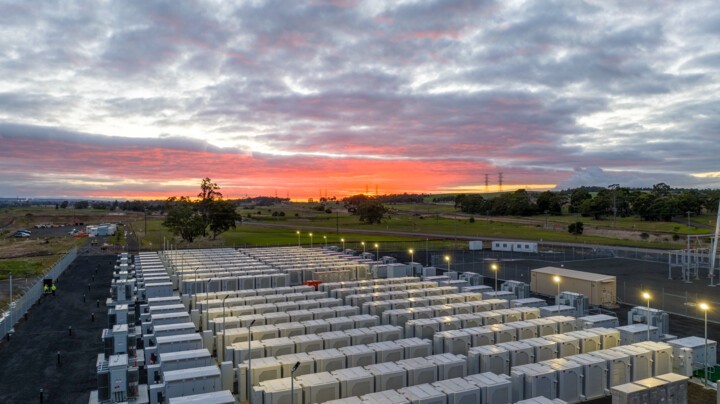
Image: Engie
Though California and Texas lead the United States in solar deployment, both markets face a growing pressure to build out energy storage systems that can ensure firm, clean power and grid reliability after the sun goes down.
Australia’s an ocean away, but it offers a valuable glimpse of what could be next for storage in California and Texas.
“Australia is going gangbusters at the state level,” said Hugh McDermott, a former senior vice president at ESS, Inc., in reference to ESS deployment. He told ESS News that states around the country have set green goals that push them to be entirely carbon-free as early as 2045. “That’s right around the corner in the utility world.”
California and Texas are no strangers to grid volatility; in both markets, surging midday solar generation drives prices negative, only to be followed by steep evening demand peaks. Short-duration lithium-ion batteries help smooth this curve, but only to a point. In Australia, the limitations of two- and four-hour systems have already prompted a shift.
“Certain states in Australia, Queensland being in the lead, have totally bought into long-duration energy storage (LDES) and they’re putting their money where their mouth is,” said McDermott, adding that New South Wales and Victoria aren’t far behind. “They’re actually investing in the technology companies themselves because those states are all seeing the impacts on their grid of high rates of solar adoption.”
And Australia’s proactive policies could offer a roadmap for how California and Texas can make their storage dreams viable while still achieving their green goals, meeting electricity demands and ensuring grid resilience.
Australia’s national and state governments have made major investments in LDES technologies, and Sydney-based Federation Asset Management recently announced it will launch a multibillion-dollar investment platform centered on LDES. Coupled with policy support, Australia has positioned itself as a global laboratory for ESS deployment.
California, on the other hand, has introduced an LDES program, but it’s spurred little momentum. Texas has no such policy. Both states could borrow from Australia’s approach by using targeted grants and competitive tenders to help build up long-duration capacity while maintaining private sector momentum.
“Frankly, one of the most interesting and dynamic markets is in Australia,” Ruchira Shah, general manager of software product at Wärtsilä, told ESS News. “The things they’re working on and the services batteries are providing are really showcasing the rest of the world the potential of batteries.”
Shah pointed to advanced applications like synthetic inertia, where batteries mimic the physical response of spinning turbines to stabilize the grid, as examples of how Australia is pushing the envelope on ancillary grid services.
“These are things batteries are going to be expected to do globally eventually,” she said. “It’s a dynamic market and one way to see where the industry is going is to look at Australia. My guess is the U.S. will follow.”
ess-news.com |



