Lk Mead water problem
I still haven't figured how someone is to create water much less walk upon it.
Message 33821980
At Critical Reservoir, a Tangible Sign of Trouble
Intake valve at Lake Mead is fully exposed for first time in its history
By Arden Dier, Newser Staff
Posted Apr 28, 2022 6:50 PM CDT
newser.com
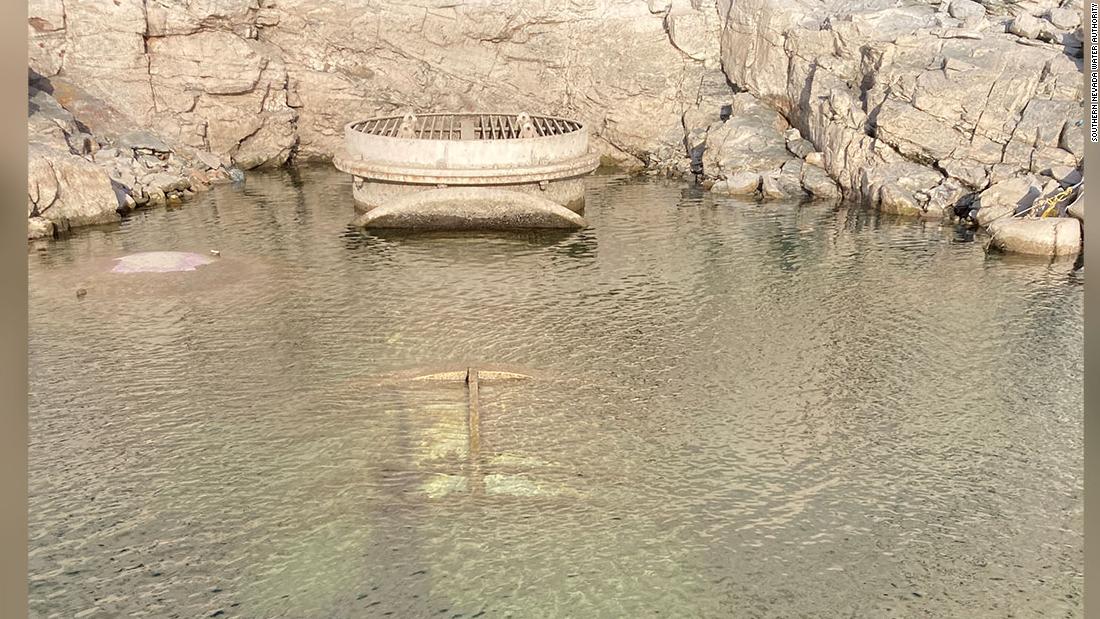
(NEWSER) – Lake Mead has hit a new low. For the first time, water levels at the man-made reservoir have dropped low enough to expose one of three original intake valves, CNN reports. The valve has been drawing water since 1971—but that's no longer possible, according to the Southern Nevada Water Authority. Photos show the intake valve completely dry above the water line, which stood at 1,055 feet above sea level as of Wednesday, down from 1,060 feet on April 4, when the top of the intake was first exposed.
Officials are still able to draw water, though. In another first, they've begun using a low-lake pumping station, which was built with the West's worsening drought in mind. It was only completed in 2020. Lake Mead is now at 35% capacity, reports the Las Vegas Sun. And the water level will only continue to fall this year—perhaps as much as seven feet in elevation—as a result of the record-low water level at Lake Powell, the other critical reservoir on the Colorado River. Water released from Lake Powell flows downriver into Lake Mead. But in March, Powell's water dropped below 3,525 feet above sea level, or about 25% capacity, the lowest level since the reservoir was formed in 1968.
At that critical level, water supplies to Page, Arizona, and the LeChee Chapter of the Navajo nation are threatened, per the Sun. Below 3,490 feet, the Glen Canyon Dam can no longer generate hydroelectricity used to power 450,000 homes, per the Salt Lake Tribune. And projections indicate that point will be reached later this year, Eric Balken reports for Deseret News. The seven Colorado River Basin states of Arizona, California, Colorado, Nevada, New Mexico, Utah, and Wyoming have therefore agreed to the Department of Interior's recommendation that water releases from Lake Powell be curtailed this spring. (Read more drought stories.) |



