Covfefe boy bragged to the Australian ambassador about the Trumpty campaign getting illegally acquired dirt on Hillary from Russia in May 2016. Before Christopher Steele's dossier was released to anyone. Even before it was finished likely. The Australian ambassador reported it to the FBI. This prompted the FBI investigation.
Mor6/ In fact, while today's NYT story is indeed this month's second-biggest Trump-Russia revelation—after the December 1 guilty plea by Mike Flynn—what makes it significant isn't that it rebuts Trump's false claims but that it may have *sealed the Trump-Russia collusion narrative*.
Seth Abramson?Verified account @SethAbramson
7/ If the NYT understood this, it would've led with it. But one must know the *prior* reporting on Papadopoulos to understand why today's news constitutes one of the biggest revelations in the 18-monthy history of the Trump-Russia probe. So I'll *briefly* summarize what we know.
8/ On September 22—40 days before we learned Papadopoulos was cooperating with the Mueller probe—I said that he had directly identified himself to Trump as a Kremlin agent in March 2016. This led to major-media coverage of the now-infamous "TIHDC meeting."
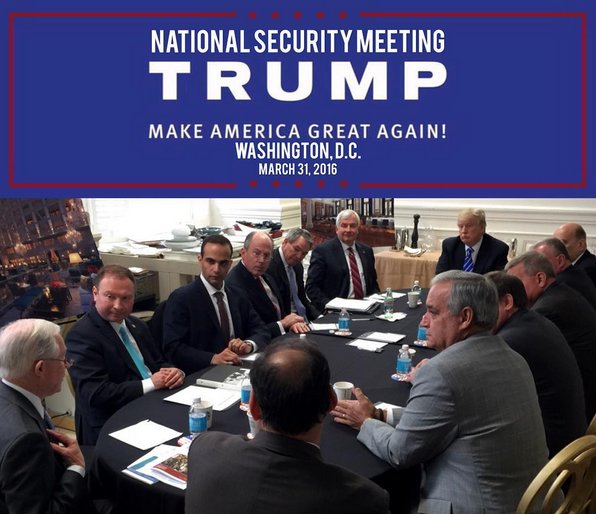
Seth AbramsonVerified account @SethAbramson
(THREAD) This is a picture of one of the biggest moments in the Trump-Russia scandal—and no one has reported on it until now. Please SHARE.
Show this thread
9/ It hadn't previously been discussed that Papadopoulos was at the first meeting of Trump's national security (NatSec) team at the Trump International Hotel in DC (TIHDC) on March 31, 2016. But he was there—a *week* after revealing himself as a Kremlin agent to the NatSec team.
10/ So when (per the NYT) Papadopoulos revealed in May '16 to an Australian diplomat that he knew Russia had committed major federal crimes against the U.S.—via computer theft and fraud—it was two months after he told Trump's NatSec team *and Trump* he was in contact with Russia.
11/ The nature of the contact that Papadopoulos revealed in March 2016 to Trump and his team was that he was a *legal* agent—in the law we'd say "special agent"—of the Kremlin. He was authorized to represent the Kremlin's interests in setting up a clandestine Trump-Putin meeting.
12/ That authority came to Papadopoulos—from Kremlin officials—through another Kremlin agent, Joseph Mifsud. This is why Papadopoulos, per public reporting by WP, identified himself to Trump on March 31, 2017 as a Kremlin "intermediary" designated not by Trump but by the Kremlin.
13/ As has been exhaustively detailed by WaPo (WP), Trump's NatSec team spent *two months*—from March to May of 2016—discussing how to handle Papadopoulos' "offer" of acting as an intermediary between Trump and Putin. They did *not* dismiss the offer in March, whatever some say.
14/ It was in the *middle* of this deliberation by the NatSec team that Papadopoulos, in April 2016, was told the Kremlin had committed federal computer crimes by stealing emails from a presidential candidate. Papadopoulos *knew* his team was then deliberating a Trump-Putin meet.
[ While this was a federal crime, I'm pretty sure even if the federal govt were kept from investigating by a criminal President, computer theft would still be a state crime in whatever state the DNC servers were located. ]
15/ During this period, Papadopoulos was *personally* hounding top Trump officials—per the WP—to give him more authority and allow him to travel abroad to arrange a Trump-Putin meeting. His April intelligence on the Clinton emails was *without a doubt* a card he would've played.
16/ So while Australian law enforcement knew of the stolen Clinton emails in May 2016, and the FBI knew by July 2016 (via Australia), it's a *lock* that Papadopoulos gave this intel to Trump and his campaign—from whom he wanted present authority *and* a future job—in April 2016.
17/ So when Trump said, in July 2016, "Russia, if you're listening..." let's be clear—he a) knew they were listening, b) knew they'd stolen the emails he was urging them to release, and c)—this is key—had already promised, *via Papadopoulos*, to reward them for being good to him.
18/ This is the first real bombshell from the NYT: we now know Papadopoulos helped write the April 27, 2016 speech in which Trump promised Russia a "good deal" if they'd be his "friend," and that Trump *knew* Papadopoulos would transmit to Russia that that speech was a *message*.
19/ In March 2017, I was the first to argue that Trump's Mayflower Speech was the orchestrated beginning of a negotiation with the Russians—a negotiation about unilaterally dropping Russian sanctions. That thread essentially launched this feed (see link). t.co
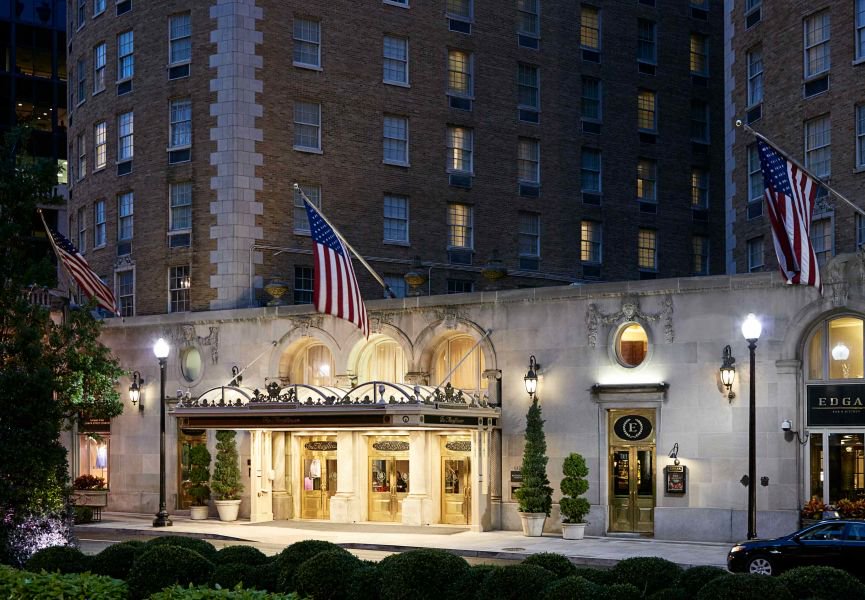
20/ The NYT has just confirmed the crux of that March 2017 thread: that Trump had—by April 27, 2016—established sufficient means to send a message to Russia that the careful placement of Kislyak at the event (violating diplomatic protocol) signaled the beginning of a negotiation.
21/ Per the NYT, Papadopoulos was that means. Papadopoulos told Trump he was a Kremlin agent; Trump put Papadopoulos on his campaign's Russia beat (not Papadopoulos' specialization); he let him help with the Mayflower Speech; he knew Papadopoulos would communicate that to Russia.
22/ Per the NYT, Papadopoulos working on the Mayflower Speech was a signal to Russia negotiations had begun. So: Papadopoulos tells Russia he's helping with Trump's foreign policy; Russia tells him of the emails; Papadopoulos tells the campaign; Trump offers Russia a "good deal."
23/ All of this happens in April 2016, which is why Papadopoulos was feeling pretty damn good about himself in May 2016 when he let slip about the emails to an Australian diplomat. It also explains why Trump was so frustrated when the Kremlin didn't give Don the emails in June.
24/ Don was excited to meet Kremlin agents in June 2016 to get Clinton "dirt" because Papadopoulos told the campaign in April Russia had that dirt. When Veselnitskaya left only a slim file with Don, the campaign was dissatisfied. They thought Russia would then release the emails.
25/ That didn't happen—other hacked info was released instead—which is why Trump made the appeal himself, on TV, in July 2016. He'd already promised Russia a "good deal" on sanctions if they'd be a "friend"—he said he'd "reward" friends—but he felt they hadn't delivered enough.
26/ I've been arguing on this feed for over six months now that Trump-Russia collusion is *already known*: Trump negotiated sanctions relief for Russia in exchange for continued assistance with leaks—which constitutes *Aiding and Abetting Computer Crimes*.

27/ In October, I made this case in even greater detail.
Seth AbramsonVerified account @SethAbramson
(THREAD) This thread shows how Trump aided (18 U.S.C. § 2) Russian computer fraud (18 U.S.C. § 1030)—an impeachable offense. Please retweet. |



