U.S. Virgin Islands cover 30% of electricity needs with six solar-plus-battery facilities
About 124 MWh of Honeywell battery energy storage systems will be installed alongside six solar facilities with a combined capacity of 140 MW.
December 6, 2023 Jerusha Kamoji
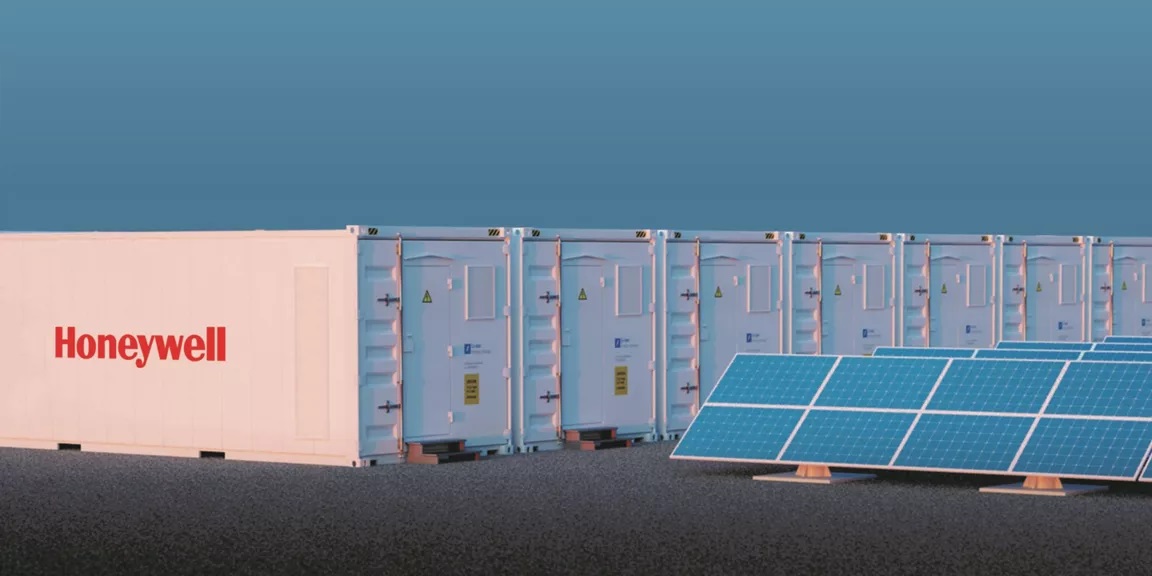
Image: Honeywell
Share
    
Honeywell Process Solutions announced it will provide Massachusetts-based renewable energy developer VIElectron with its first installment of battery energy storage systems (BESS) to accommodate six solar facilities across the U.S. Virgin Islands (St. Thomas, St. Croix, St. John).
All six of the Virgin Island installations use SEG solar modules. Three of the projects are in Saint Croix, two in St.Thomas, and one project is on St John. All projects use fixed-tilt, ground mount tracking, which VIelectron told pv magazine USA was engineered to withstand 185 MPH wind speeds. Construction has begun on the first three sites, and VIelectron expects the first project to be complete in late April or early May 2024.
The lithium-ion based BESS will add 124 MWh of energy storage co-located with the solar facilities. Grid-scale storage solutions can absorb fluctuations in demand, further stabilizing the grid by absorbing excess power during low usage and then releasing it during peak hours. The adjoining solar facilities will provide a total of 140 MW solar capacity.
The solar-plus-storage system is expected to fulfill 30% of the islands’ energy consumption needs.
According to the Department of Energy (DOE), the U.S. Virgin Islands have heavily relied on fossil fuels to generate electricity in the past. This means residents accrued expensive electricity costs that fluctuated with global oil prices.
“In 2009, the U.S. Virgin Islands were almost 100% dependent on imported oil for electricity, water desalination and transportation, resulting in electricity costs nearly four times the U.S. national average,” the DOE said.
The U.S. Energy Information Administration states that at the start of 2022, U.S. Virgin Island residents paid an average of ¢0.41 kW/h, down from ¢0.47 kW/h in 2015. However, this was almost three times more than the average U.S. power price of ¢0.15 kW/h in 2022.
Since then, the U.S . Virgin Islands have set a goal to reduce its dependence on fossil fuels for energy production by 60% by 2025. The National Renewable Energy Laboratory (NREL) adds that the U.S. Virgin Islands also want to generate 30% of peak capacity from renewables by 2025. According to the DOE, the territory is well on its way to reaching these goals due to its growing portfolio of renewable energy projects that include:
- A 448 kW solar system located at the Cyril E. King Airport on St. Thomas. According to NREL, this is one of the largest solar plants in the Caribbean. Moreover, it saves almost $1,000 each day in electricity costs.
- 15 MW of distributed solar plants either in place or under construction
- Energy efficiency upgrades in 11 schools that led to an energy-cost saving of $3 million. This allowed the U.S. Virgin Islands government to allocate $35 million toward installing lighting and water retrofits in 34 more schools.
- Almost 1,500 solar water heating and plant systems installations throughout the territory.
“As we embark on a transformative journey toward renewable energy, Honeywell’s battery storage expertise aligns seamlessly with our vision,” said Gov. Bryan. Pramesh Maheshwari, president of Honeywell, added that the solar-plus-storage project will reduce the cost of energy for residents of the U.S. Virgin Island and function as an example of how sustainable technologies can make renewables more affordable for islanders everywhere.
pv-magazine-usa.com
Just the beginning of the buildout.
A number of small islands in the South Pacific run on solar, wind and storage exclusively.
(Thank you Tesla Megapacks!)
No more importing expensive diesel fuel...
youtube.com
Eric |



