2023 in review: Australia nears half-way mark to 82% renewables
Sophie Vorrath 8 January 2024 3
Image: Western Power
Share
Tweet
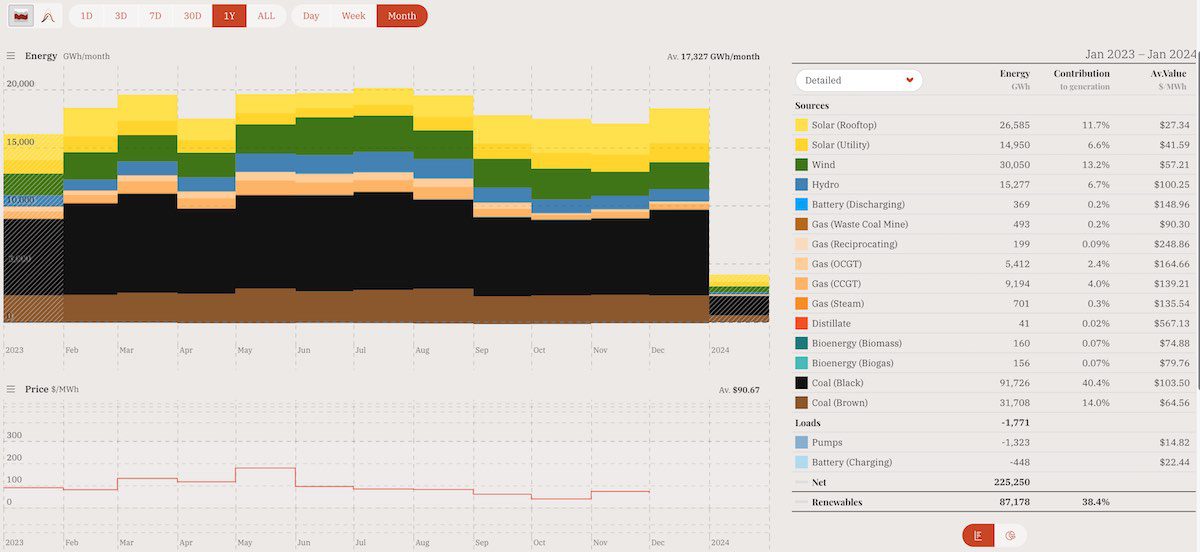
Renewable energy sources supplied nearly 40 per cent of electricity demand in Australia over the course of 2023, according to data from OpenNEM, edging the nation closer to the halfway mark on its target of 82 per cent renewables by 2030.
According to OpenNEM, increasing contributions from mostly small-scale solar, wind and large-scale solar supplied combined to supply an average share of 38.4 per cent renewables across the country’s main grids for the year, from January 2023 to January 2024 (inclusive).
Source: Opennem.org.au
This is up from an average share of more than 35% renewables in 2022, with the share of rooftop solar jumping to an annual average of 11.7%, large-scale solar to 6.6% and wind to 13.2%.
As the data period measured includes the first week of January, it’s interesting to note that for the month so far OpenNEM puts the average renewables contribution at 42%. It’s also interesting to note that the average share of renewables recorded for January 2022 wound up being almost exactly the same as the average for the year.
Rooftop solar was the clear star of 2023, setting records right up to the last day of the year, although in the end fell just short of beating the 2021 record for the most new capacity added in a calendar year of 3.23GW.
According to SunWiz, a record 921MW of rooftop PV installed in the fourth quarter of 2023 took the total new capacity installed in 2023 to about 3.17GW, making it the second biggest year for panels installed by homes and businesses in Australia.
As Geoff Eldridge reports here, rooftop solar records were still being set in the final hours of 2023, when Victoria’s rooftop PV share hit a new high of 65.8% at 12:30pm on Sunday December 31.
At the same time in South Australia, the rooftop PV share soared to 101.8%, beating the previous record of 101.1% set on a Saturday afternoon in September and marking the second instance where SA’s rooftop PV met the entire region’s demand.
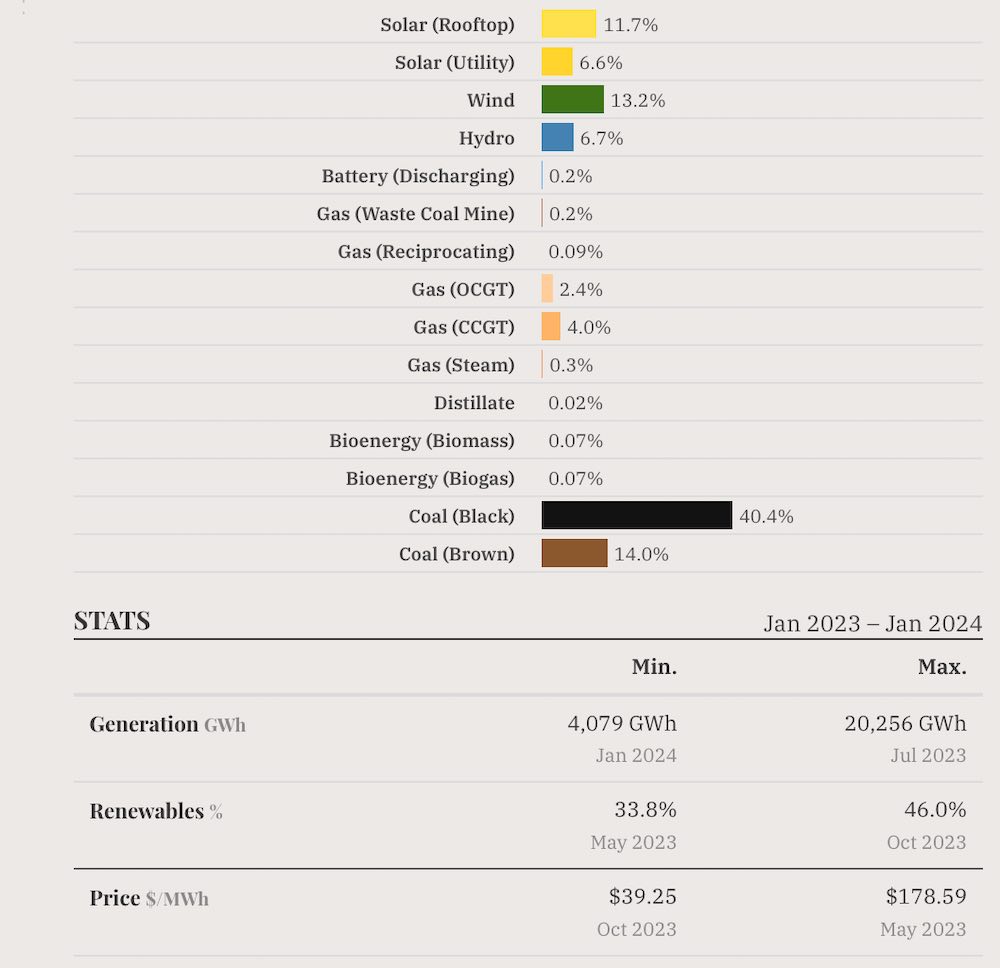
As you an see in the OpenNEM charts below, the highest share of renewables across all regions of Australia in 2023 was recorded in mid-Spring in October, with a share of 46% across the month. The biggest share in a day, nationally, was recorded on October 22 at 51%.
Source: Opennem.org.au
In South Australia, renewables supplied the state with an average of 75.4% of its electricity needs over the year, 42.3% from wind. The rest of the major states averaged somewhere between 26.9% (Queensland), 37.8% (Victoria) and 99.3% Tasmania (thanks mainly to hydro).
Western Australia was powered by an average share of nearly 20% (19.8) rooftop solar, with the share of all renewables averaging at 36% over the year.
reneweconomy.com.au |



