NSW gets lion’s share as 19 solar, wind and hybrid projects win Australia’s biggest renewable tender
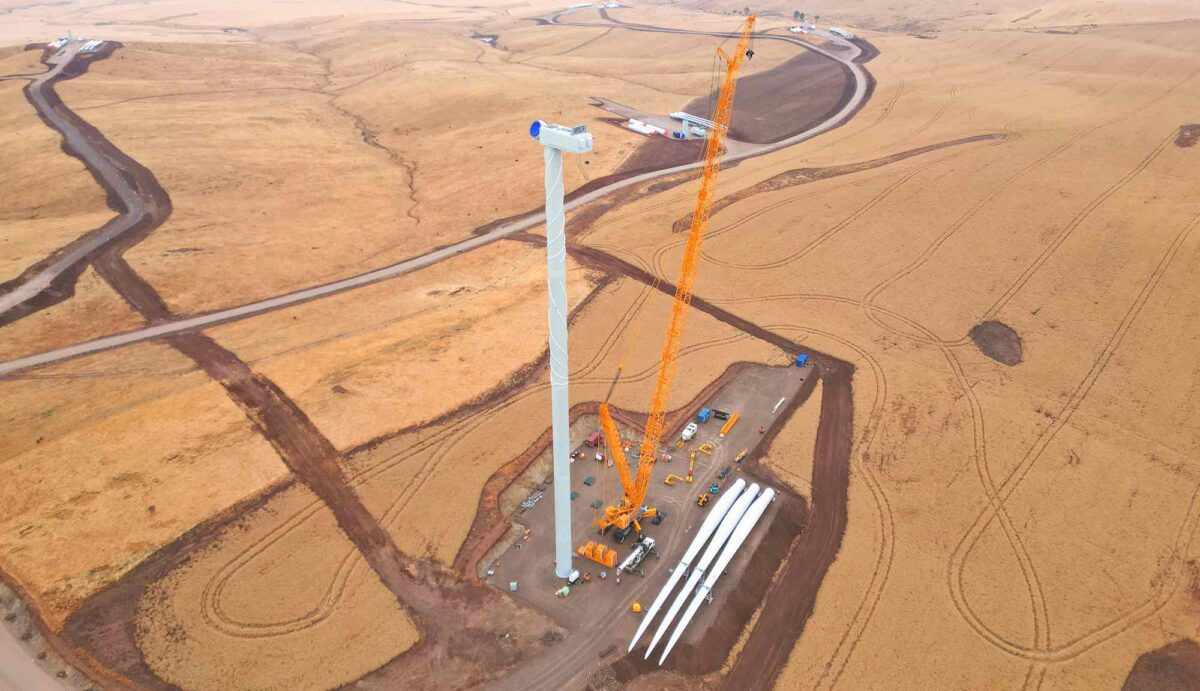
Goyder South wind farm. Image: Neoen
Giles Parkinson
Dec 11, 2024
17
Policy & Planning
Solar
Wind
A total of 19 solar, wind and hybrid projects have been named as winners of Australia’s largest ever renewable energy tender, with NSW – as designed – to host the lion’s share to help its massive and urgent task of replacing the country’s biggest fleet of ageing coal generators.
The other big winners of the first large scale auction under the federal government’s Capacity Investment Scheme are iron ore billionaire and green energy evangelist Andrew Forrest, France’s Neoen, UK-based Elgin Energy, Lightsource bp, and local developer Edify Energy. They account for 14 of the 19 projects.
In all, 6.4 gigawatts of generation capacity has been awarded, with a surprisingly high number of solar projects (11), although wind projects are bigger and account for more than half of all capacity. Eight out of the 19 projects specify big batteries, although many of the others will also have storage.
There are some surprising omissions – with the country’s biggest wind project, Golden Plains, and the even bigger Liverpool Plains and Yanco Delta projects in NSW missing out. Also of interest, none of the country’s biggest utilities appear to have got a look in, despite indicating they had entered the process.
The CIS is the main Labor government policy initiative to help propel the country towards its target of 82 per cent renewables by 2030, which it insists is still doable – a prospect that looks increasingly likely given the recent lift in construction starts and commitments.
All told, at least 32 GW of capacity will be auctioned through the series of tenders, with at least 23 GW of wind and solar capacity and a further 9 GW (36 GWh) of storage, most likely batteries, to be allocated.
The first tender was swamped with proposals of more than 40 GW, and those projects that missed out have been invited back to the second 6 GW generation tender, which has already opened and whose winners will be announced after the next federal election.
| State | Project | Technology | Size | Operator | | NSW | Glanmire Solar Farm | Solar + BESS | 60MW solar and 104 MWh BESS | Elgin Energy | | NSW | Sandy Creek Solar Farm | Solar | 700 MW | Lightsource bp | | NSW | Spicers Creek Wind Farm | Wind | 700 MW | Squadron Energy | | NSW | Goulburn River Solar Farm | Solar | 450 MW | Lightsource bp | | NSW | Valley of the Winds | Wind | 936 MW | ACEN Australia | | NSW | Thunderbolt Wind Farm | Wind | 230 MW | Neoen | | NSW | Junction Rivers | Wind + BESS | 585 MW wind generation and 800 MWh BESS storage | Windlab | | Vic | Mokoan Solar Farm | Solar | 46 MW | European Energy Australia | | Vic | Barnawartha Solar and Energy Storage | Solar + BESS | 64 MW generation and 138.8 MWh BESS | Gentari | | Vic | Campbells Forest Solar Farm | Solar | 205 MW | Risen | | Vic | West Mokoan Solar Farm | Solar + BESS | 300 MW solar and 560 MWh BESS | Lightsource bp | | Vic | Barwon Solar Farm | Solar | 250 MW solar and 500 MWh BESS | Elgin Energy | | Vic | Elaine Solar Farm | Solar | 125 MW solar and 250 MWh BESS | Elgin Energy | | Vic | Kentbruck Wind Farm | Wind | 600 MW | Neoen | | SA | Goyder North Stage 1 Wind Farm | Wind | 300 MW | Neoen | | SA | Palmer Wind Farm | Wind | 274 MW | Tilt Renewables | | Qld | Hopeland Solar Farm | Solar | 250 MW | ACS | | Qld | Majors Creek SolarPower Station | Solar + BESS | 150 MW solar and 600 MWh BESS | Edify Energy | | Qld | Ganymirra Solar Power Station | Solar + BESS | 150 MW generation and 600 MWh BESS | Edify Energy |
The CIS is essentially an underwriting agreement that asks project developers to bid for a minimum price – below which they get compensated by the government – and a maximum price, above which they return excess monies to the government.
Project developers also stipulate an annual payment “cap” which defines the potential exposure of the federal government.
Bowen has rejected calls to release the price details of the winning bids – even though some in the industry reckon that information will help to sharpen pencils for subsequent rounds. But he says the results of the first round are better than hoped.
“Bids were highly competitive and costs came in significantly lower than expected,” Bowen said in an emailed statement to Renew Economy.
The government says that bids were “rigorously” assessed through an independent third party, AEMO Services, and were based on a project’s likelihood of lowering wholesale energy market prices, how it would help system reliability, and its proposed benefits to local communities and First Nations Australians, including local supplies.
They will deliver a combined $600 million in shared community benefits, $280 million in First Nations benefits and more than $14 billion in spending on local businesses, as well as more than $200 million of locally milled steel.
The biggest winning project is the 936 MW Valley of the Winds project in central west NSW, proposed by Acen Renewables, which also owns the country’s biggest solar farm at New England, but which has been struggling to get final sign off on its contested 900 MW Robbins Island wind project in Tasmania.
Among other developers, Neoen continues its successful strike rate with three project wins – the 300 MW Goyder North wind project in South Australia, the 600 MW Kentruck wind project in Victoria, and the 230 MW Thunderbolt energy hub in NSW.
All will likely be built with batteries, but these were not part of their tender offerings. Kentbruck will be sold to the Julia-Gillard chaired HMC Capital as part of Neoen’s divestment of its Victoria portfolio to meet regulatory requirements for its sale to Canadian asset manager Brookfield.
The Goyder North is perhaps the most significant, given it is the first stage of what could be a 1,000 MW wind project with a 3,600 MWh battery. It is situated next to the equally impressive Goyder South hub, which is already nearing completion of its first 413 MW wind stage, and could add more wind, solar and battery storage.
NSW was guaranteed at least 2.2 GW of capacity, and gets 3.6 GW, with four wind and three solar projects, and just two with an accompanying battery, although the Goulburn River solar farm will be built next to an eight hour battery that has already landed a contract with the NSW under the tender models that become a blueprint for the CIS.
Interestingly, only one project was awarded to the newly created south-west renewable energy zone in NSW, where more than 20 GW of projects are queuing for a connection and a contract.
That winner is Windlab’s 585 MW Junction Rivers wind project, with an 800 MWh battery – one of the lesser known of Andrew Forrest’s sizeable portfolio.
Forrest’s Squadron Energy also picks up the 700 MW Spicers Creek wind project in the central west REZ, while newly arrived Elgin, now majority owned by Danish giant Copenhagen Infrastructure Partners, picked up three solar and battery projects – Elaine, Glanmire and Barwon.
Australia’s Edify Energy picks up two projects – the neighbouring Majors Creek and Ganymirra solar farms which will total 300 MW and will share a 1.2 GWh battery south of Townsville – while Lightsource bp picks up three solar projects – Goulburn River, Sandy Creek and West Mokoan.
Victoria, surprisingly, gets six solar farms, and just two with a big battery, and one wind project as it gears up its charge towards its legislated 95 per cent renewables target for 2035.
South Australia gets two winners – Goyder North and Tilt Renewables’ 274 MW Palmer wind project – which will help propel that state towards becoming the first in the world with a supply of 100 per cent “net” renewables by 2027.
Queensland also gets three smaller solar projects, two with battery storage, for a total generation capacity of 550 MW. Western Australia will hold a seperate auction.
Federal energy and climate minister Chris Bowen says even more projects will be awarded contracts in the second tender that has already opened.
“The former Coalition Government ignored the experts and retused to take advantage of our abundant sun and wind, leaving households paying the price of having a grid that’s too reliant on expensive, unreliable, ageing coal and exposed to international price shocks,” he said in a statement.
“The Albanese Labor Government is delivering Australian households and businesses an energy system that is lowest cost, more reliable and better equipped to power Australian homes and businesses now and into the future.
“We are also making sure that the communities who host these projects see the benefits of them – with strong commitment to use Australian manufacturing and hire local people.”
For more information, see Renew Economy’s Big Battery Map of Australia.
reneweconomy.com.au
My comments:
In less than fifteen years Australia will be totally off of fossil fuels for electrical power generation.
Eric |



