Inflation at lowest level since 1957
By Annalyn Censky, staff reporter
November 17, 2010: 10:35 AM ET
money.cnn.com
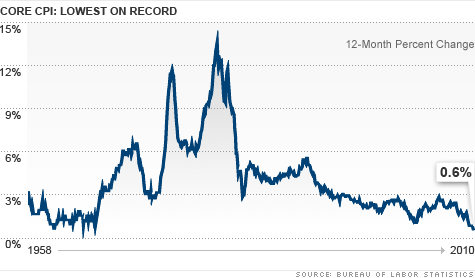
NEW YORK (CNNMoney.com) -- Consumer prices for everything other than food and energy are rising, but at a rate so sluggish, it's the smallest price increase on record, the government said Wednesday.
The Consumer Price Index, a key measure of inflation, increased 1.2% over the past 12 months ending in October, the Bureau of Labor Statistics said.
But after stripping out volatile food and energy prices, the more closely watched core CPI rose 0.6% on an annual basis -- the smallest price increase since the government started recording the data in 1957.
Falling prices for new and used vehicles, apparel, recreation and tobacco kept the index low.
Still, it may feel to consumers like prices are rising: Shelter and medical care costs rose, and gasoline prices are up 9.5% over last year.
Consumers may also be noticing their grocery bills going up, but only slightly -- around 1.4% over last year.
The overall index remained low, even as commodity prices have surged in the last month -- some even to record highs. Cotton, for example, recently traded at its highest price in 140 years of trading.
Businesses just haven't started passing those costs on to consumers yet, said Jennifer Lee, senior economist with BMO Capital Markets.
"Businesses and producers are swallowing the increases we see in commodities," Lee said. "Consumers still have a lot of power in their hands."
A rate of inflation around 1% is considered sluggish, and raises concerns of deflation -- or falling prices.
While that may sound good to consumers who are still grappling with 9.6% unemployment, falling prices often also mean falling wages, as businesses respond to declines by cutting output and jobs.
That's why the Federal Reserve is trying to raise inflation slowly, around its target of about 2% per year. Two weeks ago, the central bank announced a plan to stimulate the economy by lowering interest rates -- a move that it hopes will encourage both consumers and businesses to spend more.
While that plan -- known as quantitative easing -- has recently come under fire from several economists, Wednesday's latest inflation data is likely to lend more support to the Fed's argument that the economy is teetering on the brink of deflation, and needs a jumpstart.
Defending the Fed's move in a speech Wednesday, Eric Rosengren, president of the Federal Reserve Bank of Boston cited low inflation as cause for concern.
"With unemployment so high and inflation unusually low, most models indicate that further monetary accommodation is warranted," he said.
Month by month: CPI rose 0.2% in October, on a monthly basis. Economists surveyed by Briefing.com had expected a 0.3% uptick. The increase was largely due to an increase in energy prices, the report said.
Meanwhile, core CPI was flat on a monthly basis, slightly lower than economists' forecasts for a 0.1% increase. To top of page |



