German company installs PV-powered desalination plant in Ukraine
Germany’s Boreal Light says it has installed a desalination plant in Mykolaiv, Ukraine. It claims that the system – which uses 560 W solar modules to produce 125 cubic meters of clean water per hour – is Europe’s largest PV-powered desalination project.
October 26, 2023 Lior Kahana
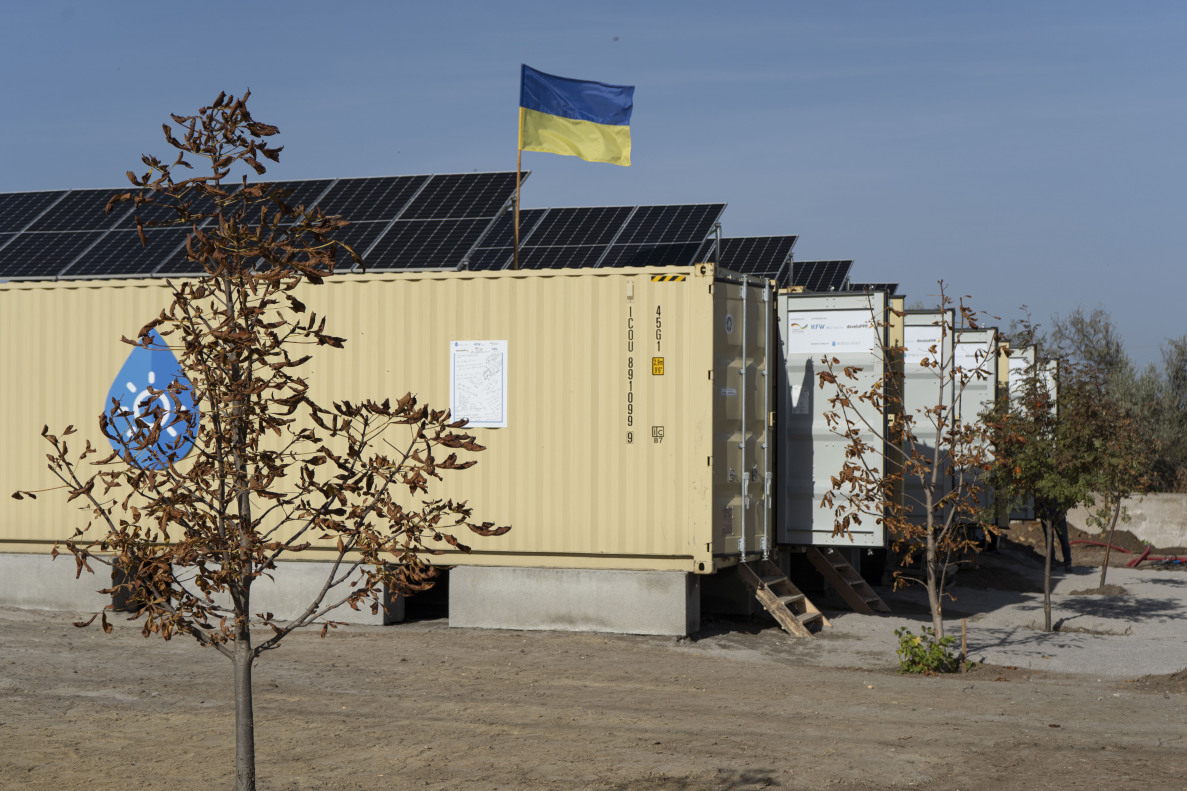
Mykolaiv’s solar water desalination system
Image: Boreal Light
Share
    
German company Boreal Light said this week that it has completed the installation of what it claims is Europe’s largest solar water desalination system. The 460 kWp system in Mykolaiv, southern Ukraine, can produce 125 cubic meters of clean water per hour.
“The project was initiated shortly after the Russian attack on Ukraine started, as the main drinking water pipelines supplying water to Mykolaiv were bombarded,” Boreal Light CEO Hamed Beheshti told pv magazine. “Mykolaiv has a serious water salinity challenge due to its coastal lines and saline rivers, so we applied our solution that was originally designed for developing countries.”
The system features 560 W monocrystalline PV modules installed on fixed-mounting brackets. The brackets are divided into five units and can each produce 25 cubic meters of clean water per hour. The source water is up to 13,000 parts per million in terms of salinity. Besheti said the system was split into five units for “security reasons” and “higher” project resilience.
The system does not use any batteries. Instead of energy, it stores clean water for later use. If there is fluctuating radiation from the sun, the system’s control mechanism distributes the voltage between three pumps to maintain constant pressure in the pressure tube. Pressure tubes operate as filters for reverse osmosis purification processes in desalination plants.
However, on days of heavy cloud cover, the machine can switch to a three-phase 480 VAC supply from the grid.
The German company said water production costs approximately EUR 0.22 ($0.23) per cubic meter, with a minimum system lifetime of 25 years. Regular maintenance involves replacing desalination components like membranes and prefilters every four to five years.
Besheti said that during the two-week installation process, the city was hit by two missile strikes, with one of them landing near the installation site. Despite these challenges, Besheti said he hopes the project can ease some of the “devastating challenges” the war has wrought on the local community.
pv-magazine.com |



