No one alive today has suffered slavery in the USA - no one alive today was a slave owner - nothing to apologize for or anyone to apologize to.
as always, you right wing asshats are always wrong, with your heads up your collective asses
1930s Georgia
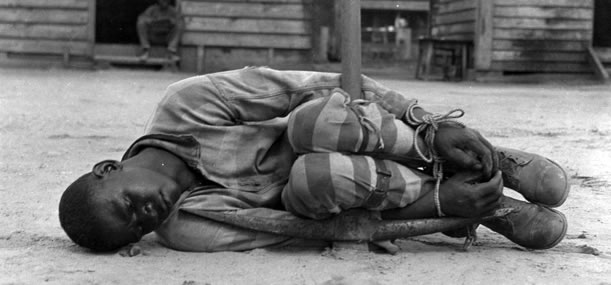
Southern Gulag: How 20th Century Slave Labor Undermined the US Labor Movement
September 3rd, 2008 | Nathan Newman
Let us talk this Labor Day about slave labor in the United States. No, not the antebellum kind before the Civil War but the slavery that persisted well into the 20th century, the slavery that was integral not only to the southern economy but slaves owned by northern corporations and used to break strikes and keep the South a union-free reserve. And I don’t mean some metaphorical slavery, but, as Douglas Blackmon writes in his recent Slavery by Another Name, the slavery of brutal forced labor, whips, death and sexual rape of black women–in many ways worse than that of the older form of slavery.
The author is not a leftwing journalist but Atlanta bureau chief of the Wall Street Journal, but what he documents is seven decades of a southern gulag- and I use the word “gulag” deliberately for what his story shows is that the U.S. had within its borders as brutal a regime of degradation as the worst that Stalin could dish out. This southern gulag involved millions of black workers enslaved through a combination of capitalist employers, farm owners and a legal system that promised a brutal fate for anyone defying their de facto masters. And it is a key story for understanding the ultimate weakness of the overall U.S. labor movement, since having a deunionized Southern region was an essential tool in disciplining Northern workers who feared loss of jobs to a region without labor rights. That is the story that Blackmon tells. I urge every person to go out and read the book, but the following gives the highlights (or lowlights if you will).
todaysworkplace.org  |



