SI
SI
discoversearch

We've detected that you're using an ad content blocking browser plug-in or feature. Ads provide a critical source of revenue to the continued operation of Silicon Investor.  We ask that you disable ad blocking while on Silicon Investor in the best interests of our community.  If you are not using an ad blocker but are still receiving this message, make sure your browser's tracking protection is set to the 'standard' level.
Politics : Formerly About Advanced Micro Devices

 Public ReplyPrvt ReplyMark as Last ReadFilePrevious 10Next 10PreviousNext  
To: tbolding who wrote (798404)8/10/2014 8:27:36 AM
From: Bilow  Read Replies (2) of 1581910
 
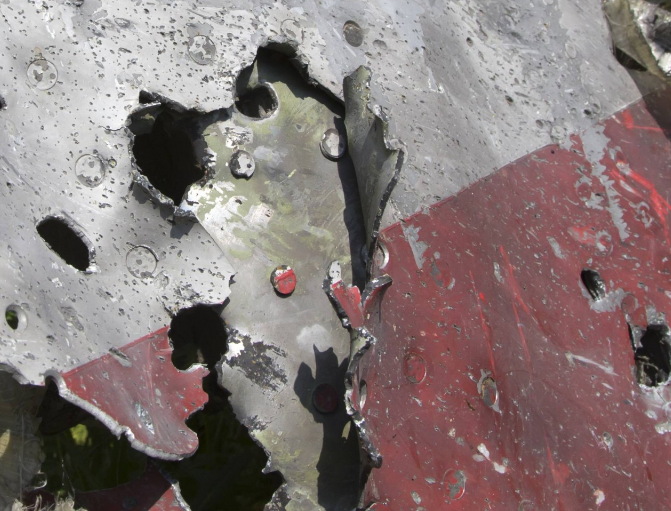
Hi tbolding; Re the theory that the Malaysia airliner was shot down by aircraft instead of missile, "The cockpit shows traces of shelling! You can see the entry and exit holes. The edge of a portion of the holes is bent inwards. These are the smaller holes, round and clean, showing the entry points most likely that of a 30 millimeter caliber projectile. The edge of the other, the larger and slightly frayed exit holes showing shreds of metal pointing produced by the same caliber projectiles. Moreover, it is evident that at these exit holes of the outer layer of the double aluminum reinforced structure are shredded or bent outwardly!";

Here's what he's talking about, for example:


These are entrance and blast from a nearby warhead explosion. The fragments create the small holes. When they enter the plane they create pressures that bend the metal away from the entrance hole.

In short, my opinion (and I've seen more than my share of military warhead damage) is that this is completely compatible with the standard explanation; shot down by surface to air missile.

Warhead explosions are very messy. They typically occur outside the aircraft and some distance from it. A warhead has a lot of fragments that make plane killing holes. These are designed to fly some distance so the warhead can miss the plane and still take it down. But a warhead is surrounded by a missile and all the other missile parts can also destroy an aircraft. In particular, if the explosion is close enough, the outer skin of the missile becomes shrapnel. You can see the effect of that shrapnel in the above picture. Look towards the top left; all the little odd shaped holes in the paint are the outer skin of the missile being driven into the skin of the aircraft by the explosion. This is part of what is sometimes called in the military the "blast effect" as opposed to the "fragments" and blast can destroy an enemy aircraft even if all the fragments miss. The blast effect also includes overpressure.

Gunfire with shells can't do that. Shells can produce explosions but they're usually inside the aircraft and at worst they're on the outer surface. They can't explode a great distance from the aircraft. And if you look at the whole picture it's clear that a single warhead explosion created the damage.

-- Carl
Report TOU ViolationShare This Post
 Public ReplyPrvt ReplyMark as Last ReadFilePrevious 10Next 10PreviousNext