SI
SI
discoversearch

We've detected that you're using an ad content blocking browser plug-in or feature. Ads provide a critical source of revenue to the continued operation of Silicon Investor.  We ask that you disable ad blocking while on Silicon Investor in the best interests of our community.  If you are not using an ad blocker but are still receiving this message, make sure your browser's tracking protection is set to the 'standard' level.
Strategies & Market Trends : The Epic American Credit and Bond Bubble Laboratory

 Public ReplyPrvt ReplyMark as Last ReadFilePrevious 10Next 10PreviousNext  
To: bruiser98 who wrote (83626)7/16/2007 2:34:25 AM
From: bart13  Read Replies (1) of 110194
 

I hope Bart13 can figure it out. I first thought you had gotten a two time zone head start on me on drinking. But then I looked at this page.
...
I hope Bart13 can explain what "nominal" means.


Nominal is basically face value, as opposed to something like a purchasing power parity which involves some value judgments.

There are three main dollar index:
1. The USDX which is 57.6% Euro, 13.6% Yen, 11.9% Pound, 9.1 % Canadian dollar, 4.2% Swedish Krona and 3.5% Swiss Franc. Perhaps too basic, but this is the one on the news and is also the one traded on futures exchanges.

2. The Major Currencies index, which is literally what it says - a subset of all the major currencies of the world. It's trade weighted - if a country has a small trade with the US, it's currency has an equivalent weight.Other have mentioned it, but it broke to an all time low a few months ago.


3. The Broad index, which is most of the currencies of the world. It's also trade weighted.


I've never paid much attention to the broad or major indexes, other than to note if they're drifting out of alignment since that can signal a move or move continuation or trend change. I also haven't researched any of the "special moment" data issues that may and probably does surround them, not do I know why John Williams chart is so far off the actual Fed data.

My best guess is that he has applied some type of purchasing power correction to both of the ones on his chart, along with adjusting for data issues in the second line.
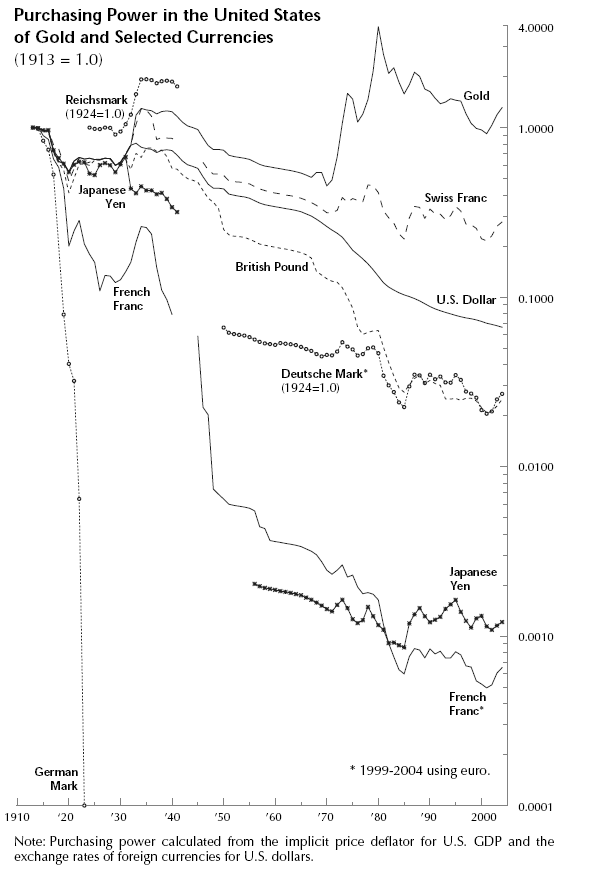
It's not unlike the various currency adjustments done by the AEIR in this very long term chart:

Report TOU ViolationShare This Post
 Public ReplyPrvt ReplyMark as Last ReadFilePrevious 10Next 10PreviousNext