Intel SVP in China: Chinese CPUs Could Catch Us by 2025
www.tomshardware.com /news/chinese-cpus-could-catch-up-by-2025
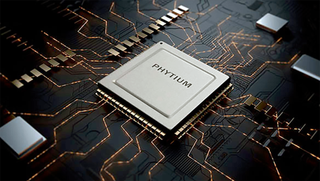
(Image credit: Phytium)
Some interesting comments made by an Intel senior executive in China have come to light. According to a report from Taiwan's DigiTimes, an Intel exec said that it is clear Chinese CPU makers will become "strong competitors" to Intel in the next three to five years. Rui Wang, SVP of Intel Corporation and chair of Intel China, made the comments at the 2022 National Party Congress on March 11. You don't need to ask which party was holding the event in China, and this should help put the crowd pleasing comments into some perspective.
Truth or Toady?
Speaking at a Chinese Communist Party gettogether probably isn't an ideal situation to share inconvenient truths about the nation's hopes of CPU glory. With this in mind, perhaps Wang was trying to please party despots, to be optimistic, or at least to be polite about China's chances of catching up with the likes of Intel in the CPU sphere.
"So far there has not been any local companies that are able to deal a substantial threat to Intel," stated the Intel SVP at the National Party Conference last week. "But in 3-5 years, it will become clear that local companies will emerge as strong rivals," envisioned Ms. Wang. Having said this, Wang went a little distance to temper expectations that US tech giant Intel would easily be displaced, dislodged, or usurped as the CPU leader in China. "Intel won't be polite, and will exert its power to compete fairly," she reminded anyone getting carried away with hopes of an easy victory.
Chinese Companies With Intel in Their Sights
Unfortunately, Intel China's Chair wasn't specific about the avenue from which Intel's business in China would be assaulted. No specific Chinese CPU or IT company was highlighted, and no mention was made of any specific architecture with a chance at becoming an Intel competitor.
China has quite a wide range of CPU design outfits that could potentially surprise us in the next three to five years. We have previously and recently reported on the successes of China-made Zhaoxin CPUs. One of these LuJiaZui microarchitecture quad-core chips features in what looks like a China-only version of the Yoga Slim 7i laptop, dubbed the Lenovo Kaitian N7. The immature architecture combined with a custom China OS means that the N7 isn't a great performer, however, and it looks like it has issues with waste heat and battery life.
We have also posted news in recent months discussing Chinese chip advances by the likes of Loongson (MIPS based), Sunway (supercomputers), and Hygon (AMD Zen 1 based, under license). China also has at least a couple of firms building processors on the Arm architecture. Huawei's HiSilicon and Phytium Technology are the two best know Arm architecture proponents in China. Phytium has a particularly wide portfolio with products for the server, workstation, and embedded markets, as well as five new high performance CPUs penciled in for the coming months.
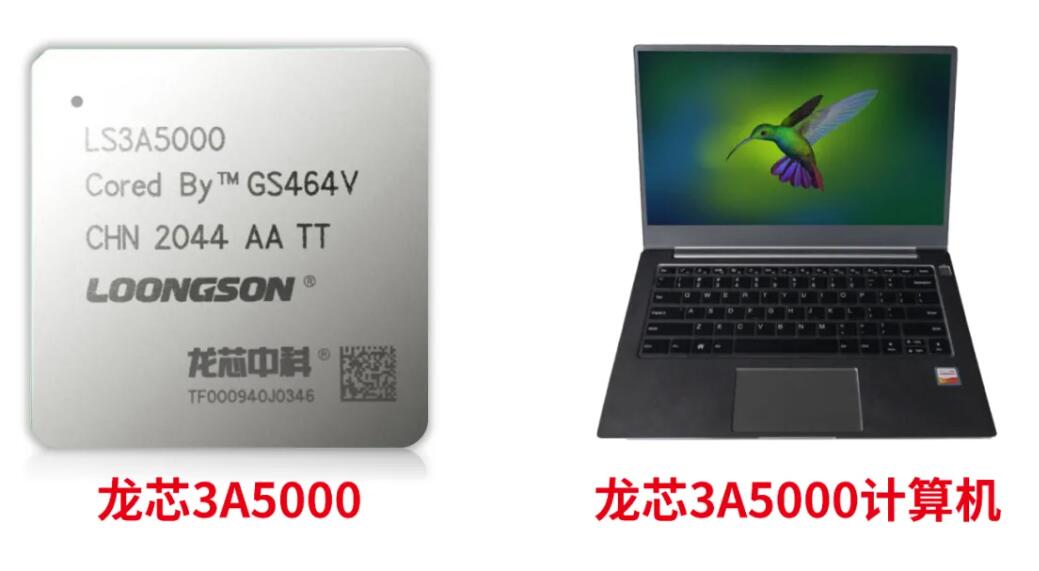
(Image credit: CnTechPost)
China has homegrown GPUs and DDR4 (currently planning DDR5 production) too, and hopes to make its semiconductor foundries, especially the state backed SMIC, more competitive in the not-too-distant future.
Some other important data with which to frame the above news includes a recent statement by Xiao Yaqing, China's Minister of Information and Technology. Just ahead of the National Party Congress, Yaqing asserted that the domestic chip industry had grown by a third compared to a year ago.
RECOMMENDED VIDEOS FOR YOU...
Potential Impacts on Intel
US computing power being usurped in China has a highly significant precedent. DigiTimes notes that China's Inspur took IBM by surprise when its servers snatched IBM's banking system business in China in 2014. Teething problems and early issues with the new computer systems were considered to be worth it in the longer run.
If the worst happens for Intel, it could be quite financially painful, especially if the move is sudden. China is the source of about a quarter of Intel's revenue, according to DigiTimes' analysts. |



