Our Discarded Plastic May Doom Oysters
Ingested particles quickly damage their ability to produce, says study
By John Johnson, Newser Staff
newser.com
Posted Feb 2, 2016 12:32 PM CST
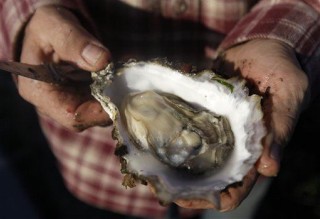
(NEWSER) – Oysters may have a new No. 1 menace in the sea: plastic. A troubling new study finds that oysters feeding on microplastics quickly develop serious reproduction problems, scientists report at Phys.org. In their study, researchers grew Pacific oysters in a lab and exposed them to the type of microplastic particles they would encounter in the ocean. Because these particles were the same size as the phytoplankton the oysters typically consume, the creatures gobbled them right up. After two months, the oysters were producing 41% fewer offspring, and those offspring grew more slowly than normal. Even the male oysters' sperm moved more slowly, reports Science. Why this happens is unclear: It may be because the plastic is causing hormonal problems or, more simply, is gumming up digestive systems and making it more difficult for the oysters to consume food and thus get energy.
The results should be seen as "an early warning system" about the rising amount of microplastics in the ocean, say the French and Belgian researchers in their study, published in the Proceedings of the National Academy of Sciences. What's more, the dangers can be applied to other "marine bivalves" that feed in the same way as oysters, reports Discovery. These microplastics are used in cosmetics and other industrial practices and commonly enter the ocean when products get flushed, notes Smithsonian, which frames the problem this way: Oysters will appear on many a Valentine's Day plate because of their supposed aphrodisiac powers, but the creatures are imperiled by the products used by couples primping for that same meal. (The study follows a different one predicting that the world's oceans will have more plastic than fish by 2050.) |



