What happens when the Windows 10 free upgrade timer runs out?
By Joel Hruska on January 29, 2016
extremetech.com
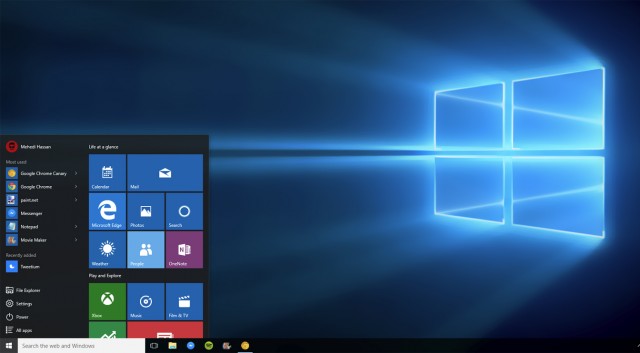
When Microsoft launched Windows 10, it announced that all existing Windows 7, 8, and 8.1 customers could receive a free upgrade to Windows 10, provided they took advantage of it within one year. So far, that strategy has paid dividends. Earlier this month, Microsoft reported that more than 200 million users had upgraded to Windows 10, double the number of Windows 8 users that adopted that operating system over the same time frame.
Data from the Register suggests that home users are upgrading more quickly, which makes sense — businesses and government offices deploy new operating systems more slowly. The graph below shows each operating system’s relative market share for three months, ending on January 10. This data was gathered by measuring OS market share on systems used to access US government websites.
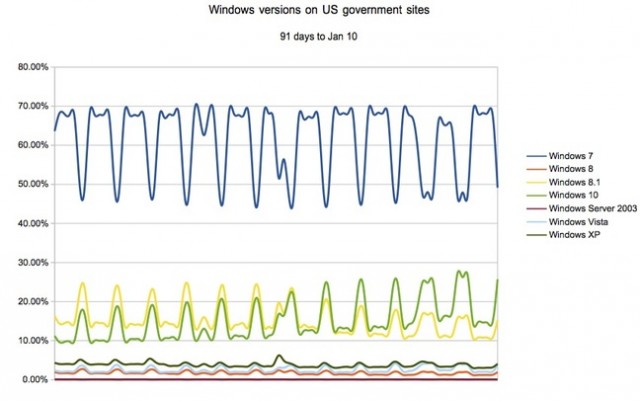
The regular dips are weekend periods when Windows 8.1 and 10 increase, while Windows 7 decreases. Interestingly enough, most of Windows 10 marketshare gains appear to be at the expense of Windows 8.1, not Windows 7.
Even at this relatively rapid pace, there will still be millions of Windows 7 and 8.1 users when Microsoft’s one year timer expires. Over at ZDNet, Ed Bott discusses what Microsoft might do next. The company could simply stop giving Windows 10 away and start charging for the privilege, it could simply extend the deadline indefinitely, or it could set a new deadline — say, the end-of-life deadline for Skylake systems we reported a few weeks back.
All of these are reasonable options, and I think Bott is right when he says Microsoft probably hasn’t decided what it’s going to do, yet. The one thing Ed doesn’t mention is what additional steps Microsoft might take to encourage users who don’t currently want to upgrade.
Our coverage of Windows 10 has often touched on privacy concerns, software controls, and the mandatory telemetry logging that Microsoft implemented with its latest operating system. The mandatory feature updates are another issue — security updates should be mandatory, but feature updates are a different story. Developers are vocally unhappy about the current state of the Windows 10 Store as well.
By next summer, most of the people who wanted to upgrade to Windows 10 will have done so, while less-technical users who left “Recommended” updates enabled will be upgraded whether they like it or not. The major holdouts at that point will be enterprise and business customers on their own refresh cycles and individual users who, for various reasons, don’t find Windows 10 attractive enough to switch.
Microsoft, of course, can choose any upgrade policy it wishes — but if it wants to actually move customers off earlier Windows versions, it could do worse than to give those customers more control over certain areas of the operating system.
* * * |



