I think we interbred with neanda, but their DNA is markedly different. That may preclude the mating thing.
Art is a form of language. Mean that they thought out consequences and future acts. Tool use is something that spreads by example even amongst as primitive a species as politicians and lawyers.
A test of the advancement of the political structure of a country is to go into a Canadian Tire store where it is assumed the retail public understands the mechanical nature of their technology and is busy maintaining it with simple hand tools. One should poll how many professionals, politicians and lawyers make up the buying mix, or can explain, if they are in the store, what some of the elementary implements are used for. Cross them off the sentient column if they profess blandly and ignorance or are waiting for a relative.. etc.. I think you will find a distinct paucity of individuals in that class who can be called "tool using", making an estimation of 100K years to branching to a sentiently-run society a decidable proposition.
jqjacobs.net
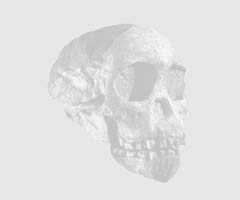
"In comparison to modern DNA 27 differences are seen. The Neanderthal sequence was compared with 2051 human and 59 chimpanzee sequences over 360 base pairs. Twenty five of the 27 variable base pairs coincide with positions that vary in at least one of the human sequences. The sequence was compared with 994 human mtDNA lineages. While these lineages differ among themselves by eight substitutions on average, the range of difference with the Neanderthal sequence is 22-36. The Neanderthal sequence has 28.2 ±1.9 substitutions from the European lineage, 27.1 ±12.2 substitutions from the African lineage, 27.7 ±2.2 substitutions from the Asian lineage, 27.4 ±1.8 substitutions from the American lineage, and 28.3 ±2.7 substitutions from the Australian/Oceanic lineages. This indicates no closer a relationship with Europeans than with the other modern human subsets considered.
The comparison to chimpanzees with modern humans is 55.0 ±3.0, compared to the average between humans and Neanderthals of 25.6 ±2.2. These results indicate a divergence of the human and Neanderthal lineages long before the most recent common mtDNA ancestor of humans. Based on the estimated divergence date of 4-5 million years ago for humans and chimpanzees, the authors estimate the human and Neanderthal divergence at 550,000-690,000 years ago. The age of the common human ancestor, using the same procedure, is about 120,000-150,000 years ago.
These results do not rule out the possibility that Neanderthals contributed other genes to modern humans. However, the results support the hypothesis that modern humans arose in Africa before migrating to Europe and replacing the Neanderthal population with little or no interbreeding."
I think most politicians and lawyers will profess not to understand art. Combine that with not being ever found in CDN Tire stores, or being able to assemble meccano sets or bicycles at Christmas, and we can safely categorize them as pre-neanderthal. |



