Toxic toads killing Australian crocodiles: scientists
1 day ago
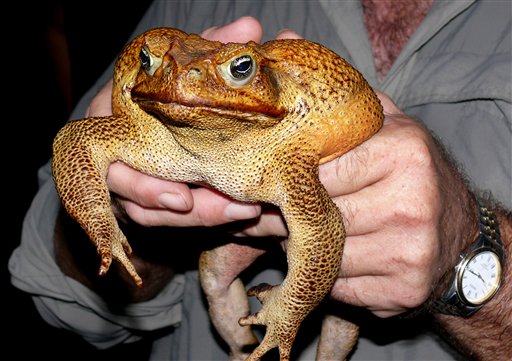
SYDNEY (AFP) — Toxic cane toads are killing alarming numbers of Australia's freshwater crocodiles as the alien pests hop inexorably across the continent, research showed Tuesday.
The warty amphibians, which have poisonous sacs on their heads, have cut the number of crocodiles in some Northern Territory rivers by more than half, said Professor Keith Christian of Charles Darwin University.
"A recent survey on the Victoria River showed that in a one-year period as many as 77 percent of the crocodiles have died as a result of eating cane toads," he said.
The marauding toads, Bufo Marinus, were introduced to Australia in 1935 from their native Central and South America in an attempt to control beetles ravaging sugar cane fields in the tropical northeast.
But like many animals imported into Australia they turned into pests themselves, breeding explosively and spreading westwards across the country, wielding a venom so powerful it can kill large predators in minutes.
The mortality rate among crocodiles has serious implications for the future of the species, Christian said.
"Populations can't really withstand that year-after-year high mortality. Particularly in these really long-lived species that take a long time to mature before they are reproductive," he said.
The toads have spread into the wetlands of the world heritage-listed Kakadu National Park, and all attempts to fight their relentless march westward have failed.
One local council earned the ire of animal welfare groups last year for promoting "cane toad golf".
Rather than whacking the toads with golf clubs, the RSPCA said the best way of killing the pests was to place them in the fridge, where they go into a comatose state, then euthanise them in the freezer. |



