If George Zimmerman Loses a Pretrial Motion to Dismiss, He Can Still Be Acquitted
from Hit and Run by Jacob Sullum
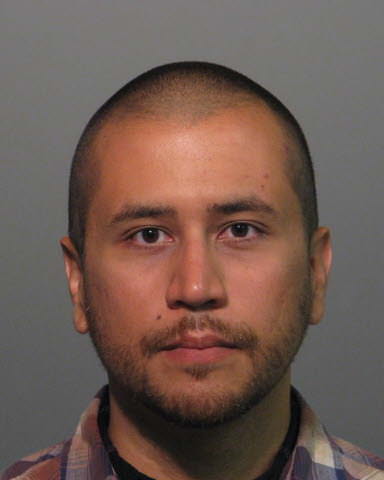 Judging from a sidebar in today's New York Times, there is some confusion about how Florida's self-defense law applies to George Zimmerman's case. The law, as amended in 2005, states that someone who justifiably uses force in self-defense "is immune from criminal prosecution." Under a 2010 decision by the Florida Supreme Court, that means Zimmerman has a right to a pretrial hearing where he can get the second-degree murder charge against him dismissed if he can show, by "a preponderance of the evidence," that he reasonably believed deadly force was necessary to prevent Trayvon Martin from killing or seriously injuring him. In other words, he has to convince a judge it is more likely than not that his use of force was lawful. But if he loses that motion, he can still argue at trial that he acted in self-defense, and the prosecution has to prove beyond a reasonable doubt that he did not. Judging from a sidebar in today's New York Times, there is some confusion about how Florida's self-defense law applies to George Zimmerman's case. The law, as amended in 2005, states that someone who justifiably uses force in self-defense "is immune from criminal prosecution." Under a 2010 decision by the Florida Supreme Court, that means Zimmerman has a right to a pretrial hearing where he can get the second-degree murder charge against him dismissed if he can show, by "a preponderance of the evidence," that he reasonably believed deadly force was necessary to prevent Trayvon Martin from killing or seriously injuring him. In other words, he has to convince a judge it is more likely than not that his use of force was lawful. But if he loses that motion, he can still argue at trial that he acted in self-defense, and the prosecution has to prove beyond a reasonable doubt that he did not.
By contrast, the Times leaves the impression that Zimmerman has no hope of acquittal if his motion to dismiss is denied:
- The case will almost certainly include a pretrial hearing to determine whether the state’s Stand Your Ground law, which grants broad protections to people who claim to have killed in self-defense, applies; if the judge finds that Mr. Zimmerman acted appropriately, the case will end there. If the judge decides that the protections of the law do not apply, the case will go forward.
- At trial, however, the question of self-defense can be brought up again and possibly will, said Robert Weisberg, a criminal law expert at Stanford Law School. That could lead to a fallback position for the jury — if allowed by the judge — of a lesser verdict of manslaughter should the jury decide that Mr. Zimmerman sincerely but unreasonably believed that he was appropriately using lethal force to defend himself, which is known as "imperfect self-defense."
Contrary to the implication, a manslaughter conviction is not the best that Zimmerman can hope for if his case goes to trial. The jury could conclude there is reasonable doubt as to whether he acted in self-defense, in which case he would be acquitted. That standard is not some weird quirk of Florida law. As Northern Kentucky University law professor J.Z. Mannheimer points out, "this is true in virtually every State."
Furthermore, the Times conflates two different aspects of Florida's self-defense law. If Zimmerman's account of his fight with Martin is true, he had no opportunity to safely retreat, so the right to "stand your ground" (the "broad protections" mentioned by the Times) would not apply. In this case the unusual aspect of Florida's law is not the self-defense argument Zimmerman is making but the fact that he gets to present it before trial, along with evidence to support his version of the shooting.
In mandating that procedure, the Florida Supreme Court noted the legislative intent expressed in the preamble to the 2005 law: "The Legislature finds that it is proper for law-abiding people to protect themselves, their families, and others from intruders and attackers without fear of prosecution." The court explained that the "immunity" promised by the law was meant to provide extra protection for people who use force in self-defense:
- While Florida law has long recognized that a defendant may argue as an affirmative defense at trial that his or her use of force was legally justified, section 776.032 contemplates that a defendant who establishes entitlement to the statutory immunity will not be subjected to trial. Section 776.032(1) expressly grants defendants a substantive right to not be arrested, detained, charged, or prosecuted as a result of the use of legally justified force. The statute does not merely provide that a defendant cannot be convicted as a result of legally justified force.
But to reiterate, the latter defense is still available even if Zimmerman does not have enough evidence in his favor to avoid a trial.
|



