This Paper Discusses Problems With the Evolutionary Tree That You Didn’t Learn in Biology Class
If only evolutionists would tell the world what they tell each other. In the popular media, in detailed books about evolution and in textbooks a unified front is presented: Evolution is a fact as much as is gravity or the roundness of the Earth. It would be perverse and irrational to conclude otherwise. The scientific evidence for evolution is overwhelming. There are no scientific problems of substance with evolution, just scientific questions about details. Simply put, we know evolution occurred, just not how it occurred.
But deep in the bowels of academic libraries, the highly technical research journals tell a different story. The scientific evidences which evolutionists often refer to as so strongly confirming evolution, in fact, do not. Yes there are evidences that are consistent with evolution, but there are also many that are not. In fact there are many evidences which argue against evolution. This is evident in the many fundamental predictions made by evolution which have failed. There is a gaping mismatch between the high claims of evolutionists and the actual science.
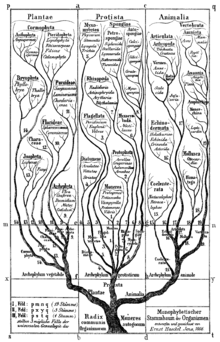
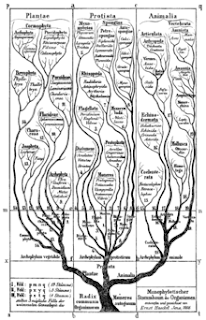
For example, here is what the introduction of a 2009 journal paper said about the evolutionary tree:
The genome sequence is an icon of early twenty-first century biology. Genomes of nearly 2000 cellular organisms, and from many thousands of organelles and viruses, are now in the public domain. … At the same time, one cannot but be struck by the diversity of genomes, both across the living world and, in many cases, within genera or species. … Perhaps most unexpected of all is the substantial decoupling, now known in most, although not all, branches of organismal life, between the phylogenetic histories of individual gene families and what has generally been accepted to be the history of genomes and/or their cellular or organismal host lineages. The tree of life paradigm consolidated by Darwin's Origin of Species (1859), but itself arising from a much older tradition of natural history, seems likely to emerge, if at all, from the multi-genome era much more restricted in scope, and subject to many more qualifications, than could have been anticipated a dozen years ago.
The decoupling discussed above refers to the many inconsistencies between the traditional evolutionary tree of life, as determined from the visible features of the species, and evolutionary trees determined from the newer genetic data. In fact, not only is there a decoupling between the visible and genetic data, there are substantial inconsistencies within each group.
In fact, it is impossible to construct a realistic evolutionary tree using all the data. Evolutionists routinely construct evolutionary trees using a select, more cooperative, subset of the data. And even then the resulting trees are unrealistic. That is, they require evolutionary change for which there is no known mechanism. This is true even according to evolutionists who are quite liberal in allowing for speculation.
The problem is the species may be similar in some aspects, but not others. So neighboring species on the evolutionary tree may have a great many similarities, but in many cases they have some big differences, which evolutionary theory cannot explain beyond vague speculation.
The paper concludes:
The rapid growth of genome-sequence data since the mid-1990s is now providing unprecedented detail on the genetic basis of life, and not surprisingly is catalysing the most fundamental re-evaluation of origins and evolution since Darwin’s day. Several papers in this theme issue argue that Darwin’s tree of life is now best seen as an approximation—one quite adequate as a description of some parts of the living world (e.g. morphologically complex eukaryotes), but less helpful elsewhere (e.g. viruses and many prokaryotes); indeed, one of our authors goes farther, proclaiming the “demise” of Darwin’s tree as a hypothesis on the diversity and seeming naturalness of hierarchical arrangements of groups of living organisms.
The authors of the paper are evolutionists, and so are sympathetic witnesses. They believe evolution is true, and yet even they must admit that the evolutionary tree has problems. Even they admit that the evolutionary tree may be passé, or at least will be subject to many qualifications, restricted in scope and at best an approximation.
Between the introduction and conclusion there are plenty of interesting details. For example the paper discusses a particular example species where the evolutionary tree “does not appear to be helpful, or even especially meaningful.” And the paper mentions alternate models such as a ring, network or other topology.
To be sure the authors still see much value to the traditional evolutionary tree model. But the paper highlights the fact that this traditional evolutionary tree model is, well, just that—a model. In fact the paper, which is a brief survey, does not discuss several problems with the tree model. For instance, the paper implies that the more complex eukaryotic species fit the evolutionary tree model well. That is not true. There are plenty of contradictions to go around, including in the eukaryotes.
And so if the evolutionary tree model is just a model, with warts and blemishes that are not uncommon with scientific models, then where does this leave the evolutionist’s high claims in the popular media, in detailed books about evolution and in textbooks, that evolution is a fact—overwhelmingly supported by the science?
There is a wide gap between the truth claims evolutionists make, and the science. Here we looked at the evolutionary tree, but the story is the same in the other evidences for evolution. Over and over, there are the high claims of evolutionists, and then there is the science.
Whenever a theory is presented in an inaccurate light, then science loses. Scientists lose the public trust, and students lose the opportunity to learn the real science.
Posted by Cornelius Hunter
http://darwins-god.blogspot.com/2012/05/this-paper-discusses-problems-with.html |