CA Unfunded Pensions Triple to $884 Bil
Anyone else smell a rat ?

AUG. 23, 2011
By CHRISS STREET
The three largest California public retiree plans — CalPERS, CalSTRS and UCRS, which administer the pensions of approximately 2.6 million California state and local public current and retired employees — have been under tremendous scrutiny since last year’s release of the report of the Stanford Institute for Public Policy Research, “ Going for Broke.” The report concluded that California retirement plans’ liability was under-funded by more than $500 billion.
The report blamed most of the shortfall on the pension plans’ expectation of future annual investment returns of 7.75 percent, versus a realistic expectation of a 4.14 percent annual return. The cabal of California politicians, bureaucrats and crony consultants that justified the granting of lucrative benefits to employees, while failing to contribute enough to support the true pension costs, solemnly dismissed the Stanford report as unsophisticated reflections by academics.
But now that a swarm of local governments wants to abandon the floundering retirement trusts, the state plans are willing to credit only a 3.8 percent expected return.
If the California state pension plans adopted the same 3.8 percent rate they are only willing to credit when participants want to leave, their published $288 billion in pension shortfall would metastasize into an $884 billion California state insolvency.
It doesn’t take a Stanford MBA to realize producing consistently high investment returns since 2007 has been difficult in the extreme. The California state pension plans that currently control $432 billion in assets suffered $109.7 billion in losses during the 2008-09 recession.
Paltry Employee ContributionsPension plans normally require employers and their employees to mutually increase contributions to make up pension shortfalls. But public pension plans are notorious for not requiring employees to make significant contributions. California police, prison guards, firemen and lifeguards can retire at age 50, but have never been required to contribute to fund pensions.
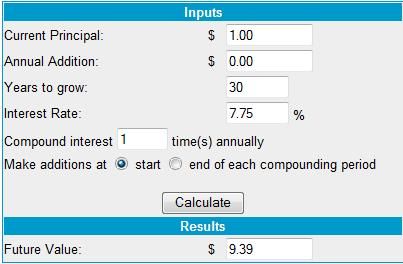
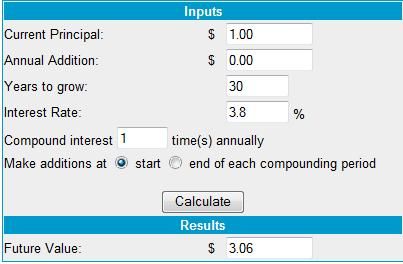
With headlines that California plans are in big trouble, many government agencies applied to withdraw from the state plans. But as calculated below, compounding investments at 7.75 percent grows to more than three times the amount of compounding investments at a 3.8 percent rate of return.
When I was elected as treasurer of Orange County, Calif. in 2006, I was flabbergasted to discover that the county’s $8 billion of retirement investments were covertly leveraged up by $22 billion of derivatives. I quickly learned that many unions see pension benefits as contracted rights; and pension investing as a no risk crap-shoot for extraordinary returns.
If the pension investment returns skyrocket, the unions will bargain for increased benefits. If the pension investment returns crash, the public employees are protected by a rock-solid contract law that prevents any reduction in benefits.
In 2007, I was fortunate to gain the support of enough Orange County Pension Trustees to reduce speculative derivative use by 90 percent. At the time, trustees for the California state public pension plans solemnly dismissed Orange County as unsophisticated. Shortly thereafter, the stock market crashed and the state pension trustees stopped making comments.
Tarnished Golden StateOnce famous as the Golden State for leading the nation in high-tech growth industries that provided excellent wages, California is now tarnished for having the second-highest unemployment and worst state credit rating in the nation. Forbes recently quoted a top venture capitalist who compared the California business climate to France: “I try not to hire here, and I certainly would not launch a company here. But the wine is good.”
For most taxpayers, the tripling of the burden of the under-funded pension liability to almost $1 trillion will probably ruin the taste of California wine.
(Feel free to forward or follow our research at ChrissStreetAndCompany.com.)
Chriss Street is the former treasurer of Orange County. |