SI
SI
discoversearch

We've detected that you're using an ad content blocking browser plug-in or feature. Ads provide a critical source of revenue to the continued operation of Silicon Investor.  We ask that you disable ad blocking while on Silicon Investor in the best interests of our community.  If you are not using an ad blocker but are still receiving this message, make sure your browser's tracking protection is set to the 'standard' level.
Politics : Evolution

 Public ReplyPrvt ReplyMark as Last ReadFilePrevious 10Next 10PreviousNext  
To: Brumar89 who wrote (58289)9/21/2014 6:19:55 PM
From: 2MAR$  Read Replies (2) of 69300
 
The chronology of will be very different a generation from now....As usual whatever spills out of your mouth must be so dum dum? Please show how & where the chronology is going to change in the next generation from Thutmose father at the start of the 18th Dynasty on.

You really need to get out more, I'll leave you with some real chronologies to study, documented up to the hilt & beyond by just so much archaeology.


Eighteenth Dynasty

The Eighteenth Dynasty ruled from c. 1550 to 1292 BC:

NameImageCommentsDates
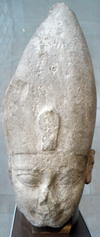
Nebpehtire Ahmose I, Ahmosis I Brother and successor to Kamose, conquered north of Egypt from the Hyksos.c. 1550–1525 BCE; Radiocarbon date range for the start of his reign is 1570–1544 BCE, the mean point of which is 1557 BCE [57]
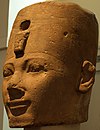
Djeserkare Amenhotep I -1541–1520
Aakheperkare Thutmose I -1520–1492
Aakheperenre Thutmose II -1492–1479
Maatkare Hatshepsut The second known female ruler, though quite possibly the seventh (the reigns of five other women are likely, but disputed). Recent evidence suggests she died of bone cancer. [58]1479–1458
Menkheperre Thutmose III Often called the " Napoleon of Egypt." Dominated early in his reign by his stepmother Hatshepsut; after she died, he began expanding Egyptian rule into the Levant.1479–1425
Aakheperrure Amenhotep II -1425–1400
Menkheperure Thutmose IV -1400–1390
Nebmaatre Amenhotep III The Magnificent King Ruled Egypt at the peak of her glory, surpassed all pharaohs in numbers of monuments built and statues erected. His mortuary temple was the largest ever built, only to be destroyed by Rameses II. Recent DNA testing proved he was the grandfather of Tutankhamun.1390–1352
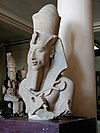
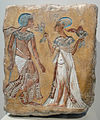
Neferkheperure-waenre Amenhotep IV/ Akhenaten Founder of brief period of a solar-centered religion ( Atenism). His original name means " Amun is pleased."1352–1334
Ankhkheperure Smenkhkare Co-regent and successor of Akhenaten. The identity of this individual is uncertain and disputed. Usually believed to be either a son or son-in-law of Akhenaten but sometimes identified as Akhenaten's wife Nefertiti. Other scholars distinguish two individuals between Akhenaten and Tutankhamun, namely Smenkhkare, who is then seen as male, and a female ruler, who is then most often identified as Akhenaten's eldest daughter Meritaten1334–1333
Nebkheperure Tutankhaten/ Tutankhamun Commonly believed to be the son of Akhenaten, probably reinstated the polytheistic religion and the name change reflects the change in primary deity from Aten to Amun. He is also known as the boy king.1333–1324
Kheperkheperure Ay Close advisor to two and perhaps three of the pharaohs who ruled before him and was said to be the power behind the throne during Tutankhamun's reign.1324–1320
Djeserkheperure-setpenre Horemheb Former General and advisor to Tutankhamun. Obliterated images of the Amarna queens and kings (all except Amenhotep III and Tiye).1320–1292
Nineteenth Dynasty[ edit]The Nineteenth Dynasty ruled from 1292 to 1186 BC and includes one of the greatest pharaohs: Rameses II the Great:

NameImageCommentsDates
Menpehtire Ramesses I [59] -1292–1290
Menmaatre Seti I -1290–1279
Usermaatre-setpenre Ramesses II the Great The ruler usually associated with Moses; he reached a stalemate with the Hittites at the Battle of Kadesh in 1275 BC, after which a peace treaty was signed in 1258 BC1279–1213
Banenre Merenptah [60] A stele describing campaigns in Libya and Canaan contains the only extant reference to " Israel" in Ancient Egyptian records.1213–1203
Menmire-setpenre Amenmesse -1203–1200
Userkheperure Seti II [61] -1203–1197
Sekhaenre/Akhenre Merenptah Siptah [62] -1197–1191
Satre-merenamun Tausret A rare female ruler also known as Tawosret in some places, she was probably the wife of Seti II. [63]1191–1190
Twentieth Dynasty[ edit]The Twentieth Dynasty ruled from 1190 to 1077 BC:

NameImageCommentsDates
Userkhaure Setnakht -1190–1186
Usermaatre-meryamun Ramesses III Fought the Sea Peoples in 1175 BC. Died assassinated in a harem plot.1186–1155
User/Heqamaatre-setpenamun Ramesses IV -1155–1149
Usermaatre-sekheperenre Ramesses V -1149–1145
Nebmaatre-meryamun Ramesses VI -1145–1137
Usermaatre-setpenre-meryamun Ramesses VII -1137–1130
Usermaatre-akhenamun Ramesses VIII -1130–1129
Neferkare-setpenre Ramesses IX -1129–1111
Khepermaatre-setpenptah Ramesses X [64] -1111–1107
Menmaatre-setpenptah Ramesses XI [65] Ended rule sharing power with High Priest of Amun Herihor ruling in the south and Smendes I ruling in the north, a period known as wehem mesut. [66]1107–1077
Third Intermediate Period[ edit]The Third Intermediate Period (1077–732 BC) marked the end of the New Kingdom after the collapse of the Egyptian empire. A number of dynasties of Libyan origin ruled, giving this period its alternative name of the Libyan Period.

Twenty-First Dynasty[ edit]The Twenty-First Dynasty was based at Tanis and was a relatively weak group. Theoretically, they were rulers of all Egypt, but in practice their influence was limited to Lower Egypt. They ruled from 1069 to 943 BC

NameImageCommentsDates
Hedjkheperre-setpenre Nesbanebdjed [67] Also known as Smendes I1077–1051
Neferkare Heqawaset Amenemnisu-1051–1047
Aakheperre Pasebakhenniut I (Psusennes I) Also known as the Silver Pharaoh1047–1001
Usermaatre Amenemope -1001–992
Aakheperre Setepenre Osorkon (Osorkon the Elder) - * (Osochor )992–986
Netjerikheperre-setpenamun Siamun-meryamun -986–967
Titkheperure Pasebakhenniut II (Psusennes II) -967–943
Twenty-Second Dynasty[ edit]The pharaohs of the Twenty-Second Dynasty were Libyans, ruling from around 943 to 728 BC:

NameImageCommentsDates
Hedjkheperre-setepenre Shoshenq I 943–922
Sekhemkheperre Osorkon I -922–887
Heqakheperre Shoshenq II -887–885
Takelot I -885–872
Hedjkheperre Harsiese A rebel, at Thebes880–860
Usermaatre-setepenamun Osorkon II -872–837
Usermaatre-setepenre Shoshenq III -837–798
Shoshenq IV-798–785
Usermaatre-setepenre Pami -785–778
Aakheperre Shoshenq V -778–740
Aakheperre-setepenamun Osorkon IV -740–720
Twenty-Third Dynasty[ edit]The Twenty-Third Dynasty was a local group, again of Libyan origin, based at Herakleopolis and Thebes that ruled from 837 to c. 735 BC:

NameImageCommentsDates
Hedjkheperre-setpenre Takelot II Previously thought to be a 22nd Dynasty pharaoh, he is now known to be the founder of the 23rd837–813
Usermaatre-setepenamun Pedubast A rebel—seized Thebes from Takelot II826–801
Usermaatre-setepenamun Iuput ICo-regent with Pedubast812–811
Usermaatre Shoshenq VISuccessor to Pedubast801–795
Usermaatre-setepenamun Osorkon III Son of Takelot II; recovered Thebes, then proclaimed himself king795–767
Usermaatre-setpenamun Takelot III Co-reign with his father Osorkon III for the first five years of his reign.773–765
Usermaatre-setpenamun Rudamun Younger son of Osorkon III and brother of Takelot III.765–762
Rudamun was succeeded in Thebes by a local ruler:
Report TOU ViolationShare This Post
 Public ReplyPrvt ReplyMark as Last ReadFilePrevious 10Next 10PreviousNext