It's saved far more lives than it's killed. Lots of other things are killers too:
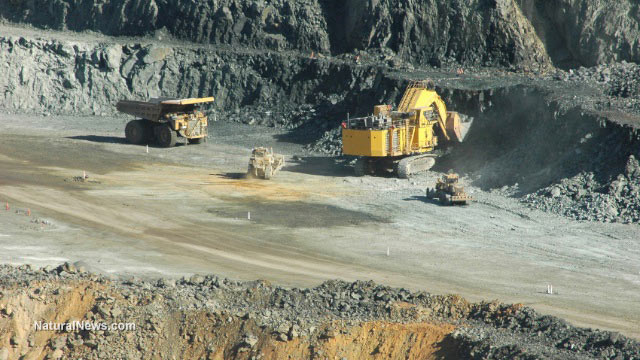
Go to where they mean the rare earths and metals are mined and processed and you can see this:


Rare Earth Mine in California


rare-earths-lake-china-008

Labourers work at a rare earth mine in China Photo: REUTERS

waste discharge caused by rare earths processing forms a rare earths ...
english.peopledaily.com.cn

rare-earths-pollution-China
Rare Earths and Other Chemicals Damaging the Environmental Value of Renewables By David Sims
August 22, 2013
Baotou, Mongolia, where rare earths are mined for a variety of high-tech applications, including renewable energy systems.
The old adage about how you don’t want to see how laws or sausage is made applies to so-called renewable energy. Specifically, you don’t want to know the environmental cost of all those rare earth minerals that the technology requires.
Solar energy requires components which are manufactured using lots of dirty traditional energy. The wind power industry produces a great deal of toxic waste and kills thousands of birds. Mining rare earth minerals, which are essential for so much green energy, especially wind turbines, is a dirty business. Is it worth the cost? That depends on whom you ask.
Solar Energy: Not So Clean After All.
Solar energy turns sunlight into electrical power. What’s not to like? Well, there is that whole process of manufacturing solar panels, which requires a great deal of energy. All that energy requires generation via means other than solar power -- usually coal.
“In the case of silicon-based solar panels, which are the most common type, the silicon material requires melting silica rock in roughly 3,000-degree F ovens,” notes The Data Center Journal. “That energy, however, typically comes from coal plants, meaning that although solar panels may produce no emissions when in operation, they indirectly produce a fair amount during manufacturing.”
And what to do with the solar panels when their productive life is over in about 25 years or so? And what about all the waste chemicals generated by the solar panel manufacturing process? The Union of Concerned Scientists write that the photovoltaic (PV) cell manufacturing process “includes a number of hazardous materials,” similar to “those used in the general semiconductor industry,” such as “hydrochloric acid, sulfuric acid, nitric acid, hydrogen fluoride, 1,1,1-trichloroethane, and acetone.” If we’re talking about thin-film PV cells, it’s worse, as UCS explains, since those have “more toxic materials than those used in traditional silicon photovoltaic cells, including gallium arsenide, copper-indium-gallium-diselenide, and cadmium-telluride.”
Wind Energy: About Those Rare Earths... Wind energy seems so clean -- gentle breezes quietly spinning sleek blades, generating energy. What could be dirty about that? According to The Data Center Journal, for one, the answer is, “Plenty.”
See, to get those wonderful turbines, one needs a rather large quantity of rare earth minerals (which, despite their name, are not so rare). Mining and processing these rare earths generates a tremendous amount of “hazardous and radioactive byproducts,” the DCJ reports, which “can cause tremendous harm to both people and the environment.”
In fact, the environmental effects of rare earth mining can be literally sickening. In the Mongolian town of Baotou, the epicenter of Chinese rare earths production, the mining has literally killed off the local farming, The Guardian reports: “The soil and groundwater are saturated with toxic substances. Five years ago (local farmer) Li had to get rid of his sick pigs, the last survivors of a collection of cows, horses, chickens, and goats, killed off by the toxins.”
The environmental damage that rare earth production requires might be one of the major reasons the U.S. is happy to let China do most of it, and buy the finished product from them. The irony is rather hard to miss -- proponents of wind power demand stringent environmental standards on our domestic coal and nuclear industry, but seem strangely unconcerned at the appalling environmental conditions necessary to supply their rare earths habit.
Chinese rare earths mining.
In fact, it’s rare earths which account for a great deal of the overall carbon footprint of green energy, energy storage, and other clean technologies.
The 17 so-called rare earth minerals, e.g., the lanthanides, scandium, and yttrium, as well as associated metals molybdenum and tungsten, are needed in the production of items such as cell phones, other popular consumer electronics, batteries, the electronics governing defense systems, and missiles.
Production and consumption of rare earth minerals totaled over 100,000 metric tons in 2012, according to a report from IHS Chemical in Houston. IHS’s study estimates that from 2012 to 2017, global demand for rare earth products will grow by 7.6 percent annually and reach more than 150,000 metric tons, with China leading consumption growth at 8.3 percent annually.
...............Rare Earths Not So Eco-Friendly, Either.
According to the online journal Ecocred, “[A]n electric car might use nearly 10 times the amount of rare earth metals as opposed to a conventional car, which uses a little more than one pound of rare earth materials.”
Research conducted at MIT noted, “A single large wind turbine (rated at about 3.5 WM) typically contains 600 kg, or about 1,300 lbs, of rare earth metals.”
The grim trade-off between obtaining power from wind and the methods required to make that happen leave those within the industry uncomfortable. “Executives in the $1.3 billion rare-earths mining industry say that less environmentally damaging mining is needed, given the importance of their product for green energy technologies,” The New York Times wrote back in 2009, adding that Nicholas Curtis, the executive chairman of the Lynas Corporation of Australia, in a speech to an industry gathering in Hong Kong said, “This industry wants to save the world. We can’t do it and leave a product that is glowing in the dark somewhere else, killing people.”
http://news.thomasnet.com/IMT/2013/08/22/rare-earths-and-other-chemicals-damaging-the-environmental-value-of-renewables
http://instituteforenergyresearch.org/analysis/big-winds-dirty-little-secret-rare-earth-minerals/

Nickel mine: http://resourceglobalnetwork.com/index.php/articles/340-glencore-sells-sinclair-nickel-project
Currently, a large percentage of global cadmium metal production takes place in Asia. Cadmium is generally recovered as a byproduct from zinc concentrates. Zinc-to-cadmium ratios in typical zinc ores range from 200:1 to 400:1. Sphalerite (ZnS), the most economically significant zinc mineral, commonly contains minor amounts of other elements; cadmium, which shares certain similar chemical properties with zinc, will often substitute for zinc in the sphalerite crystal lattice. The cadmium mineral, greenockite (CdS), is frequently associated with weathered sphalerites and wurtzites [(Zn, Fe)S], but usually at microscopic levels. A significant amount of cadmium is also recovered from spent nickel cadmium batteries.
Cadmium is primarily consumed for the production of rechargeable nickel cadmium batteries; other end uses include pigments, coatings and plating, and as stabilizers for plastics. Solar cell manufacturing may become another significant market for cadmium in the future. Cadmium telluride thin-film photovoltaics are an alternative to the traditional silicon-based solar cells and are a preferred photovoltaic technology for commercial rooftop applications and for large-scale, ground-mounted utility systems.
---------------------------------

Found on 2.bp.blogspot.com
Jacqueline Bran • 2 years ago
This former copper mine operated between 1955 and 1982. Gold and silver were also mined. An elaborate system of pumps and drains kept the local water level low enough for mining. Today, the 1,780 foot-deep pit is filled with around 900 feet of very contaminated water filled with metals and chemicals such as arsenic, cadmium, pyrite, zinc, copper and sulfuric acid. The water can be as acidic as battery acid, and copper can actually be “mined” directly from the water.
http://www.pinterest.com/pin/216665432044311566/

A USGS scientist collects a water sample from a spring at the base of a waste rock pile at an abandoned mine site in the St. Kevin Gulch Watershed, Colo. Springs from mine wastes can have high concentrations of cadmium (Cd), copper (Cu), iron (Fe), manganese (Mn), and zinc (Zn).
Cadmium is a disease-related avoidable pollutant with manmade causes
Learn more: http://www.naturalnews.com/046037_cadmium_heavy_metal_industrial_pollutant.html#ixzz3JREE4yJY
Solar industry grapples with hazardous wastes

By JASON DEAREN February 10, 2013 6:15 PM

. View gallery
Chart shows the amount of waste generated from solar companies in California that was shipped to other …
SAN FRANCISCO (AP) — Homeowners on the hunt for sparkling solar panels are lured by ads filled with images of pristine landscapes and bright sunshine, and words about the technology's benefits for the environment — and the wallet.
What customers may not know is that there's a dirtier side.
While solar is a far less polluting energy source than coal or natural gas, many panel makers are nevertheless grappling with a hazardous waste problem. Fueled partly by billions in government incentives, the industry is creating millions of solar panels each year and, in the process, millions of pounds of polluted sludge and contaminated water.
To dispose of the material, the companies must transport it by truck or rail far from their own plants to waste facilities hundreds and, in some cases, thousands of miles away.
The fossil fuels used to transport that waste, experts say, is not typically considered in calculating solar's carbon footprint, giving scientists and consumers who use the measurement to gauge a product's impact on global warming the impression that solar is cleaner than it is.
After installing a solar panel, "it would take one to three months of generating electricity to pay off the energy invested in driving those hazardous waste emissions out of state," said Dustin Mulvaney, a San Jose State University environmental studies professor who conducts carbon footprint analyses of solar, biofuel and natural gas production.
The waste from manufacturing has raised concerns within the industry, which fears that the problem, if left unchecked, could undermine solar's green image at a time when companies are facing stiff competition from each other and from low-cost panel manufacturers from China and elsewhere.
"We want to take the lessons learned from electronics and semiconductor industries (about pollution) and get ahead of some of these problems," said John Smirnow, vice president for trade and competitiveness at the nearly 500-member Solar Energy Industries Association.
The increase in solar hazardous waste is directly related to the industry's fast growth over the past five years — even with solar business moving to China rapidly, the U.S. was a net exporter of solar products by $2 billion in 2010, the last year of data available. The nation was even a net exporter to China.
New companies often send hazardous waste out of their plants because they have not yet invested in on-site treatment equipment, which allows them to recycle some waste.
Nowhere is the waste issue more evident than in California, where landmark regulations approved in the 1970s require industrial plants like solar panel makers to report the amount of hazardous materials they produce, and where they send it. California leads the consumer solar market in the U.S. — which doubled overall both in 2010 and 2011.
The Associated Press compiled a list of 41 solar makers in the state, which included the top companies based on market data, and startups. In response to an AP records request, the California Department of Toxic Substances Control provided data that showed 17 of them reported waste, while the remaining did not.
The same level of federal data does not exist.

FILE - In this Oct. 6, 2010 file photo, workers monitor a control bank at Solyndra's solar panel fac …
The state records show the 17 companies, which had 44 manufacturing facilities in California, produced 46.5 million pounds of sludge and contaminated water from 2007 through the first half of 2011. Roughly 97 percent of it was taken to hazardous waste facilities throughout the state, but more than 1.4 million pounds were transported to nine other states: Arkansas, Minnesota, Nebraska, Rhode Island, Nevada, Washington, Utah, New Mexico and Arizona.
Several solar energy experts said they have not calculated the industry's total waste and were surprised at what the records showed.
Solyndra, the now-defunct solar company that received $535 million in guaranteed federal loans, reported producing about 12.5 million pounds of hazardous waste, much of it carcinogenic cadmium-contaminated water, which was sent to waste facilities from 2007 through mid-2011.
Before the company went bankrupt, leading to increased scrutiny of the solar industry and political fallout for President Barack Obama's administration, Solyndra said it created 100 megawatts-worth of solar panels, enough to power 100,000 homes.
The records also show several other Silicon Valley solar facilities created millions of pounds of toxic waste without selling a single solar panel, while they were developing their technology or fine-tuning their production.
While much of the waste produced is considered toxic, there was no evidence it has harmed human health.
The vast majority of solar companies that generated hazardous waste in California have not been cited for waste-related pollution violations, although three had minor violations on file.
In many cases, a toxic sludge is created when metals and other toxins are removed from water used in the manufacturing process. If a company doesn't have its own treatment equipment, then it will send contaminated water to be stored at an approved dump.
According to scientists who conduct so-called "life cycle analysis" for solar, the transport of waste is not currently being factored into the carbon footprint score, which measures the amount of greenhouse gases produced when making a product.
Life cycle analysts add up all the global warming pollution that goes into making a certain product — from the mining needed for components to the exhaust from diesel trucks used to transport waste and materials. Not factoring the hazardous waste transport into solar's carbon footprint is an obvious oversight, analysts said.
"The greenhouse gas emissions associated with transporting this waste is not insignificant," Mulvaney said.
Mulvaney noted that shipping, for example, 6.2 million pounds of waste by heavy-duty tractor-trailer from Fremont, Calif., in the San Francisco Bay area, to a site 1,800 miles away could add 5 percent to a particular product's carbon footprint.
Such scores are important because they provide transparency to government and consumers into just how environmentally sustainable specific products are and lay out a choice between one company's technology and another's.
The roughly 20-year life of a solar panel still makes it some of the cleanest energy technology currently available. Producing solar is still significantly cleaner than fossil fuels. Energy derived from natural gas and coal-fired power plants, for example, creates more than 10 times more hazardous waste than the same energy created by a solar panel, according to Mulvaney.
The U.S. solar industry said it is reporting its waste, and sending it to approved storage facilities — thus keeping it out of the nation's air and water. A coal-fired power plant, in contrast, sends mercury, cadmium and other toxins directly into the air, which pollutes water and land around the facility.
"Having this stuff go to ... hazardous waste sites, that's what you want to have happen," said Adam Browning, executive director of the Vote Solar Initiative, a solar advocacy group.
Environmental advocates say the solar industry needs greater transparency, which is getting more complicated as manufacturing moves from the U.S. and Europe to less regulated places such as China and Malaysia.
The Silicon Valley Toxics Coalition, a watchdog group created in 1982 in response to severe environmental problems associated with the valley's electronics industry, is now trying to keep the solar industry from making similar mistakes through a voluntary waste reporting "scorecard." So far, only 14 of 114 companies contacted have replied. Those 14 were larger firms that comprised 51-percent of the solar market share.
"We find the overall industry response rate to our request for environmental information to be pretty dismal for an industry that is considered 'green,'" the group's executive director, Sheila Davis, said in an email.
While there are no specific industry standards, Smirnow, head of the solar industry association, is spearheading a voluntary program of environmental responsibility. So far, only seven of the group's nearly 81 manufacturers have signed the pledge.
"We want (our program) to be more demanding, but this is a young industry and right now manufacturing companies are focused on survival," he said.
http://news.yahoo.com/solar-industry-grapples-hazardous-wastes-184714679.html |




