if you don't count this year, it's been 6 months.
TemperaturesIn the atmosphere, 500-millibar height pressure anomalies correlate well with temperatures at the Earth's surface. The average position of the upper-level ridges of high pressure and troughs of low pressure—depicted by positive and negative 500-millibar height anomalies on the June 2015 and April–June 2015 maps—is generally reflected by areas of positive and negative temperature anomalies at the surface, respectively.
June
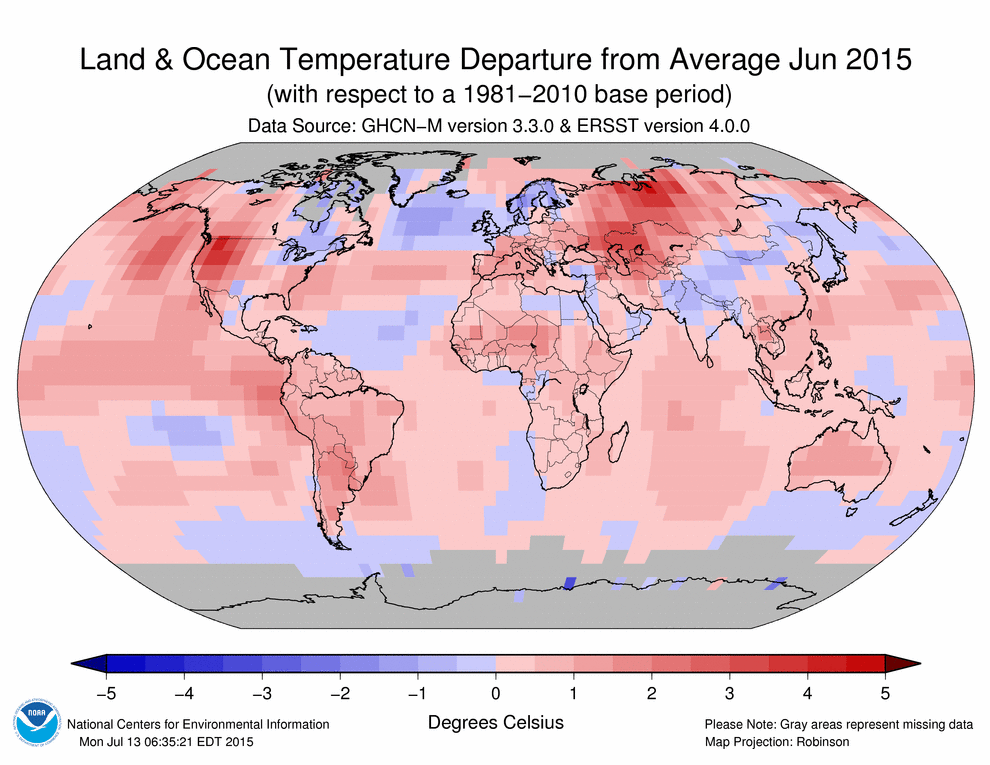
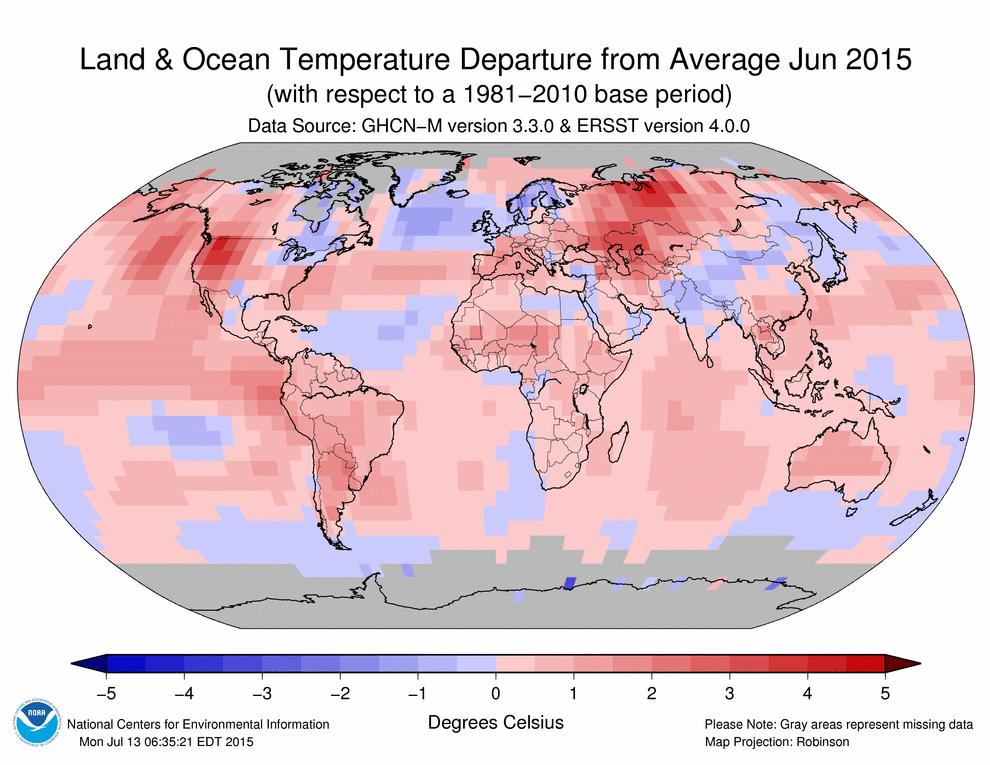
June 2015 Blended Land and Sea Surface
Temperature Anomalies in degrees Celsius
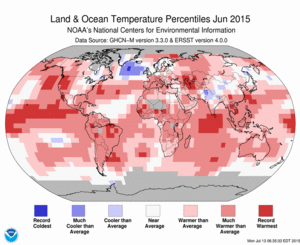
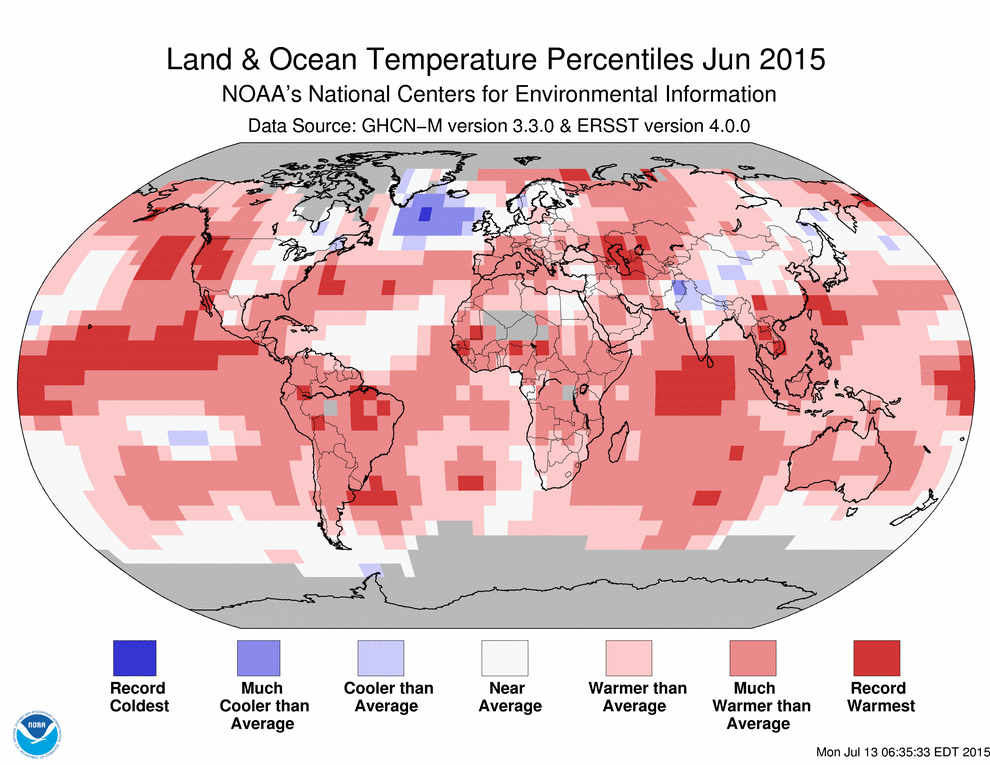
June 2015 Blended Land and Sea Surface
Temperature Percentiles
The combined average temperature over global land and ocean surfaces for June 2015 was the highest for June in the 136-year period of record, at 0.88°C (1.58°F) above the 20th century average of 15.5°C (59.9°F), surpassing the previous record set just one year ago by 0.12°C (0.22°F). This was also the fourth highest monthly departure from average for any month on record. The two highest monthly departures from average occurred earlier this year in February and March, both at 0.90°C (1.62°F) above the 20th century average for their respective months, while January 2007 had the third highest, at 0.89°C (1.60°F) above its monthly average.
June 2015 also marks the fourth month this year that has broken its monthly temperature record, along with February, March, and May. The other months of 2015 were not far behind: January was second warmest for its respective month and April was third warmest. These six warm months combined with the previous six months (four of which were also record warm) to make the period July 2014–June 2015 the warmest 12-month period in the 136-year period of record, surpassing the previous record set just last month (June 2014–May 2015). As shown in the table below, the 10 warmest 12-month periods have all been marked in the past 10 months.
RANK
1 = WARMEST
PERIOD OF RECORD:
1880–201512-MONTH PERIODANOMALY °CANOMALY °F | 1 | July 2014–June 2015 | 0.83 | 1.49 | | 2 | June 2014–May 2015 | 0.82 | 1.48 | | 3 | May 2014–April 2015 | 0.81 | 1.46 | | 4 | April 2014–March 2015 | 0.80 | 1.44 | | 5 | March 2014–February 2015 | 0.79 | 1.42 | | 6 (tie) | January–December 2014 | 0.78 | 1.40 | | 6 (tie) | February 2014–January 2015 | 0.78 | 1.40 | | 8 | December 2013–November 2014 | 0.77 | 1.39 | | 9 | November 2013–October 2014 | 0.74 | 1.33 | | 10 (tie*) | October 2013–September 2014 | 0.73 | 1.31 |
*ties with four other 12-month periods.
The average global temperature across land surfaces was 1.26°C (2.27°F) above the 20th century average of 13.3°C (55.9°F), the highest June temperature over land on record, surpassing the previous record set in 2012 by 0.06°C (0.11°F). Large regions of Earth's land surfaces were much warmer than average, according to the Land & Ocean Temperature Percentiles map above, with record warmth across the western United States, parts of northern South America, several regions in central to western Africa, central Asia around and to the east of the Caspian Sea, and parts of southeastern Asia. Western Greenland and some areas in India and China were cooler than average, and northern Pakistan was much cooler than average..
Select national information is highlighted below. (Please note that different countries report anomalies with respect to different base periods. The information provided here is based directly upon these data):
The first month of winter in Australia was the fifth warmest June in the country's 106-year period of record, with a temperature that was 1.35°C (2.43°F) higher than the 1961–1990 average. Much of the warmth was driven by daily maximum temperatures, which were the sixth highest on record when averaged across the country. Western Australia experienced its highest maximum June temperature on record, at 2.23°C (4.01°F), smashing the previous record of 1962 by 0.48°C (0.86°F). Many locations in Western Australia had their warmest June overall, according to the Bureau of Meteorology.Scandinavia represented one of the few cold spots around the world in June. Norwayreported its 18th coolest June since records began in 1900, at 1.7°C (3.1°F) below the 1961–1990 average. According to the Finnish Meteorological Institute, most of Finland experienced temperatures 1–2°C (2–4°F) below the 1981–2010 average. Spain experienced a June temperature that was 1.4°C (2.5°F) above the 1981–2010 national average. This marks the sixth warmest June for the country since records began in 1961. The six highest June temperatures have all occurred since 2003.It was also warm in Austria during June, at 1.4°C (2.5°F) higher than the 1981–2010 average. This marked the 10th warmest June for the country in the 249-year period of record.Overall, temperatures were near-average across New Zealand during June at 0.4°C (0.7°F) above the 1981–2010 average. However, a polar outbreak at the end of the month affected the entire country, but was particularly notable in Canterbury and Otago. Parts of inland Canterbury had the coldest temperatues recorded anywhere in New Zealand in the past two decades. The lowest temperature of -21.0°C (-5.8°F) recorded at Tara Hills in the Mackenzie Country on June 24th was the fourth lowest temperature ever recorded in New Zealand.For the oceans, the June global sea surface temperature was 0.74°C (1.33°F) above the 20th century average of 16.4°C (61.5°F), the highest for June on record, surpassing the previous record set last year by 0.06°C (0.11°F). This also tied with September 2014 as the highest monthly departure from average for any month for the globally-averaged sea surface temperature. Nine of the ten highest monthly departures from average have occurred since May 2014.
http://www.ncdc.noaa.gov/sotc/global/201506 |