SI
SI
discoversearch

We've detected that you're using an ad content blocking browser plug-in or feature. Ads provide a critical source of revenue to the continued operation of Silicon Investor.  We ask that you disable ad blocking while on Silicon Investor in the best interests of our community.  If you are not using an ad blocker but are still receiving this message, make sure your browser's tracking protection is set to the 'standard' level.
Strategies & Market Trends : 2026 TeoTwawKi ... 2032 Darkest Interregnum
GLD 408.23+2.3%Dec 22 4:00 PM EST

 Public ReplyPrvt ReplyMark as Last ReadFilePrevious 10Next 10PreviousNext  
To: clochard who wrote (115389)1/8/2016 8:45:55 AM
From: Elroy Jetson  Read Replies (1) of 218682
 
You're asking how much longer the United States can survive the heavily subsidized income tax rates implemented by Ronald Reagan? As opposed to more progressive rates in other industrialized nations, where the top 1% of earners pay far more.

Without terminating Social Security checks and Medicare benefits, not much longer. Because income tax rates were subsidized with the surplus revenue generated by payroll taxes for Social Security and Medicare.

The problem Republicans have selling this proposal is they need to continue collecting the Social Security and Medicare payroll taxes even after terminating all benefits for elderly Americans in order to maintain subsidized income tax rates - let alone further reduce income tax rates for those earning more than $450k annually as Donald Trump has suggested.

This foolishness has gone on for 35 years and does need to end. Working Americans pay 15% payroll taxes in order to subsidize income tax rates for the wealthiest Americans, and in addition pay income tax of 10%, 15%, 20%, 25% or more. Meanwhile guys like Mitt Romney pays a mere 13% for both payroll and income tax combined, less than many Americans working for poverty wages.

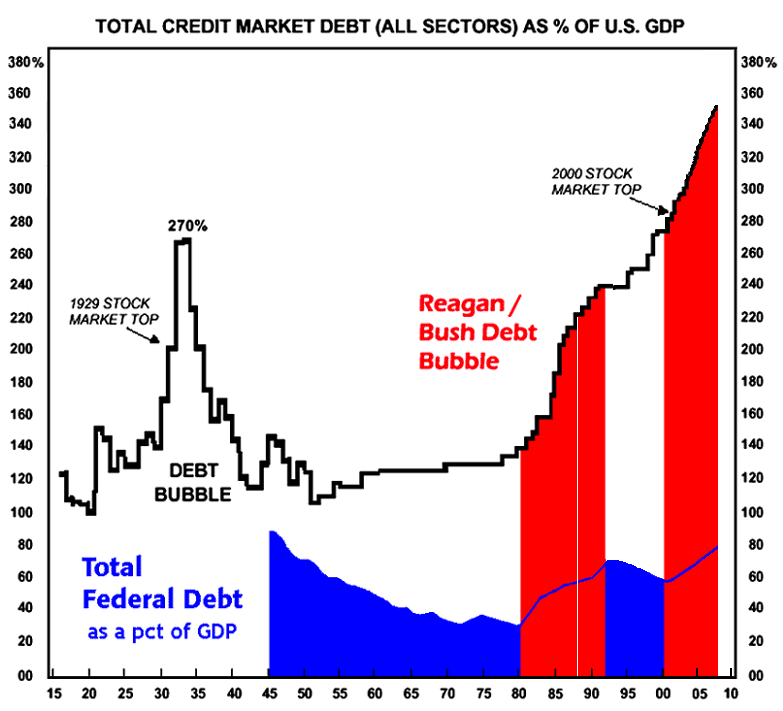
The United States had quickly paid down the debt incurred during the Great Depression and WW-II (see the blue line below) until 1980 when Ronald Reagan subsidized income tax rates for top earners. Reagan's government continued to rapidly increase spending while sharply reducing revenue raised which slowed economic growth and led to a sharp rise in government debt.

The total non-government debt is the result of wealth being transferred from working Americans to the wealthiest 1%. While Working Americans may still appear to own their own homes, they have very little equity. The majority of their home is owned by the top 1% in the form or mortgages.

Report TOU ViolationShare This Post
 Public ReplyPrvt ReplyMark as Last ReadFilePrevious 10Next 10PreviousNext