Those critical of Donald Trump say he is a liar.
Name me one politician who tells us the truth.
We have been lied to our entire lives by politicians.
So this is no big deal to me.
Trump upsets the professional political class which is the most positive
development in my lifetime of listening to elected political scum bags of both parties.
Better the scum bag that overturns these smug arseholes including the MSM then
reelecting the same old bag of shit.
How did we get to such a farked up country that FREE Speech has been abrogated
to the dust bin of history?
Do you need a safe zone?
Do you need trigger warnings because you may HEAR something that offends you?
Grow up!
How Trigger Warnings Silence Religious StudentsPractices meant to protect marginalized communities can also ostracize those who disagree with them.
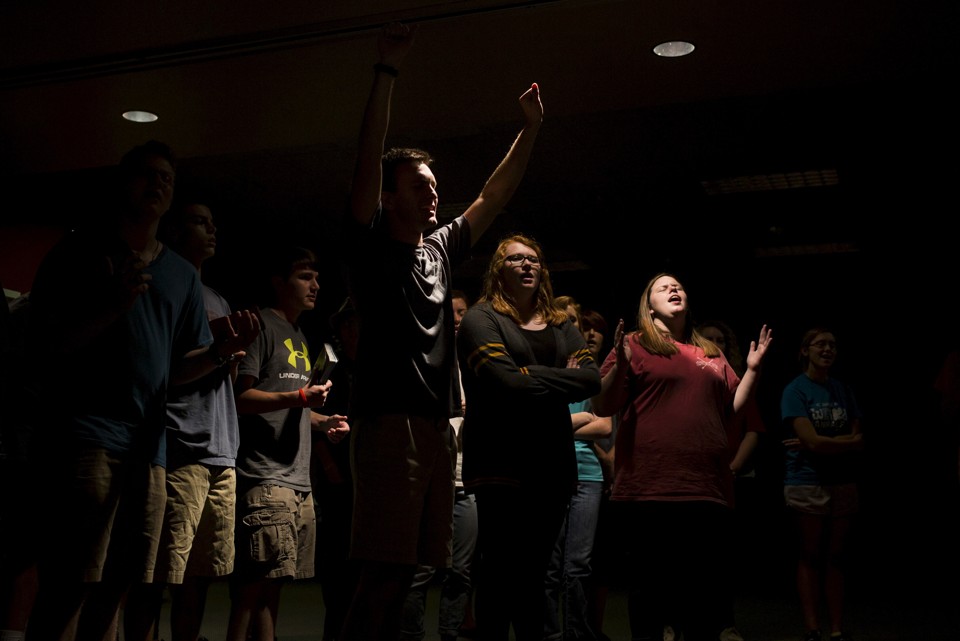
Students attend a Baptist Campus Ministry service at Western Kentucky University in Bowling Green.Brittany Greeson / Reuters
  
TEXT SIZE
ALAN LEVINOVITZ AUG 30, 2016 POLITICS
Subscribe to The Atlantic’s Politics & Policy Daily, a roundup of ideas and events in American politics.
Last week, the University of Chicago’s dean of students sent a welcome letter to freshmen decrying trigger warnings and safe spaces—ways for students to be warned about and opt out of exposure to potentially challenging material. While some supported the school’s actions, arguing that these practices threaten free speech and the purpose of higher education, the note also led to widespread outrage, and understandably so. Considered in isolation, trigger warnings may seem straightforwardly good. Basic human decency means professors like myself should be aware of students’ traumatic experiences, and give them a heads up about course content—photographs of dead bodies, extended accounts of abuse, disordered eating, self-harm—that might trigger an anxiety attack and foreclose intellectual engagement. Similarly, it may seem silly to object to the creation of safe spaces on campus, where members of marginalized groups can count on meeting supportive conversation partners who empathize with their life experiences, and where they feel free to be themselves without the threat of judgment or censure.
LATEST FROM POLITICS
The Runaway 9/11 Bill That Congress Couldn't Stop
In response to the letter, some have argued that the dean willfully ignored or misunderstood these intended purposes to play up a caricature of today’s college students as coddled and entitled. Safe spaces and trigger warnings pose no real threat to free speech, these critics say—that idea is just a specter conjured up by crotchety elites who fear empowered students.
Perhaps. But as a professor of religious studies, I know firsthand how debates about trigger warnings and safe spaces can have a chilling effect on classroom discussions. It’s not my free speech I’m worried about; professors generally feel confident presenting difficult or controversial material, although some may fear for their jobs after seeing other faculty members subjected to intense and public criticism. Students, on the other hand, do not have that assurance. Their ability to speak freely in the classroom is currently endangered—but not in the way some of their peers might think. Although trigger warnings and safe spaces claim to create an environment where everyone is free to speak their minds, the spirit of tolerance and respect that inspires these policies can also stifle dialogue about controversial topics, particularly race, gender, and, in my experience, religious beliefs. |



