SI
SI
discoversearch

We've detected that you're using an ad content blocking browser plug-in or feature. Ads provide a critical source of revenue to the continued operation of Silicon Investor.  We ask that you disable ad blocking while on Silicon Investor in the best interests of our community.  If you are not using an ad blocker but are still receiving this message, make sure your browser's tracking protection is set to the 'standard' level.
Politics : Formerly About Advanced Micro Devices

 Public ReplyPrvt ReplyMark as Last ReadFilePrevious 10Next 10PreviousNext  
To: Brumar89 who wrote (1006846)3/19/2017 8:47:00 PM
From: Wharf Rat  Read Replies (1) of 1574435
 
the mean July temperatures along the northern coastline of Russia may have been 2.5° to 7.0°C warmer than modern

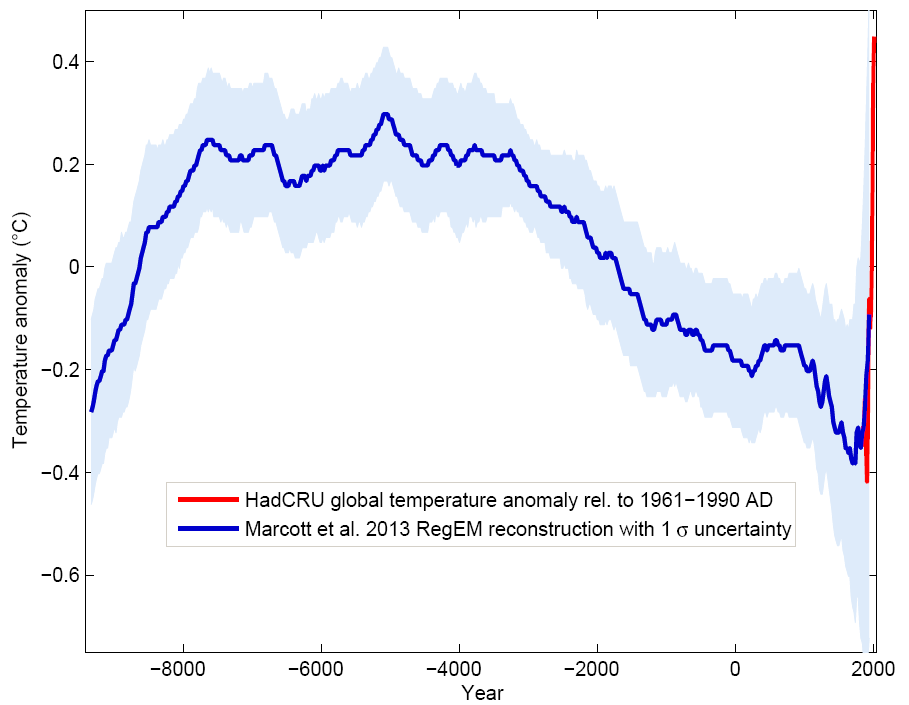
So the average global temp = the July mean on Russia's north coast? LMAO.

By the way, this graph was from 2013. Temperatures in the last 3 years have taken the red line off the graph; maybe an inch above the top line. Since this is HADCRU, the anomaly was 0.774 degrees.


"Methane bubble scare debunked by experiment:"

Gas Blowouts on the Yamal and Gydan Peninsulas
Professor Vasily Bogoyavlensky, Member of Russian Academy of Sciences

geoexpro.com


Figure 2: Gas blowout crater C1 on the Yamal Peninsula - (A) on 8 July 2015, photographed from a helicopter, (Source: Vasily Bogoyavlensky)


Figure 3: A typical pingo to the south of Bovanenkovo field, July 2015. (Source: Vasily Bogoyavlensky)
=
Methane Erupting From Arctic Ocean Seafloor

Methane levels as high as 2846 ppb
[ click on images to enlarge ]

On March 14, 2017, methane levels were as high as 2846 ppb, as illustrated by the image on the right. While the origin of these high levels looks hard to determine from this image, the high levels showing up over the East Siberian Arctic Shelf (ESAS) later that day (image underneath) give an ominous warning that destabilization of methane hydrates is taking place.

The images also show that high methane levels are showing up at many other places, e.g. over Antarctica where hydrate destabilization also appears to be taking place, which could also be the cause of noctilucent clouds as discussed in earlier posts (see links at end of this post).

arctic-news.blogspot.com

Why did the methane not get released during the Holcene period to cause unprecedented warming?

It wasn't warm enuf.
Report TOU ViolationShare This Post
 Public ReplyPrvt ReplyMark as Last ReadFilePrevious 10Next 10PreviousNext