The WMO’s Dubious Omissions…Arctic Of The 1930s And 1940s Just As Warm As Today!
By P Gosselin on 4. April 2017
Learning from the climate’s history: the Arctic heat waves of the 1930s and 40s By Dr. Sebastian Lüning and Prof. Fritz Vahrenholt
[German text translated/edited by P Gosselin]
Climate alarm at the World Meteorological Organisation (WMO) was reported on 21 March 2017 at the German online derwesten.de:
Heat waves in the Arctic – climate scientists sound the alarm
[…] During the winter in the Arctic temperatures reached near the melting point. It wasn’t the only weather extreme that climate scientists reported on. Such a heat wave occurred in the Arctic at least three times at the start of 2017, so reported the World Weather Organisation (WMO) in Geneva. Mighty Atlantic currents had delivered warm, moist air to the Arctic. At the peak of winter in the period when it should be freezing, temperatures reached near freezing on some days. The polar jet stream – a wind current that circles the planet at high altitudes – thus impacts the global weather.”
Do we really find ourselves on the verge of disaster? Is it getting hotter and hotter in the Arctic?
Let’s look at the HadCRUT4 temperatures in Arctic (Fig. 1). One clearly sees the warming phase of 1990-2005. Before and after that there were a bit wavy temperature plateaus. There hasn’t been any significant warming in the Arctic in 10 years.
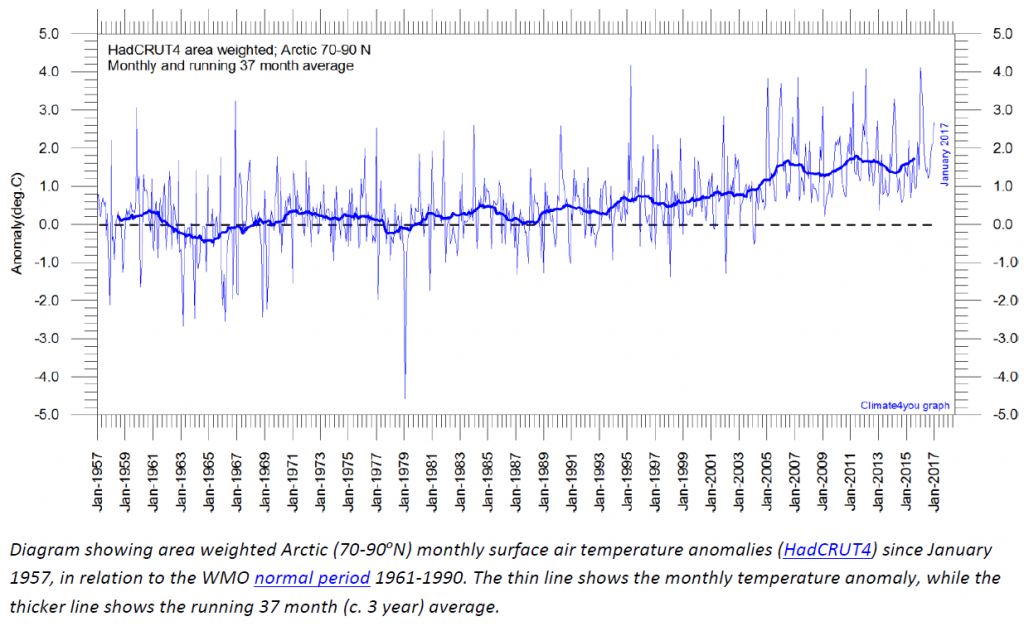
Fig. 1: Arctic temperature since 1957. Data: HadCRUT4, Chart: Climate4You.
Now let’s extend the time scale and look back 100 years. What a surprise: In the 1930s and 1940s there were two heat decades in the Arctic which were almost as warm as today (Fig. 2). This is just a small fact that went missing in the WMO press release and in the derwesten.de article.
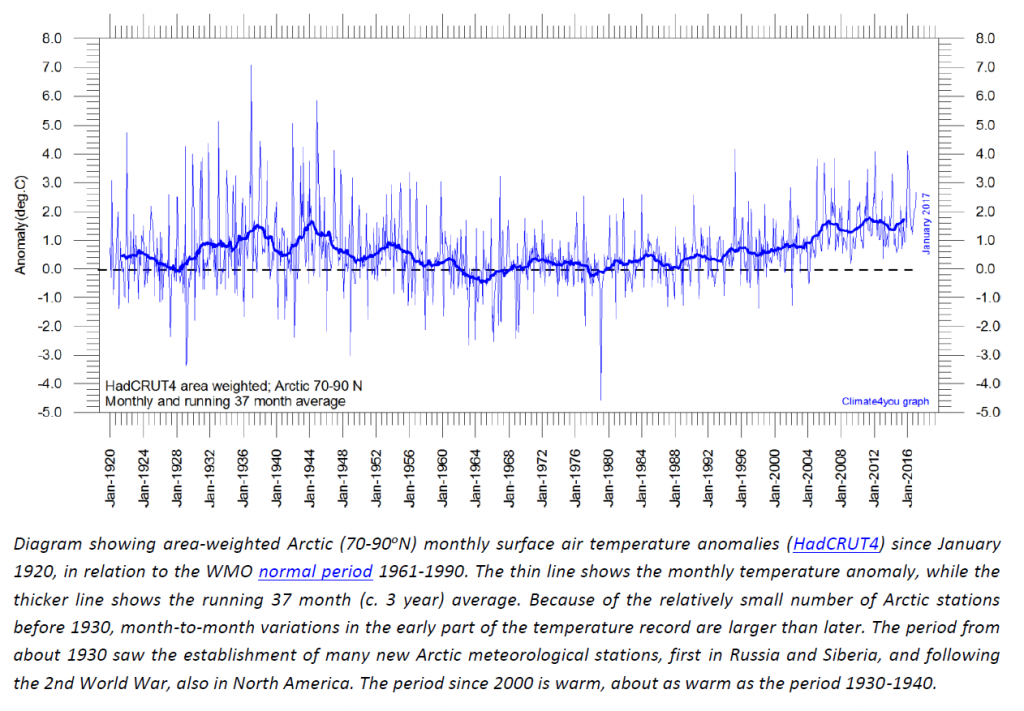
Fig. 2: Arctic temperature since 1920. Data: HadCRUT4, Chart: Climate4You.
The earlier Arctic heat years are impressive when we look at the temperature plot of the island city of Akureyri (Fig. 3):
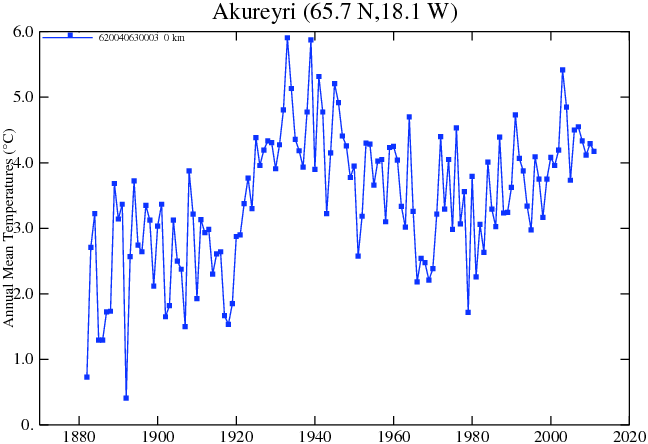
Fig. 3: Temperature plot of the Arctic location of Akureyri since 1880. Source: NASA/GISS.
Now what could have caused it to warm up in the 1930s and 1940s? Here it is enough to look back at the 60-year Atlantic Multidecadal Oscillation (AMO). This is easily done at the NOAA website (Fig. 4).
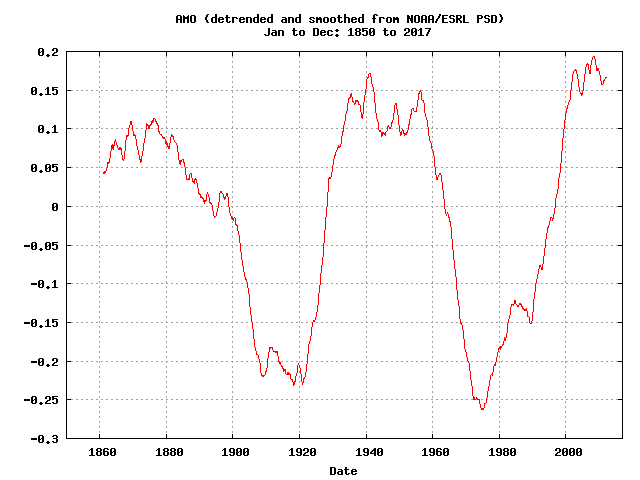
Figure 4: AMO
The curves at Wikipedia or elsewhere are perhaps more colorful, but they often don’t include the last years. The main drive behind the Arctic warming of the 1990s and 2000s was the simultaneously strong rise in the AMO.
The heat waves reported by the WMO happen to fit very well with the current high plateau of the AMO (Fig. 4). You don’t need to be a fortune teller to realistically estimate what remains ahead: the AMO plateau could continue for a few more years. A continued massive warming is not expected because the AMO peak has already been reached.
Eventually sometime in the coming years the drop in the AMO will begin. And correspondingly so will the Arctic temperatures . A look back at the climate history really pays off.
Winston Churchill long knew:
The further one looks back in the past, the further one sees into the future.Some day the ladies and gentlemen at the news media will realize this. The art of fact-checking seems to have been left on the wayside since the invention of the copy-and-paste function.
- See more at: notrickszone.com
|



