And here's why OPEC would want to meet shale producers:
Permian Basin Operators, Not OPEC, will Determine Normal Oil Prices from Here Out
in 360 Articles / Closing Bell Story / Crude Oil News by— Oil & Gas 360
July 11, 2017
When it published the results of its Q2 survey of energy executives, the Federal Reserve Bank of Dallas included a comment from one oil and gas exec that defines the overall effect of the shale boom on global oil prices:
“The exploration and production industry needs to get used to the paradigm that oil prices will be set for the next several years by the breakeven prices needed to drill Permian basin shale wells because there is a lot of tiger in this tank!”
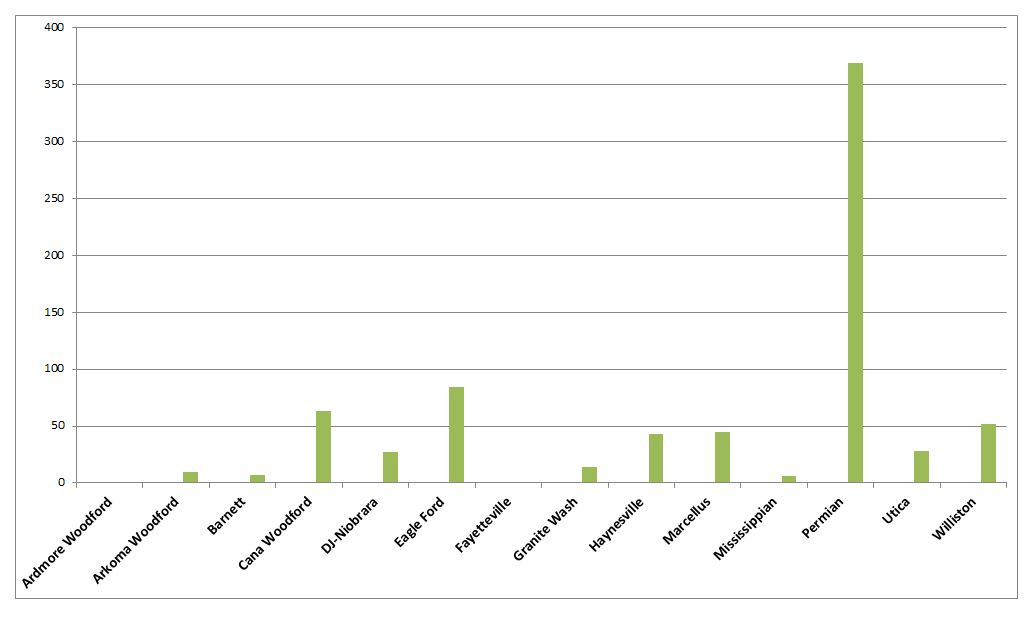
It’s a telling comment. For one thing it confirms that U.S. oil right now is all about the Permian basin—with highly productive multiple stacked layers of hydrocarbons, and wells not all that deep or overly expensive to drill, it’s more economic to drill and produce the Permian than almost any other oil play.
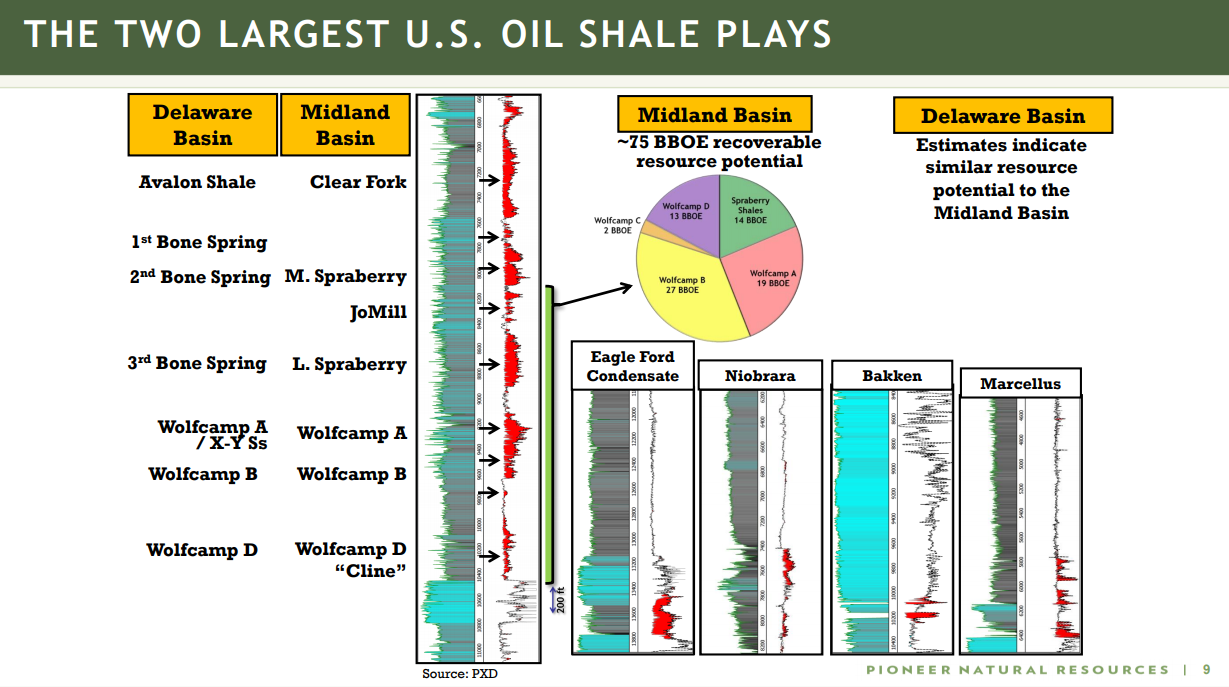
Pioneer Natural Resources Executive Chairman Scott Sheffield laid it out neatly with a slide in his presentation to the EIA’s national energy conference. The Delaware and the Midland both reside in the Permian basin.
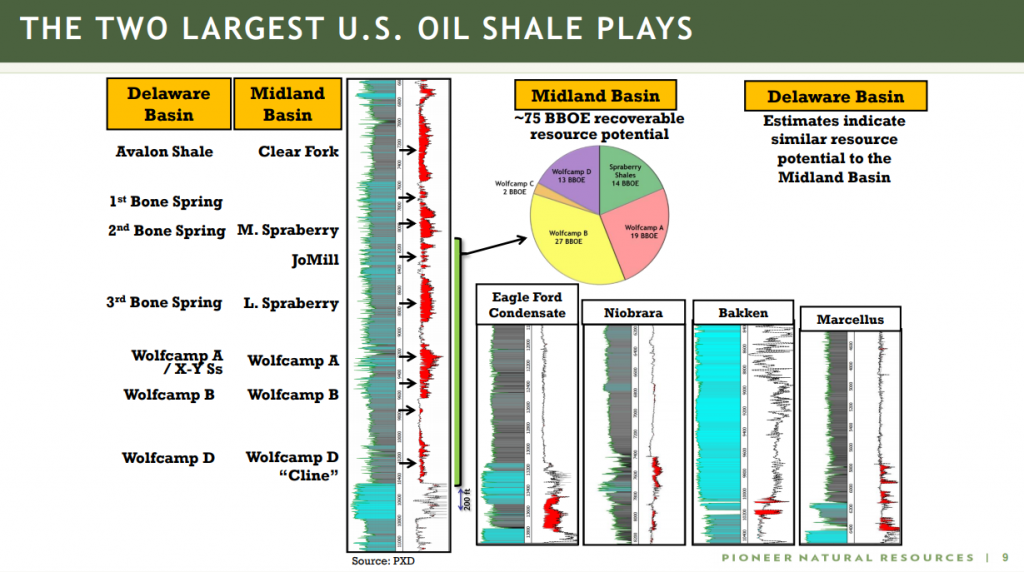 Source: Pioneer Investor Presentation Source: Pioneer Investor Presentation
Shale industry has grown upSecond, the executive’s comment points to the fact that after about 12-14 years, the U.S.’s unconventional E&P industry has grown up. Shale operators have become hyper-cost conscious in the two years since the oil price crash sucked 50% of the value from a barrel of oil and too much debt started chewing through over-levered shale players like a runaway chainsaw. That’s when the accountants took the reins.
What was once the sacrosanct domain of fast-charging wildcatters came under the ever tightening leash of bow-tie-wearing CFOs. The driving force of U.S. unconventionals changed from “get the acres and drill it” to “find ways to drill and produce it cheaper.” Oil and gas companies and their capital funding sources care about what the breakeven price is.
“Lower for Longer” was a familiar signpost for American oil in 2015 and into 2016. When “longer” kept getting longer, it became a wakeup call that rousted companies from a triple-digit oil induced slumber to slashing costs and figuring out how to sustain your company if oil is lower forever.
The prior model of acquiring as many acres as possible at any price, contracting as many rigs as possible at any price and drilling as many wells as possible at any price—that model doesn’t work within the super-tight economics of today’s shale industry. And the accountants know it all too well.
Permian operators will set global oil prices, here’s why
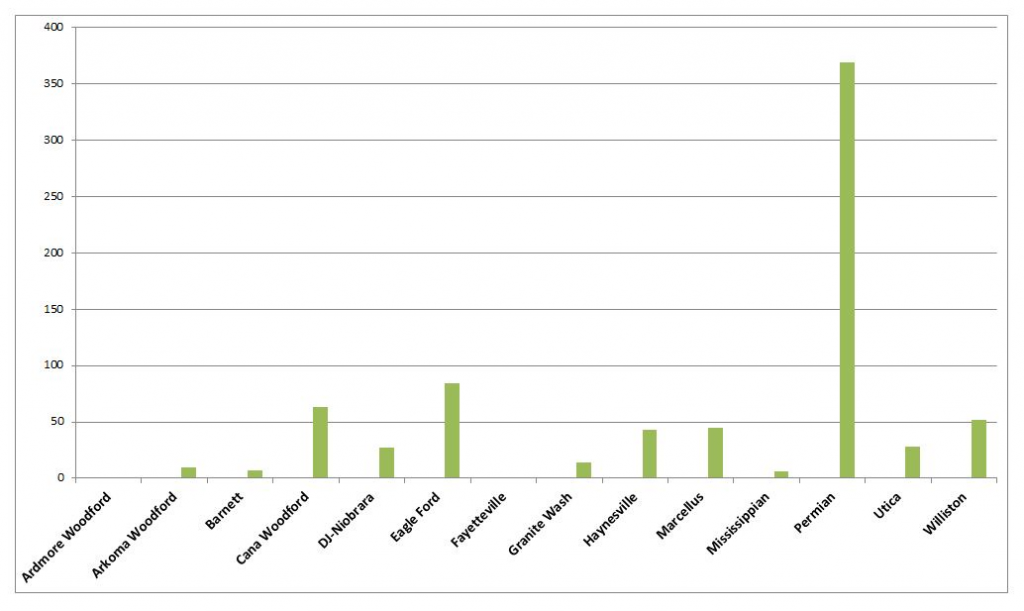 Source: EnerCom Analytics Source: EnerCom Analytics
Because 40% of all U.S. onshore rig count is presently in the Permian basin—operating rigs—and with each completion, the amount of production from the basin will increase. So the level of drilling activity will essentially set the Permian breakeven price, and the Permian breakeven price will set the level of drilling activity. When the price of oil exceeds their breakeven point (look at when oil broke into the $50-$55 range for about three months in early 2017), we had ‘drill baby drill’. When it fell down to the mid $40s and below, the accountants pulled back hard on the reins.
According to EnerCom Analytics, the average Midland basin well can return over 26% IRRs at $50/bbl oil, and will still yield around 19% IRRs at $40/bbl oil at the wellhead. However, overhead and other costs eat into these returns, decreasing profitability. While Permian players might be able to make some money at $40/bbl oil, returns are generally not high enough to ramp up activity.
In this way, Permian wells can provide some “soft bounds” for oil prices. High oil prices over a significant time will drive Permian producers to ramp up drilling activity, thereby increasing U.S. production. Sustained lower prices will result in decreased activity, slowing U.S. production.
The Permian certainly has enough oil reserves to influence global prices. In late November 2016, USGS estimated that the Wolfcamp shale in the Midland basin alone held 20 billion barrels of oil, 16 Tcf of gas and 1.6 billion barrels of NGL. This estimate of technically recoverable resources encompasses only one formation in only part of the Permian, meaning there is significantly more oil out there for producers to access.
oilandgas360.com |