Carmakers’ electric dreams depend on supplies of rare minerals
JULY 31, 2017
By Paul Homewood
The Guardian highlights another obstacle in the road for electric car makers:

Britain last week joined France in pledging to ban sales of petrol and diesel cars by 2040 in an attempt to cut toxic vehicle emissions. The move to battery-powered vehicles has been a long time coming. Environmental campaigners claim that charging cars and vans from the grid, like a laptop, is sure to be cleaner than petrol or diesel power. The government agrees and says it will invest more than £800m in driverless and clean technology, and a further £246m in battery technology research.
BMW plans to build a fully electric version of the Mini at Cowley in Oxford from 2019. Volvo announced earlier this month that from the same year, all its new models will have an electric motor.
Huge potential profits await those that can tap into this burgeoning market. Transparency Market Research estimated the global lithium-ion battery market at $30bn in 2015, rising to more than $75bn by 2024. Morgan Stanley analysts expect global car sales to rise by 50% by 2050 to more than 130m units a year, and estimates that electric vehicles will account for at least 47% of that total.
Lithium-ion batteries have long been used to power smartphones, laptops and other gadgets. Scaled-up versions are now being developed for electric vehicles. These batteries should last for at least 10 years, or 150,000 miles, until they need to be replaced.
However, the road to a promised land of zero-emission vehicles is littered with speed bumps and red lights that threaten to seriously slow the progress of the electric car. Battery makers are struggling to secure supplies of key ingredients in these large power packs – mainly cobalt and lithium. The hopes of both battery and vehicle manufacturers hang on the mining sector finding more deposits of these precious minerals.
Trent Mell of First Cobalt, a Toronto-based mining company, said: “Cobalt is tricky because of the scarcity of supply. There aren’t a lot of producers. We’re relying on more discoveries. It’s out there: we’ve just got to find it.”
The First Cobalt boss added that his company was currently confident of making discoveries in Idaho and Ontario. Investors see a chance of cashing in on the mineral’s key role: the price of shares in the Canadian firm has risen from C$0.06 to C$0.76 in the past year.
This is the mother of supply chain headaches, and one hi-tech car manufacturers and electronics firms could do without. At the heart of the global cobalt trade is Glencore. The metals and mining giant produces almost a third (28,300 tonnes) of the world’s annual supply. As much as 65% of this global supply comes from the Democratic Republic of Congo (DRC), where cobalt production has fallen this year because of the unstable political situation. This sparked a 90% jump in the price of cobalt to a peak of $61,000 a tonne earlier this month.
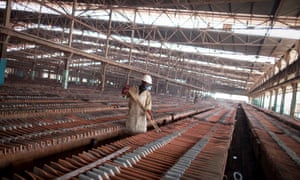
Inside the Katanga Mining copper and cobalt mine in the Democratic Republic of Congo. Photograph: Getty Images
Macquarie Research predicts that trouble in the DRC and rising demand for electric vehicles will lead to a four-year-long cobalt shortage. Writing in academic journal The Conversation, Ben McLellan, senior research fellow at Kyoto University, warned further: “Manufacturers such as electric vehicle makers should be concerned that the supply of one of the key mineral components, or the processing and refining infrastructure, could become too centralised in a single country. Without diverse source options, the possibility of supply restriction becomes more likely.”
The squeeze on cobalt has sent car giants such as Volkswagen scurrying to lock in supply deals with the likes of Glencore. First Cobalt’s Mell said: “I think there is going to be some jockeying for supply.”
Volkswagen, which had been slow to develop battery-powered vehicles, it is now pushing through an ambitious programme as it seeks to regain the trust of customers and investors after the diesel emissions scandal. The German manufacturer wants to launch more than 10 electrified models by the end of next year and is aiming at 30 battery-powered models by 2025. It plans to increase electric-car sales to a million a year by 2025, from tens of thousands at present.
Demand for other key battery ingredients, such as graphite and lithium carbonate, is also outstripping supply. The current shortage of lithium has seen prices double since 2015. Global lithium demand was 184,000 tonnes in 2015, with battery demand accounting for 40%. Analysts at Deutsche Bank expect demand to increase to 534,000 tonnes by 2025, with battery manufacturers accounting for 70%. Lithium deposits are found mostly in China and Bolivia.
theguardian.com
The report goes on to look at possible alternative technologies. But it is clear that, as with the rest of decarbonisation strategies, we are stepping into the dark with no idea where we are going.
notalotofpeopleknowthat.wordpress.com
Dung
July 31, 2017 2:05 pm
I tried to follow this story up by reading about one of the most important elements in Lithium-Ion batteries, Cobalt and it was a shock!
Most of the Cobalt comes from the Congo and the majority of that Cobalt is not from industrial mines but from ‘Artisanal’ mines, it is all dug by hand. The miners are paid peanuts and their homes are smaller than small garden sheds with no running water or electricity. The toxic effects on these miners are extreme but it is their only source of money.
When you look at the limitations we put on the mining of shale gas because of safety concerns and consider that this Cobalt is part of the supposed solution to fossil fuel, you realise how far from sanity we have strayed.
Cobalt miners - these lucky folks are bypassing the 18th and 19th and 20th centuries:
 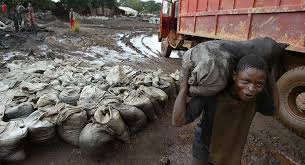
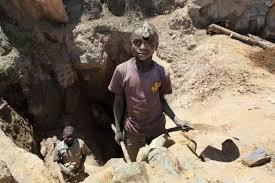 
 
Look the actual mining is done without fossil fuels. That's renewable energy. |




