Elon Musk Made Bold Promise, Fulfilled It
World's biggest lithium ion battery is installed in South Australia
By Arden Dier, Newser Staff
Posted Nov 23, 2017 9:30 AM CST
newser.com
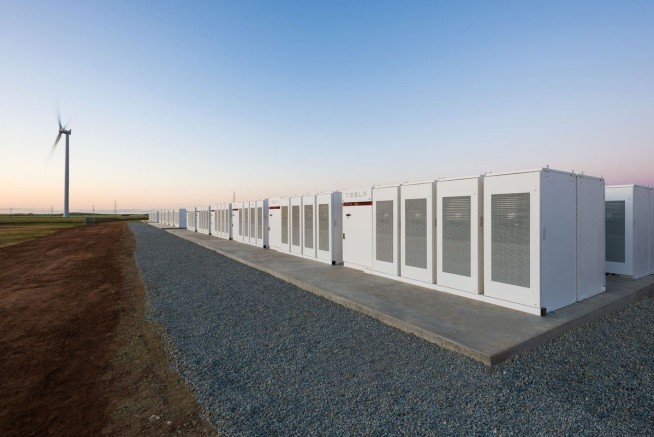
(NEWSER) – Elon Musk promised to have the job done in 100 days or it's free. Well, it looks like Australia will be paying up. Tesla has completed installation of the world's biggest lithium ion battery in South Australia and will be turning it on next week, ahead of a Dec. 1 deadline, reports the Guardian. The 100-megawatt battery is connected to a wind farm run by French company Neoen and will store renewable energy in an effort to prevent blackouts like those that have affected the country's "most wind power-dependent state" over the last year, per Reuters. South Australia Premier Jay Weatherill says it still needs to undergo testing but will be ready for Australia's summer, which officially begins on Dec. 1.
South Australia is now "a leader in renewable energy with battery storage," Weatherill says in a statement. "An enormous amount of work has gone in to delivering this project in such a short time." Musk agrees. "Congratulations to the Tesla crew and South Australian authorities who worked so hard to get this manufactured and installed in record time!" he wrote in a Wednesday tweet. The battery in Jamestown—which will "store enough energy to power 30,000 homes for an hour," reports the BBC—is estimated to have cost $50 million, per Engadget. It's part of South Australia's $390 million energy plan that also includes diesel-fired generators and support for a solar thermal power plant at Port Augusta. |



