SI
SI
discoversearch

We've detected that you're using an ad content blocking browser plug-in or feature. Ads provide a critical source of revenue to the continued operation of Silicon Investor.  We ask that you disable ad blocking while on Silicon Investor in the best interests of our community.  If you are not using an ad blocker but are still receiving this message, make sure your browser's tracking protection is set to the 'standard' level.
Politics : Formerly About Advanced Micro Devices

 Public ReplyPrvt ReplyMark as Last ReadFilePrevious 10Next 10PreviousNext  
To: Wharf Rat who wrote (1053968)2/9/2018 10:43:54 AM
From: Sdgla  Read Replies (2) of 1578124
 
Scientists warn of unusually cold Sun: Will we face another ice age?
A study by the University of California San Diego has said the Sun will experience a cold period where all solar activities will be Reduced drastically.


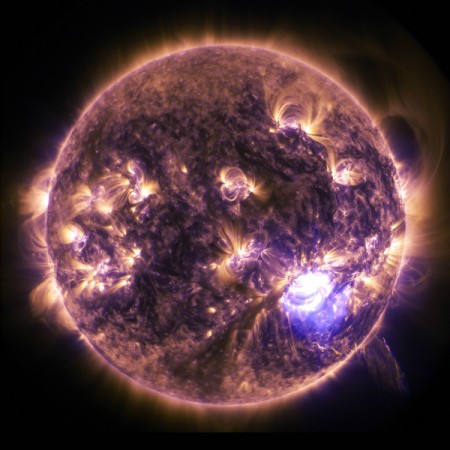
Picture for representationReuters

Remember the 1989 science fiction novel The Dying Sun by Gary Blackwood, where people were forced to migrate from the US to Mexico because of the freezing weather triggered by cooling down of the Sun? Scientists are now afraid that such a situation can become a reality in the near future. The question that now arises is, are we at all prepared for another ice age?

Also read: Ice Age surprise: Huge amounts of mercury found trapped inside Arctic permafrost for thousands of years

A study by the University of California San Diego has claimed that by 2050, the Sun is expected to become cool. You might think "what's the big deal," but remember that this means the solar activities that create the heat of the Sun to sustain life on Earth may diminish. And the last time it happened was in the 17th Century, when the Thames River froze. Scientists call this the "Maunder Minimum".

Physicist Dan Lubin at the university and his team studied the past event and concluded that were are in for a worse case. The Sun is expected to get much dimmer than last time and, in scientific terms, it is a "grand minimum" -- a time period in the 11-year solar cycle when the solar activities are at the lowest point.

Also read: Scientists warn of 'mini ice age' that could hit Earth and freeze major rivers by 2030

According to the study, titled Ultraviolet Flux Decrease Under a Grand Minimum from IUE Short-wavelength Observation of Solar Analogs and published in the journal Astrophysical Journal Letters, this grand minimum will be 7 percent cooler than such periods from the past.

Scientists also said that the Sun might have another cooling period in a decade.
Report TOU ViolationShare This Post
 Public ReplyPrvt ReplyMark as Last ReadFilePrevious 10Next 10PreviousNext