We, NNVC advocates, should apply for this prize!!
BTW, HerpesCide is the solution!
U.S. Businessman Issues Global, Multimillion Dollar (USD) Challenge for Innovative Alzheimer's Solutions

Business Wire
November 5, 2018
5:00 AM EST
Last Updated
November 5, 2018
5:00 AM EST
Filed under
Business Wire News Releases
Comment
 Facebook Facebook
 Twitter Twitter
 Reddit Reddit
 Email Email
 More More

SAN ANTONIO — To expand the understanding and explanation of Alzheimer’s disease, United States businessman James Truchard has given a $5 million USD gift to The University of Texas at San Antonio (UTSA) College of Sciences to establish the Oskar Fischer Project. The initiative will engage the world’s brightest minds in a comprehensive literature review with the goal of synthesizing that information into one simple explanation for the cause of Alzheimer’s disease. The challenge was announced today during the Society for Neuroscience’s annual meeting, an international gathering of nearly 30,000 scientists taking place through Nov. 7 in the United States.
Truchard, retired president and chief executive officer of United States-based technology company National Instruments, conceptualized and established the Oskar Fischer Project to engage the world’s brightest minds. The challenge will award up to $4 million USD in Oskar Fischer Prizes, including a grand prize of $2 million, two second place prizes of $500,000 each and four third place prizes of $250,000 each. Collectively, the monetary awards are the world’s largest prizes of their kind.
Through personal research, Truchard, 75, was introduced to the work of Oskar Fischer (1876-1942), a Jewish pioneer in neuroscience who studied dementia at the same time as Alois Alzheimer. In 1900, Fischer began working at Charles University’s German University, based in Prague. His research led to the identification of senile plaques (then called neuritic plaques), the signature lesions of Alzheimer’s disease.
Fischer hypothesized that the plaques were associated with presbyophrenia, then characterized as a form of senile dementia marked by memory loss, memory distortions and disorientation. He published on 12 patients with plaques and tangles, protein strands that appear during Alzheimer’s disease, in 1907, the same year that Alzheimer published on one patient with early onset Alzheimer’s.
Fischer remained at the German University until he was removed in 1939. Two years later, he was sent to Theresienstadt in Terezín, a way station for Auschwitz and Treblinka. He died in 1942, unable to survive the harsh conditions of the concentration camp.
“A century has passed since Oskar Fischer’s seminal work, and tens of billions have been spent around the world on research and potential cures. Over 130,000 research papers have been published and yet no definitive explanation and cure for Alzheimer’s has been found,” said Truchard. “We need to look at Alzheimer’s as a big complex puzzle with a missing piece. We need a brilliant individual who can take all of the pieces and consider what each offers, and then develop one explanation that fits because it pulls all of the pieces together and makes the puzzle whole.”
According to the World Alzheimer Report 2018 by Alzheimer’s Disease International (ADI), an estimated 50 million people worldwide are living with dementia at a cost of $1 trillion to the global economy. That population is expected to more than triple by the year 2050, according to ADI, which also reports that the global ratio of publications on neurodegenerative disorders versus cancer is just one to 12.
“The Oskar Fischer Project will take a new systems approach to the research on Alzheimer’s, building on the work Oskar Fischer started over a century ago,” said George Perry, chief scientist of the UTSA Brain Health Consortium. “Jim Truchard’s generous gift will create an international forum to assess that work and bring forward an explanation that will advance society’s understanding of the disease.”
The University of Texas at San Antonio, a world leader in brain health research, will incubate the two-year challenge. In the UTSA Brain Health Consortium, 38 of the nation’s brightest scientists are engaged in research on brain mechanisms and therapeutics. The university’s researchers have expertise in neurodegenerative disease, brain circuits and electrical signaling, traumatic brain injury, regenerative medicine and stem cell therapies, medicinal chemistry and drug design, neuroinflammation, and psychology.
“Through Jim Truchard’s support, the Oskar Fischer Project will accelerate our shared mission of unraveling the mysteries of neurodegeneration through engagement with the smartest thinkers around the world,” said UTSA President Taylor Eighmy.
Truchard added, “I truly believe that Alzheimer’s disease is multifaceted; it’s about lifestyle, heredity and brain regression. It’s important to look at all possible solutions. This contest will bring together the world’s best minds to consider the entire story.”
UTSA will work closely with an interdisciplinary committee of outstanding scientists from Texas to award the Oskar Fischer Prizes. The call for proposals will open in February 2019 and will continue through the two-year term of the project.
About The University of Texas at San Antonio
The University of Texas at San Antonio (UTSA) is a public urban serving university specializing in health, cybersecurity, energy, sustainability, and human and social development. With more than 32,000 students, it is the largest university in the San Antonio metropolitan region. UTSA advances knowledge through research and discovery, teaching and learning, community engagement and public service. The university embraces multicultural traditions and serves as a center for intellectual and creative resources as well as a catalyst for socioeconomic development and the commercialization of intellectual property—for Texas, the nation and the world. Learn more online, on Facebook, on Twitter, on Instagram or on UTSA Today.

View source version on businesswire.com: businesswire.com
Contacts
UTSA
Joe Izbrand, 210-458-8754
University Communications and Marketing
Cell: 210-827-6525
joe.izbrand@utsa.edu
business.financialpost.com
Researchers Find Herpes Viruses In Brains Marked By Alzheimer's Disease
LISTEN·3:173:17QUEUE
DOWNLOADEMBED
TRANSCRIPT
FacebookTwitterFlipboardEmail
June 21, 201811:16 AM ET
Heard on All Things Considered

JON HAMILTON
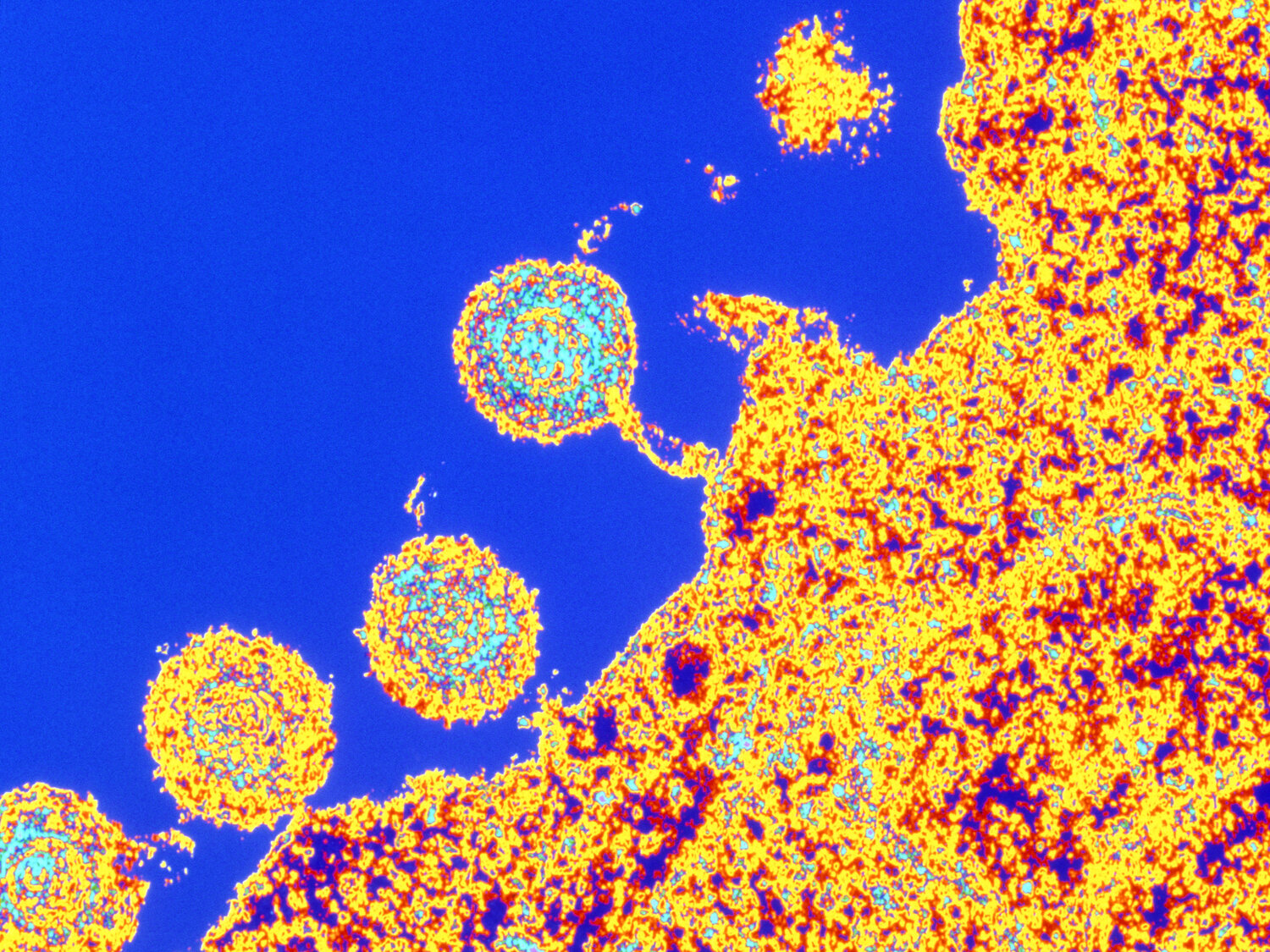
Several circular herpes virus particles are seen near a cell membrane. Roseola herpes virus causes a childhood illness marked by skin rashes and now has been found in brains with Alzheimer's disease.
NCI/Science Source
Two common herpes viruses appear to play a role in Alzheimer's disease.
The viruses, best known for causing a distinctive skin rash in young children, are abundant in brain tissue from people with Alzheimer's, a team of scientists reportsThursday in Neuron. The team also found evidence that the viruses can interact with brain cells in ways that could accelerate the disease.
"Our hypothesis is that they put gas on the flame," says Joel Dudley, an author of the study and an associate professor of genetics and genomic sciences at the Icahn School of Medicine at Mt. Sinai in New York City.
The finding adds credence to a decades-old idea that an infection can cause Alzheimer's disease. It also suggests that it may be possible to prevent or slow Alzheimer's using antiviral drugs, or drugs that modulate how immune cells in the brain respond to an infection.
But the study doesn't prove that herpes viruses are involved in Alzheimer's, says Dr. Richard Hodes, director of the National Institute on Aging, which helped fund the research.
"The data are very provocative, but fall short of showing a direct causal role," he says. "And if viral infections are playing a part, they are not the sole actor."
Even so, the study offers strong evidence that viral infections can influence the course of Alzheimer's, Hodes says.
Like a lot of scientific discoveries, this one was an accident. "Viruses were the last thing we were looking for," Dudley says.
He and a team of researchers were using genetic data to look for differences between healthy brain tissue and brain tissue from people who died with Alzheimer's.
The goal was to identify new targets for drugs. Instead, the team kept finding hints that brain tissue from Alzheimer's patients contained higher levels of viruses.
"When we started analyzing the differences, it just sort of came screaming out at us from the data," Dudley says.
The team found that levels of two human herpes viruses, HHV-6 and HHV-7, were up to twice as high in brain tissue from people with Alzheimer's. They confirmed the finding by analyzing data from a consortium of brain banks.
These herpes viruses are extremely common, and can cause a skin rash called roseola in young children. But the viruses also can get into the brain, where they may remain inactive for decades.
Once the researchers knew the viruses were associated with Alzheimer's they started trying to figure out how a virus could affect the course of a brain disease. That meant identifying interactions between the virus genes and other genes in brain cells.
"We mapped out the social network, if you will, of which genes the viruses are friends with and who they're talking to inside the brain," Dudley says. In essence, he says, they wanted to know: "If the viruses are tweeting, who's tweeting back?"
And what they found was that the herpes virus genes were interacting with genes known to increase a person's risk for Alzheimer's.
They also found that these Alzheimer's risk genes seem to make a person's brain more vulnerable to infection with the two herpes viruses.
But just having herpes virus present in the brain isn't enough to cause Alzheimer's, Dudley says. Something needs to activate the viruses, which causes them to begin replicating.
It's not clear what causes the activation, Dudley says, though he suspects some sort of change in the internal functions of brain cells.
Once the viruses do become active, they appear to influence things like the accumulation of the plaques and tangles in the brain associated with Alzheimer's. "They are sort of throwing a wrench in the works," he says.
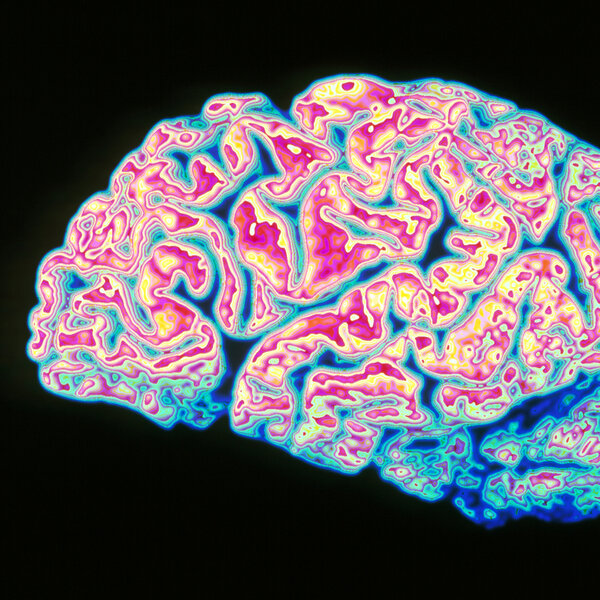
SHOTS - HEALTH NEWS Brain's Link To Immune System Might Help Explain Alzheimer's
The herpes viruses also seem to trigger an immune response in certain brain cells, Hodes says. These cells are part of an ancient immune system that has previously been implicated in Alzheimer's.
Most previous efforts to prevent or treat Alzheimer's have involved trying to reduce the plaques and tangles associated with the disease. Those efforts have failed to improve brain function even when they accomplished their immediate goal.
Those "distressing and disappointing failures" suggest it's time for some new approaches, Hodes says. And the new study suggests at least two.
One is to give antiviral drugs to people with high levels of herpes virus in their brains. The Institute on Aging is already funding a study to test this approach in people in the early stages of Alzheimer's, Hodes says.
Another approach is to prevent the brain's immune cells from reacting to the virus in ways that accelerate Alzheimer's, Hodes says. That's tricky, he says, because simply disabling the brain's immune cells could be harmful.
Even so, Hodes is optimistic.
"The more we learn about the disease process and the more targets we can address," he says, "the greater the probability we are going to slow or prevent the progression of Alzheimer's disease."
brain research neuroscience brain alzheimer's disease herpes
FacebookTwitterFlipboardEmail
npr.org |



