I generally endeavour to be balanced, deliberately so, but suspect certain professional trainings are not suitable for preparation to govern. Am thinking, knowing what we all suspect for good-enough reasons, that perhaps the at least the following sorts should not be allowed in positions of authority outside of their immediate profession and limited to serve only w/i their chosen niche as a paid-for professional:
- actors
- lawyers
- ...
... as opposed to the below sorts
- engineers
- scientists
- educators
- military
- journalists of yester-year
- generalists
Undecided, but thinking aloud
For example, could China have done what indubitably was done had its officialdom been infused w/ folks from the legal profession? I don’t it but unsure why. Let me state unequivocally that, quote, some of my closer friends are lawyers, and fit to govern, but they firstly are something else (generalists) and happens to work in legal profession, unquote.
Maybe it is a question of balance, meaning need lawyers in governance but not too many.
In the mean time I remember the first time I landed in China after reform started, I thought to self, “I am a germ, and this society has no defense against me”, 1984 November. I was right, but certainly did not predict the changes in terms of scale and thoroughness.
The article below does not adequately cover the changes and the almost-genetic constancy aspects of mindsetting (self belief re what can be done, imperatives give rise to solutions, ... vs diligence, thrift, etc).
bbc.com
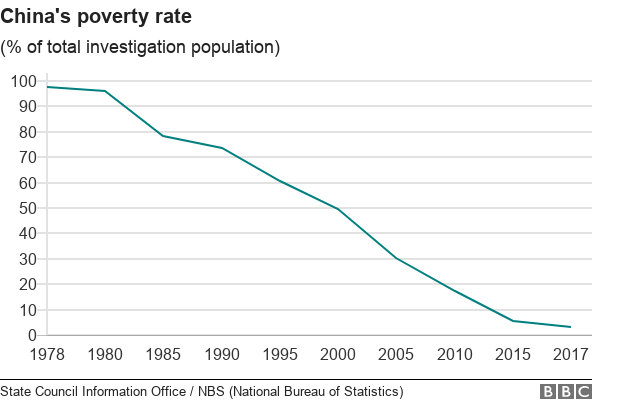
China's staggering 40 years of change in pictures - BBC NewsForty years ago, China introduced major economic reforms - lifting hundreds of millions of people out of poverty and leading to it becoming the second-largest economy in the world.
Here's the story of how China changed - in pictures.
1. Wheels and more wheels This is what Chang'an Avenue - a major street in the capital Beijing - looked like in 1978.
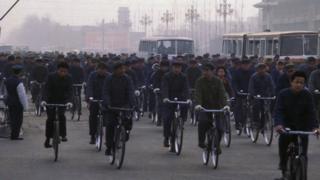 Getty Images Getty Images Four decades on, the street looks pretty different. Four decades on, the street looks pretty different.
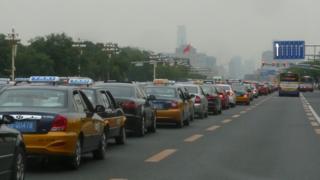 Getty ImagesCar ownership in China has soared - there are now over 300 million registered vehicles in the country - while bike ownership has dropped. Getty ImagesCar ownership in China has soared - there are now over 300 million registered vehicles in the country - while bike ownership has dropped.
Car ownership reaches record high in ChinaIt's a result of China's urbanisation and economic growth - but has also come at a price.
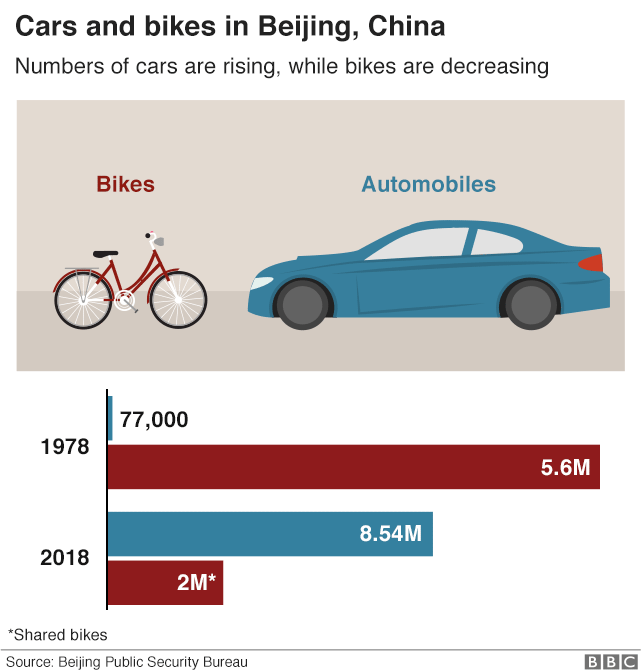 Frequent traffic jams in many cities have led to licence plate quotas being imposed. Frequent traffic jams in many cities have led to licence plate quotas being imposed.
And the World Health Organization says more than a million people in China die every year due to air pollution.
2. Money money money Compare a 1978 shop window...
 Getty Images... with one from this decade. Getty Images... with one from this decade.
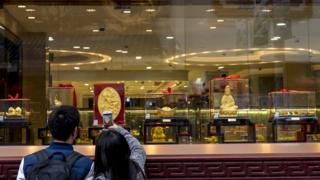 Getty ImagesAs China's gross domestic product (GDP) has skyrocketed, its shopping habits have changed too. Getty ImagesAs China's gross domestic product (GDP) has skyrocketed, its shopping habits have changed too.
Chinese shoppers are among the world's highest consumers of luxury goods.
President Xi Jinping emphasised China's economy - and how it had transformed people's lives - during a long speech on Tuesday marking the anniversary of the economic reforms.
China 'will not seek to dominate' Cement, pigs and holidays"Grain coupons, cloth coupons, meat coupons, fish coupons, oil coupons, tofu coupons, food ticket books, product coupons and other documents people once could not be without have now been consigned to the museum of history," he said.
"The torments of hunger, lack of food and clothing, and the hardships which have plagued our people for thousands of years have generally gone and won't come back."
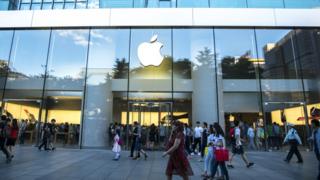 Getty ImagesApple is a popular brand in China - though not as popular as HuaweiThere's even a political element to this. As Chinese consumers have grown richer, they've become increasingly influential. Getty ImagesApple is a popular brand in China - though not as popular as HuaweiThere's even a political element to this. As Chinese consumers have grown richer, they've become increasingly influential.
Several companies have been forced to apologise after offending Chinese sensibilities, and while foreign brands are generally coveted in China, more and more shoppers are starting to say they prefer local brands.
Dolce & Gabbana products pulled in China Airlines bow to China's Taiwan deadline Gap apologises for China map T-shirtsIt's a sentiment that Mr Xi also touched on in his speech, when he said: "China is increasingly approaching the centre of the world stage."
"No-one is in a position to dictate to the Chinese people what should or should not be done."
 3. Families and childrenLife has changed significantly for children of the 2010s, compared to children of the 1970s. 3. Families and childrenLife has changed significantly for children of the 2010s, compared to children of the 1970s.
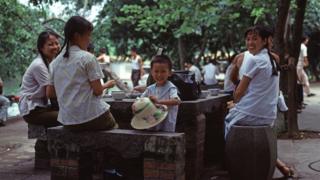 Getty ImagesA family enjoy tea in a park in Guangzhou, 1978For starters, they are likely to live longer - China's life expectancy was 66 back in 1978, and is now about 76. Getty ImagesA family enjoy tea in a park in Guangzhou, 1978For starters, they are likely to live longer - China's life expectancy was 66 back in 1978, and is now about 76.
They're also more likely to have a better education - literacy rates increased from 66% in the early 1980s to 95% in 2010.
For most Chinese children in the 1970s, going on an overseas holiday would have been almost unthinkable. Today China has the world's largest number of outbound tourists - who spend billions of dollars while abroad.
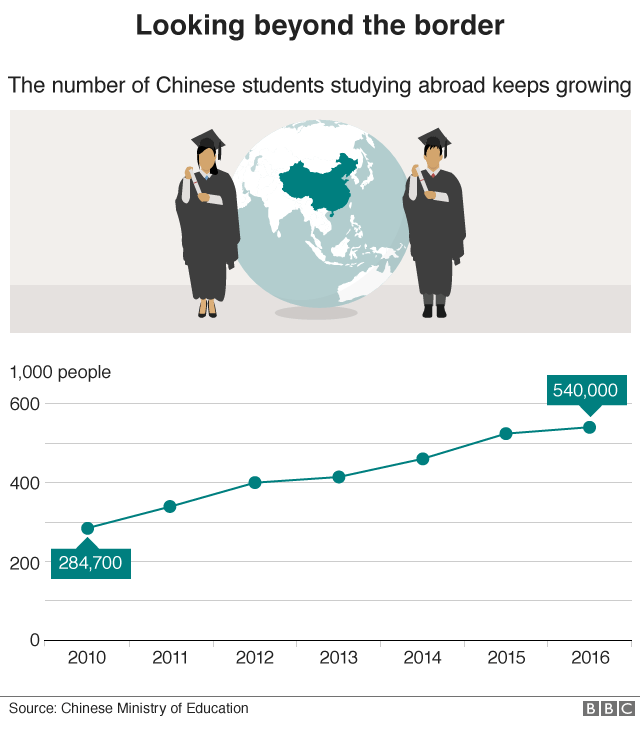
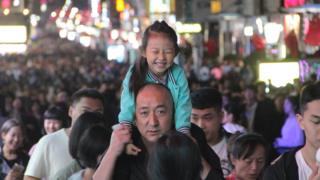 Getty ImagesA girl celebrates the golden week national holiday with her dad in October 2018Chinese students are now also more likely to end up studying abroad. Getty ImagesA girl celebrates the golden week national holiday with her dad in October 2018Chinese students are now also more likely to end up studying abroad.
According to Chinese government figures, China is currently the world's largest source of international students.
 One thing hasn't changed as much as the government would like though - the birth rate. One thing hasn't changed as much as the government would like though - the birth rate.
In 1979 - a year after starting economic reforms - the government imposed a one-child policy to try and curb population growth.
Birth rates were declining anyway - but the controversial policy was harshly enforced in some cases.
Couples who violated the policy could face punishments ranging from fines and the loss of employment to forced abortions and sterilisation.
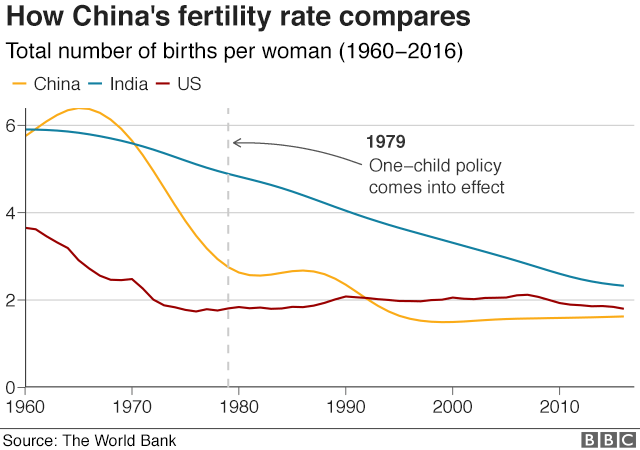 China's population, like those of many other developed countries, is now ageing. China's population, like those of many other developed countries, is now ageing.
In 2015, the government decided to end the one-child policy and allow couples to have two children.
There is even speculation that the policy may be relaxed further - to allow three or more children - in the near future.
But many Chinese millennials see having more children as too expensive - or a burden on their careers.
China hints at three-child policy with 'happy family' stamps4. To market, to marketAs economies change, so do people's diets, and what they want to spend their money on.
Here's a marketplace in the central city of Xi'an, back in 1978.
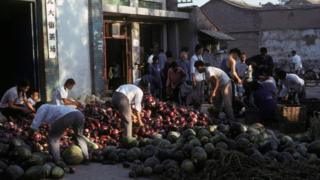 Getty ImagesAnd here's what some of Xi'an's street markets look like now. Getty ImagesAnd here's what some of Xi'an's street markets look like now.
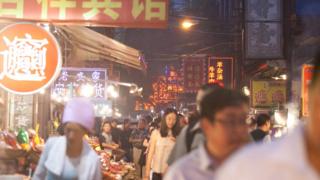 Matteo Colombo Matteo Colombo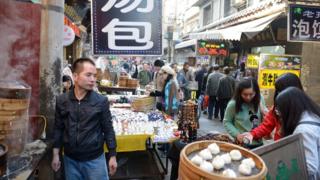 Getty ImagesMany of the signs are advertising meat dishes - and statistics show meat consumption in China has risen significantly over the past few decades. Getty ImagesMany of the signs are advertising meat dishes - and statistics show meat consumption in China has risen significantly over the past few decades.
Pork, for example, used to be considered a luxury food reserved for special occasions - now, figures suggest the average Chinese person will consume about 40kg of pork per year.
 Reporting by the BBC's Helier Cheung. Reporting by the BBC's Helier Cheung. |



