File under "Here and now".
I’m Sorry for Your Loss
By Brian Miller, originally published by South Roane Agrarian
February 12, 2019
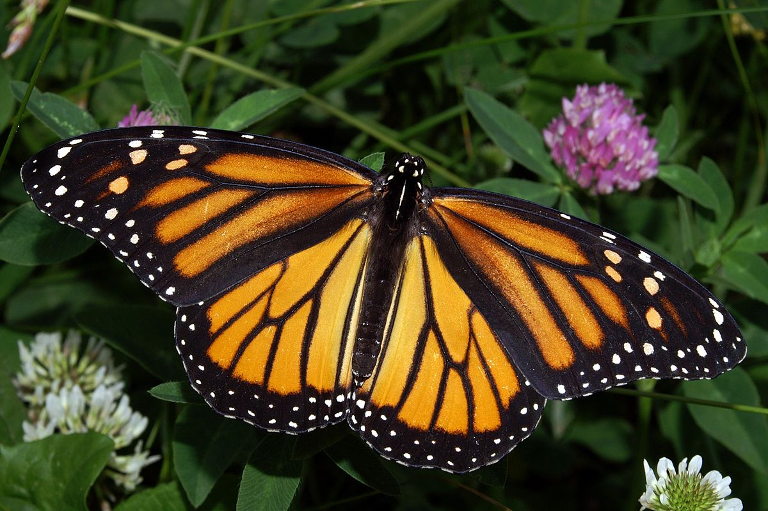

In the neighborhood where I grew up, we used to run, excited and laughing, through clouds of fluttering Eastern monarch butterflies. Thousands would float around our faces as we climbed the mimosa tree in my front yard or rode our bikes down Royal Street. It was awe-inspiring, something we sought out, immersing ourselves in those delicate migrations.
Today the monarchs are all but gone. That sad fact hit home this week as I read of the 97 percent collapse of the Western monarch population. No number of inspired “Ten Things You Can Do” articles, no amount of milkweed replanting, will revive a species once it falls into the past. No child ever again will have the heady experience of dancing with the monarchs (if today’s and tomorrow’s children were even inclined to venture outside their rooms).
It seems to me that how we grieve and how we learn to honor and acknowledge a passing are perhaps more important than ever, even as they become a lost practice.
Some years back, I was driving on a two-lane highway in North Georgia, my boss in the passenger seat. Rounding a curve, we came upon an oncoming funeral procession. I immediately pulled over onto the grass shoulder. My boss looked at me with a mixture of alarm and bemusement. “What in the hell are you doing?” she asked.
It was one of those moments of realization when two people of the same age and the same country realize they are vastly separated by different cultural norms. That she was raised in the larger cities of New Jersey might be an easy explanation. But for me, pulling over for a passing funeral seems a universal courtesy, a simple and powerful way to acknowledge a loss to an unknown family, an act of community. To her? It was a frivolous waste of time.
Over the years I have encountered an individual here and there who has never been to a funeral. As the years passed, this missing out on a collective rite began to weigh on their spirit, consciously or not. They never became members of this club that we all are a part of. Now they stand outside of community, noses pressed to the windows, spectators to one of life’s essential cycles. They have become afraid of being a participant in that oldest of rituals and, consequently, afraid of death itself.
In my childhood, there were many weekends and evenings when we boys put on our suits, polished our shoes, and went to a funeral or visitation. Learning to view a casket, stand in line, then walk up to a member of your community and say “I’m sorry for your loss” was expected. And it was important. We were not excused for being too young.
The practices of expressing loss and carrying out acts of solidarity with grieving neighbors are far older than our written memory. They are lessons, if learned, that expand the narrow community of friends and family. Maybe it is not too much to imagine honoring monarchs as our kith. They have certainly served as our canary, our token alarm bell, ringing amid the depressing catalog of all the other global declines in flora and fauna.
Are we now so afraid of being called out for acknowledging loss that we scorn the common decencies? Each tolling bell that greets the ear marks a procession that left a funeral home long days ago. That body it carries is now for the earth. We should stop and remove our hats as it passes. We should go to the bedroom, open the wardrobe, put on our best outfit, polish our shoes. Stand in a pasture or on a hilltop or climb among the spindly branches of a mimosa and practice saying, sincerely, in the open air, “I’m sorry for your loss.”
Indeed, I’m sorry for our loss.
…………………………………………………..
Next week all smiles and sunshine, I promise.
resilience.org |



