SI
SI
discoversearch

We've detected that you're using an ad content blocking browser plug-in or feature. Ads provide a critical source of revenue to the continued operation of Silicon Investor.  We ask that you disable ad blocking while on Silicon Investor in the best interests of our community.  If you are not using an ad blocker but are still receiving this message, make sure your browser's tracking protection is set to the 'standard' level.
Politics : Formerly About Advanced Micro Devices

 Public ReplyPrvt ReplyMark as Last ReadFilePrevious 10Next 10PreviousNext  
To: locogringo who wrote (1129946)4/15/2019 1:17:49 PM
From: Wharf Rat  Read Replies (2) of 1574289
 
Nenana Ice Classic 2019
gavin @ 14 April 2019

Wow.

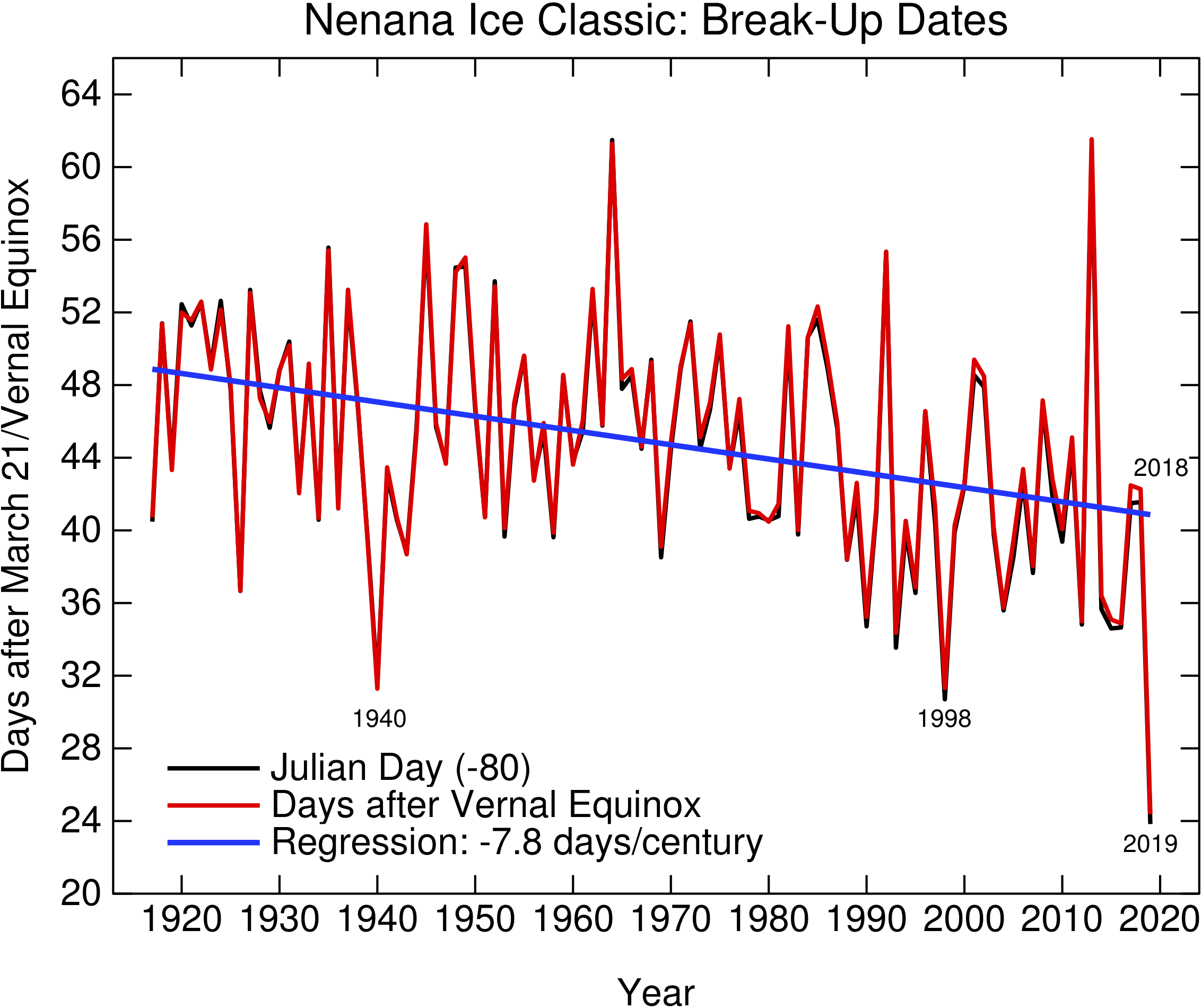
Perhaps unsurprisingly given the exceptional (relative) warmth in Alaska last month and in February, the record for the Nenana Ice Classic was shattered this year.

The previous official record was associated with the exceptional conditions in El Niño-affected winter of 1939-1940, when the ice went out on April 20th 1940. Though since 1940 was a leap year, that was actually a little later (relative to the vernal equinox) than the ice out date in 1998 (which wasn’t a leap year).

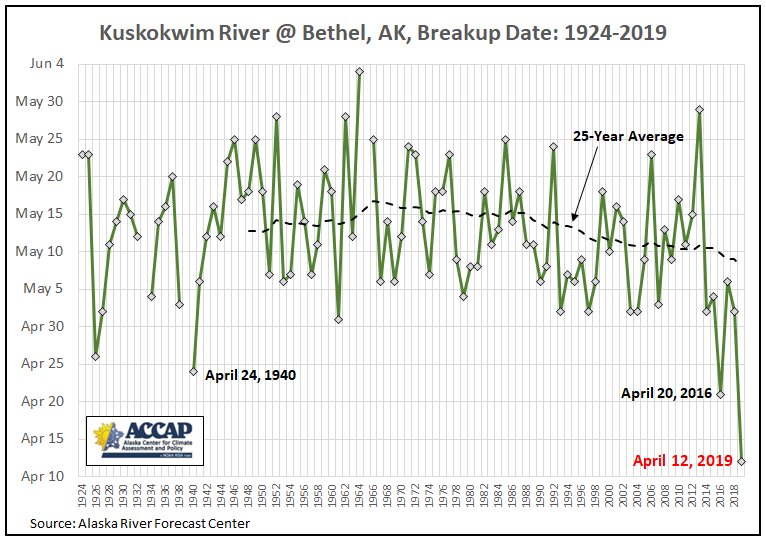
Other records are also tumbling in the region, for instance the ice out data at Bethel, Alaska:

View image on Twitter


IARC Fairbanks@IARC_Alaska


The Kuskokwim River at Bethel has gone out. This is, by far, the earliest breakup in the 90+ years of breakup data. This follows the warmest February and warmest March on record. @kuskoiceclassic @Climatologist49 @AlaskaWx


106

5:17 PM - Apr 12, 2019


116 people are talking about this


Twitter Ads info and privacy

While the trend at Nenana since 1908 has been towards earlier ice-out dates (by about 7 days a century on average), the interannual variability is high. This is consistent with the winter warming in this region over that period of about 2.5ºC. Recent winters have got close (2012/14/15/16) (3 to 4 days past the record), but this year’s April 14th date is an impressive jump (and with no leap year to help calendrically).

As usual, I plot both the raw date data and the version adjusted to relative to the vernal equinox (the official time of breakup was ~12:21am).


[As usual, I predict that there will be no interest from the our favorite contrarians in this]

realclimate.org
Report TOU ViolationShare This Post
 Public ReplyPrvt ReplyMark as Last ReadFilePrevious 10Next 10PreviousNext