| | | "You know, we’ve been having a lot of tornados in “tornado alley” the last couple weeks"
I've noticed.
Severe Outbreak Possible Monday for Southern Plains weather.com
Monday is expected to see an outbreak of severe storms including tornados across the Southern Plains.
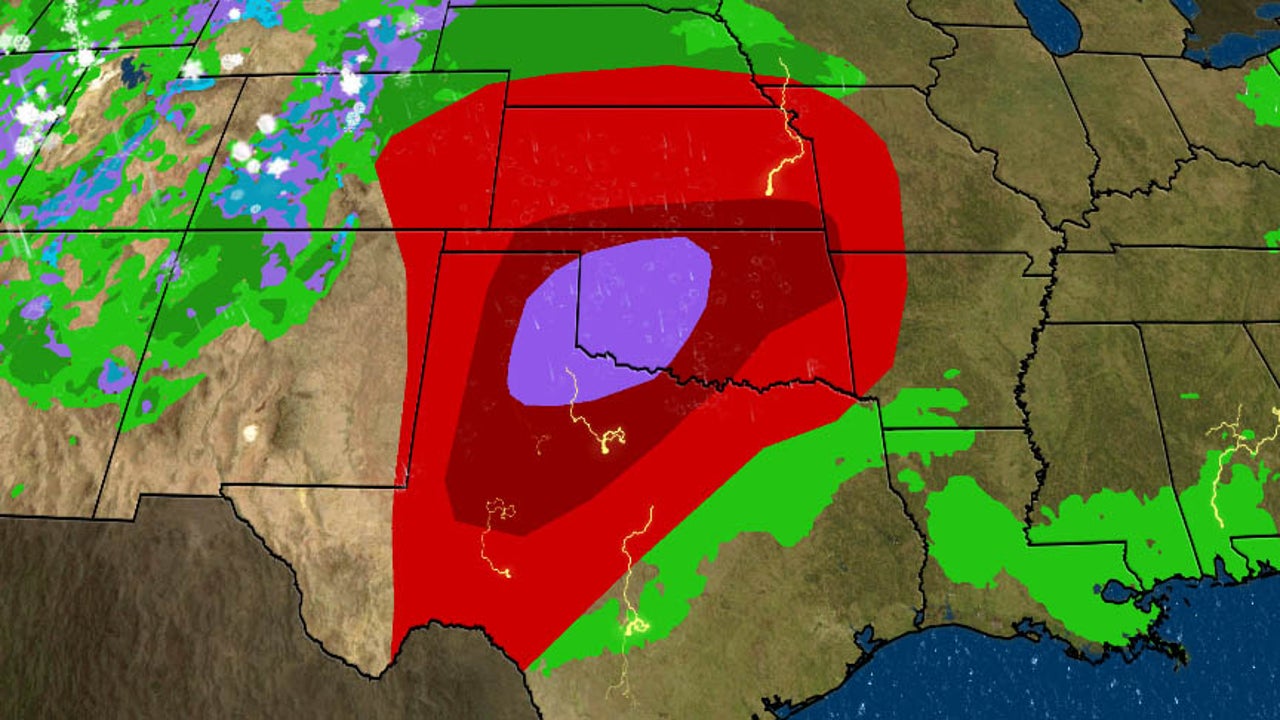
weather.com
"Wtf is up with that?"
Mother Nature is acting out.
Climate change may subtly shift Tornado Alley

Adapted from Gensini and Brooks, npj Climate and Atmospheric Science 2018. DOI: 10.1038/s41612-018-0048-2. Data: NOAA; Map: Harry Stevens/Axios
While scientists prowl the Plains in search of monster storms, others are looking at broader-scale trends that show tantalizing clues about how Tornado Alley may be shifting both geographically and temporally as the climate changes.
Why it matters: The U.S. has the greatest number of tornadoes of any nation on Earth, and where they occur affects emergency management preparations, insurance markets and individual decisions on whether to build a storm shelter. If, as global warming continues, Tornado Alley migrates, or outbreaks become more massive, this would shift the risk distribution.
Details: According to Harold Brooks, a senior researcher at the National Severe Storms Laboratory in Oklahoma, the overall number of tornadoes of EF-1 intensity or greater touching down in the U.S. each year has not changed in a statistically significant way, averaging around 500.
However, his research and that of others has shown an increase in tornado risk in parts of the mid-South and a slight decrease in what is more traditionally considered Tornado Alley in the Plains.A 2018 study showed regional shifts in tornado frequency, with an uptick in tornadoes east of the Mississippi River and a slight decline to the west.Between the lines: Some of the emerging trends are seemingly contradictory. Tornadoes are occurring on fewer days per year, but major tornado outbreaks are spawning more EF-1 or greater twisters than used to occur in a typical large event.
A warming climate does opposing things to supercell thunderstorms.
It provides more energy in the form of higher air temperatures and greater amounts of water vapor in the atmosphere, a combo meteorologists refer to as convective available potential energy.But it also may reduce the availability of wind shear, which is another crucial ingredient for tornadoes.In a warming world, there may be fewer days with both ingredients present to produce tornadoes, but when these ingredients do combine ... watch out.What they're saying: Brooks says it's not yet known what physical mechanism is causing the big tornado days to get bigger, while fewer days with a small number of tornadoes occur. Nor is there a clear cause for the spike in activity in the mid-South.
"That’s a big question that I would love to know the answer to," he said, noting that research is underway to find out.
axios.com |
|



