| | | LOL. Neither can I. On another topic, when will our intelligence services stop investigating Trump and start investigating what our tech companies are doing to support communism and the enslavement of the Chinese people? These tech companies are populated with extremely liberal people, so they don't seem to think this is wrong to support a communist regime. I'm beginning to believe that tech companies are now turning into a force for evil. They created tremendous new technologies and now they are using it for the enslavement of nations. If you want to see the future the liberals have in mind for us, look at the actions the tech companies are taking. Censorship, turning their backs on our military, actively supporting the governments of communist dictatorships, and spreading fake news and propaganda that is divisive and stokes violence and revolution in the US. The real enemy of the American people is making itself known.
--------
American Tech Giants Are Helping To Build China's Surveillance State
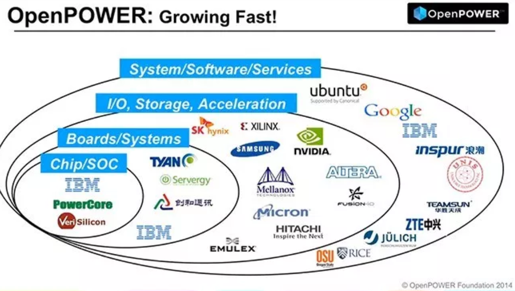
Google and IBM are leading an effort via the non-profit "OpenPOWER Foundation" that is supporting China's authoritarian government in conducting mass surveillance against its citizens, T he Intercept has revealed.
IBM under OpenPOWER sparked "innovation" in China's technology industry, has been leading a collaborative effort with China's Semptian Big Data Solutions and US semiconductor Xilinx to "advance a breed of microprocessors that enable computers to analyze vast amounts of data more efficiently."
An industry insider emailed documents to The Intercept alleging that Semptian uses American microprocessors to "enhance the capabilities of internet surveillance and censorship technology it provides to human rights-abusing security agencies in China" that monitors more than 200 million Chinese internet users on a daily basis.
After receiving tips from confidential sources about Semptian's role in China's mass surveillance program, a reporter used a bogus name and acted as a potential customer. A Semptian sales representative sent documentsconfirming that the company, under the cover of iNext -- has developed a mass surveillance system named Aegis, which can "store and analyze unlimited data" to allow "a full view to the virtual world"; reveal "the connections of everyone"; and provide "location information for everyone in the country."
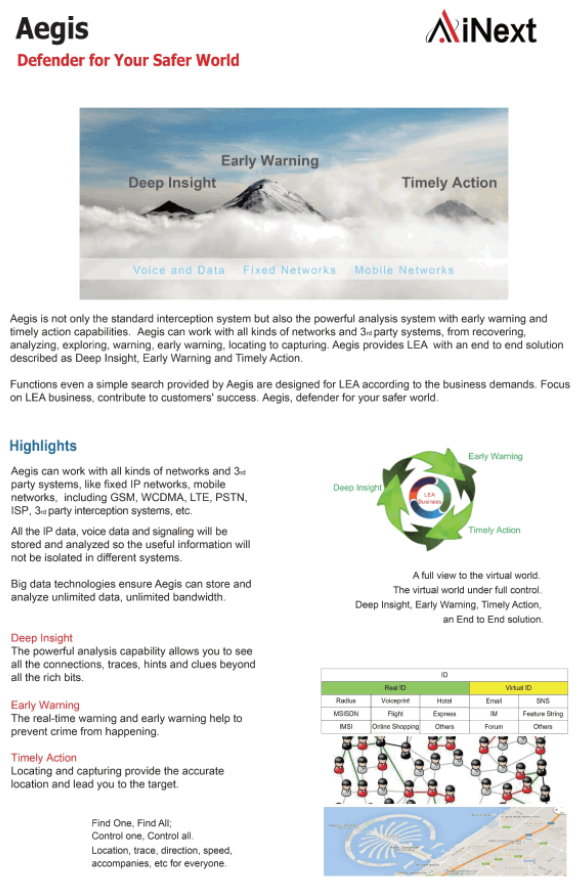
Confidential sources said Aegis is currently operating in China's communication networks to control information and assist government agents to "collect people's email records, phone calls, text messages, cellphone locations, and web browsing histories."
While Semptian, Google, and Xilinx ignored requests from The Intercept for comment, OpenPOWER Foundation emailed a statement insisting it "does not become involved, or seek to be informed, about the individual business strategies, goals or activities of its members," due to antitrust and competition laws.
An IBM spokesperson informed The Intercept that the company "has not worked with Semptian on joint technology development," refused to reply when asked about IBM's SuperVessel OpenPOWER cloud computing platform maintained by an IBM research unit in China.
IBM states on research.ibm.com that the Supervessel "acts as a virtual R&D engine for the creation and testing of applications serving burgeoning areas such as mobile and data analysis." IBM claims POWER applications are for big data, Internet of Things, and data virtualization consume "90% lower" power and are "300+ times faster in pattern matching, 200+ times faster for compression, 100+ times faster in machine learning."
IBM Research and Xilinx announced in 2016, "they will be enabling FPGA-based acceleration within the SuperVessel OpenPOWER development cloud" for demanding artificial intelligence applications including "big data analytics and machine learning."
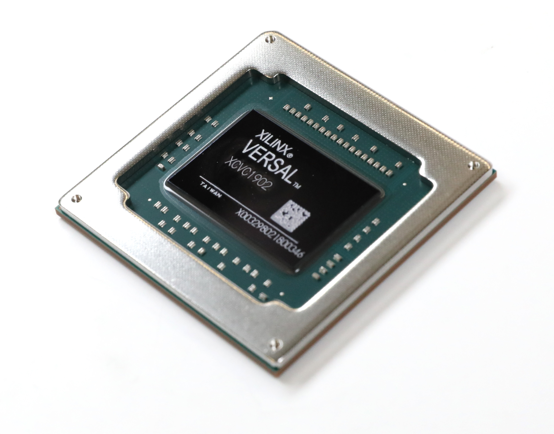
Xilinx microprocessors have similar components that are also in Intel Xeon and Xeon Phi used US super-computers. In 2015, the export of these chips to China was prohibited by the US Department of Commerce, but Xilinx coprocessors used in the SuperVessel cloud for China were excluded from the export ban.
Google shut down its Chinese search engine in 2010 after dozens of Gmail accounts of Chinese human rights activists had been hacked. Then the Chinese government demanded Google comply with demands to refine its search results. And since, Google has been quietly working on a Chinese censor-compliant search engine named Project Dragonfly.
The key to Google's search engines is its Tensor Processing Unit (TPU) for neural networks that delivers "15–30X higher performance and 30-80X higher performance-per-watt than contemporary CPUs and GPUs."
Exporting American TPU processors would undoubtedly be subject to US Commerce Department trade restrictions, but The New York Times reported last year that Google, just like IBM, "would allow other companies to buy access to those chips through its cloud-computing service."
Semptian has undoubtedly benefited from American tech companies, gaining access to breakthrough microprocessors and super-computer parts. The Chinese company stated on its website that it's "actively working with world-class companies such as IBM and Xilinx."
OpenPower Foundation stated on its website that it was excited to observe the partnership between Semptian, IBM, Xilinx, and other US tech firms.
It remains a mystery why US tech firms have preferred to work with Semptian; the arrangement could be a more comprehensive strategy to work jointly with the Chinese government to obtain greater access to other markets in Asia.
Elsa Kania, an adjunct senior fellow at the Center for a New American Security, said business partnerships between the US and Chinese companies are essential to have, "but when it is a company known to be so closely tied to censorship or surveillance and is deeply complicit in abuses of human rights, then it is very concerning."
Kania said, "I would hope that American companies have rigorous processes for ethical review before engaging, but sometimes it seems like there's a 'don't ask, don't tell,' policy — it's profit over ethics."
With US tech firms allegedly building China's surveillance state, it will only be a matter of time before this Orwellian technology washes ashore stateside. |
|



