During The Last Ice Age (190 ppm CO2), Horses Grazed In A Forested, Warmer-Than-Today Arctic AlaskaBy Kenneth Richard on 10. October 2019
In a new study, scientists report that about 17,000 to 20,000 years ago, when CO2 levels hovered near 190 ppm, “summer temperatures were higher here [North Slope, Alaska] than they are today” ( Kuzmina et al., 2019).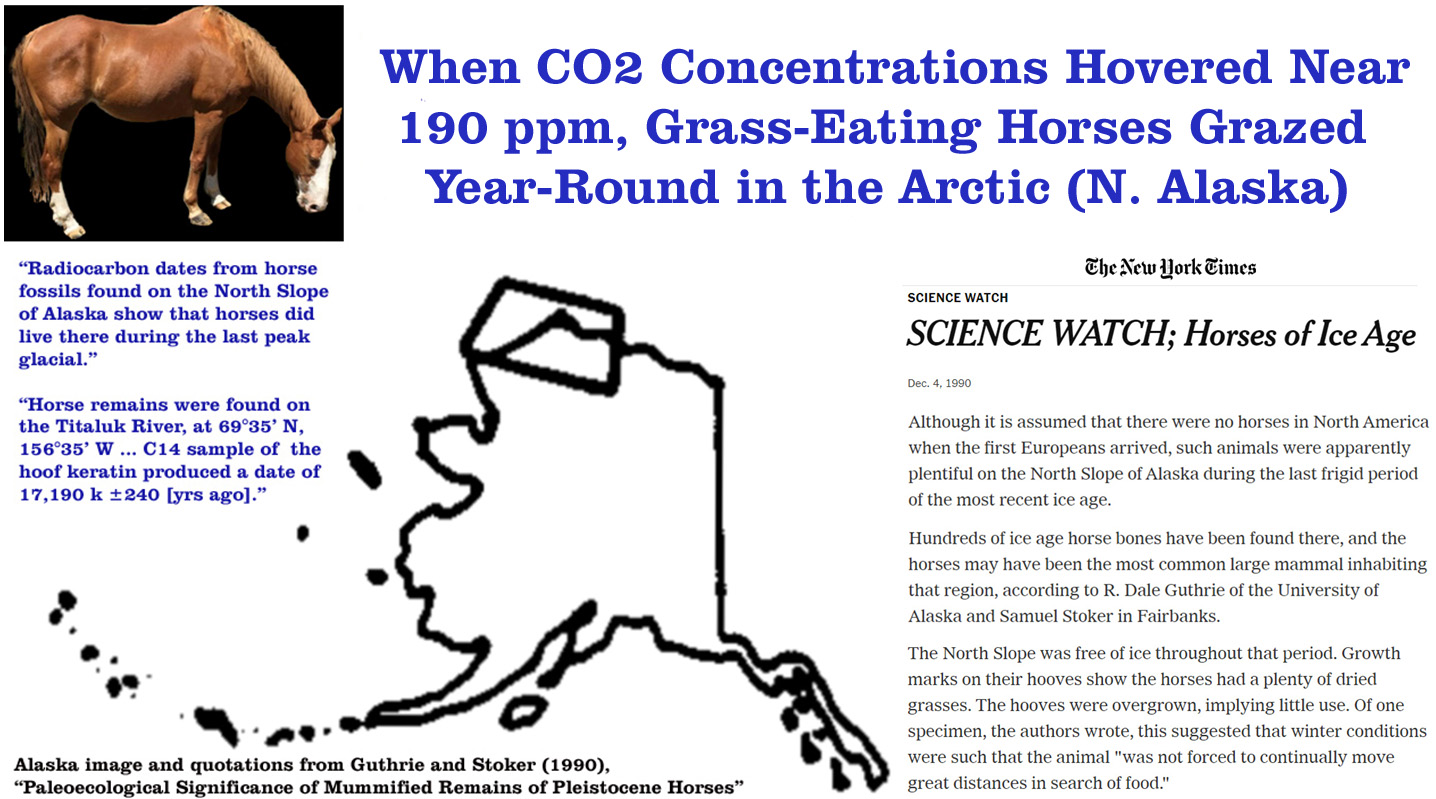
Image Source: Guthrie and Stoker, 1990 and The New York TimesIn the modern climate, North Slope, Alaska (north of the Arctic circle) has a mossy tundra terrain and an absence of trees.
About 8,000 to 9,000 years ago, with CO2 levels lingering around 260 ppm, this region was imbued with both trees and animal species that today live many 100s of km south ( Kuzmina et al., 2019).
Even during the Last Glacial Maximum (LGM) 17,000 to 20,000 years ago, when CO2 levels hovered near 190 ppm, “summer temperatures were higher here than they are today” ( Kuzmina et al., 2019).
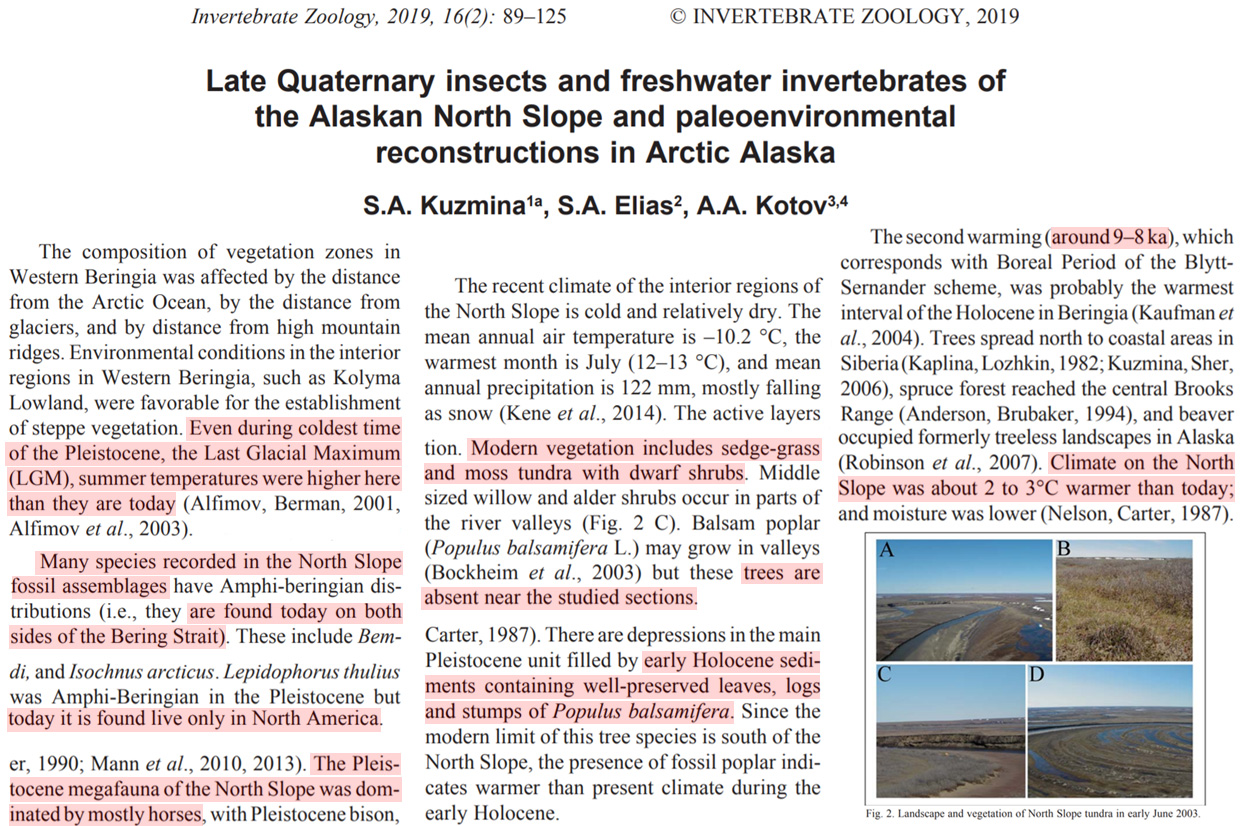
Image Source: Kuzmina et al., 2019During the LGM, horses were the most common large animal living in this region of the Arctic, followed by bison. Horses had a “substantial dietary volume” of dried grasses year-round, even in winter ( Guthrie and Stoker, 1990).
Even though CO2 concentrations have reached 410 ppm today, 220 ppm higher than during the LGM, Northern Alaska is too snow-covered and frigid for horses to occupy this region now.
As Guthrie and Stoker, 1990 conclude, the Arctic is presently “no place for horses” because there is too little for them to eat, and the food there is to eat is “deeply buried by snow”.
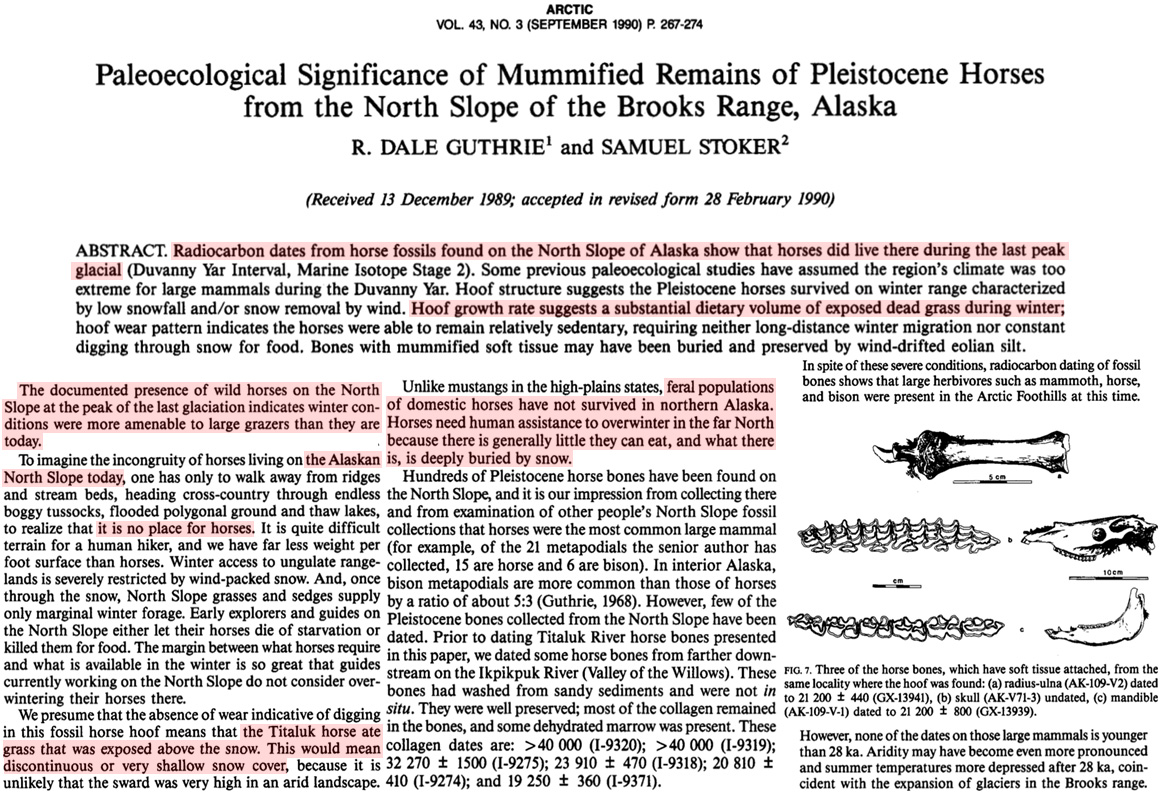
Image Source: Guthrie and Stoker, 1990notrickszone.com |



