| | | Something big ... let us hope it works
bloomberg.com
Chasing Unlimited Energy With the World’s Largest Fusion Reactor
October 29, 2019, 12:01 PM
The world’s great powers can’t agree on small steps to tackle climate change, but they’re cooperating on a huge leap of faith in Provence.
By Jonathan Tirone
Photographs by Alastair Philip Wiper
The International Thermonuclear Experimental Reactor, a fusion reactor under construction in southern France, is the world’s biggest scientific puzzle—and one of its biggest trade puzzles. At a time when tariffs, xenophobia, and intellectual-property laws are restricting the flow of material, people, and ideas across borders, a 35-country network is seeking to harness the power that makes the stars shine. “They all understand that they can’t make it alone,” says Bernard Bigot, the man in charge of piecing ITER together. “It’s the first time in human history countries representing more than half the world’s population and 80% of GDP are working together to achieve a common goal that is absolutely critical.”
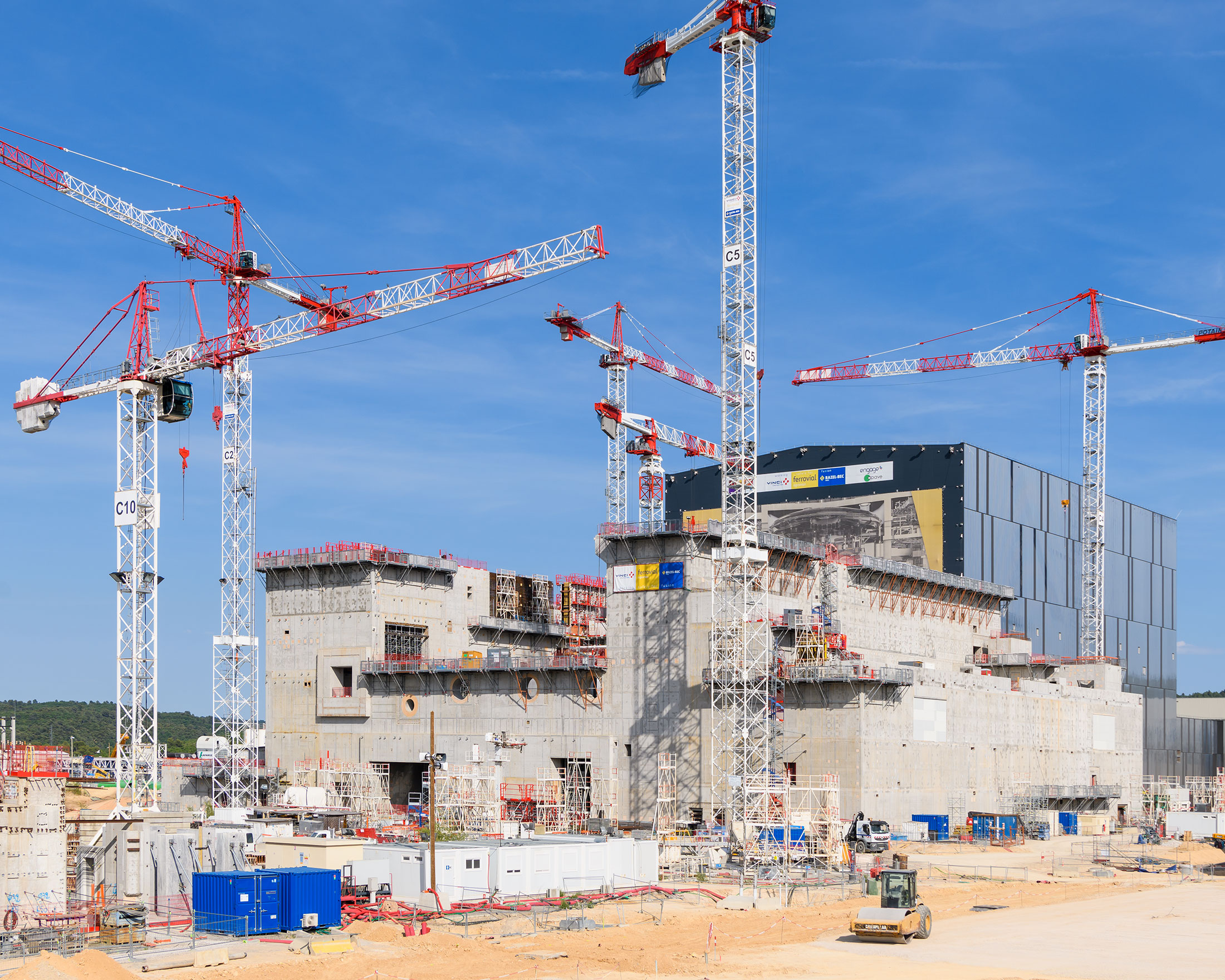
? The ITER Tokamak Complex in Provence will house a reactor intended to establish the viability of limitless, clean fusion energy.
Unlike traditional nuclear plants, which generate power that splits atoms inside fission reactors, ITER aims to fuse atoms together at 150 million degrees Celsius, a temperature 10 times hotter than the sun. The reactor, called a tokamak, is derived from designs first tested in the Soviet Union. Lasers and powerful electromagnets are arrayed around a supercooled, doughnut-shaped container to hold superheated plasma in place. The goal is to make the process efficient enough for fusion to be economical, self-sustaining, and safe. Bigot, a doctor of chemistry and physics who scaled the ranks of France’s atomic energy commission before joining ITER, figures the machine will ultimately contain about 10 times the amount of steel in the Eiffel Tower.
Reactor illustration by Chris Philpot. Fusion diagram: Culham Centre for Fusion Energy
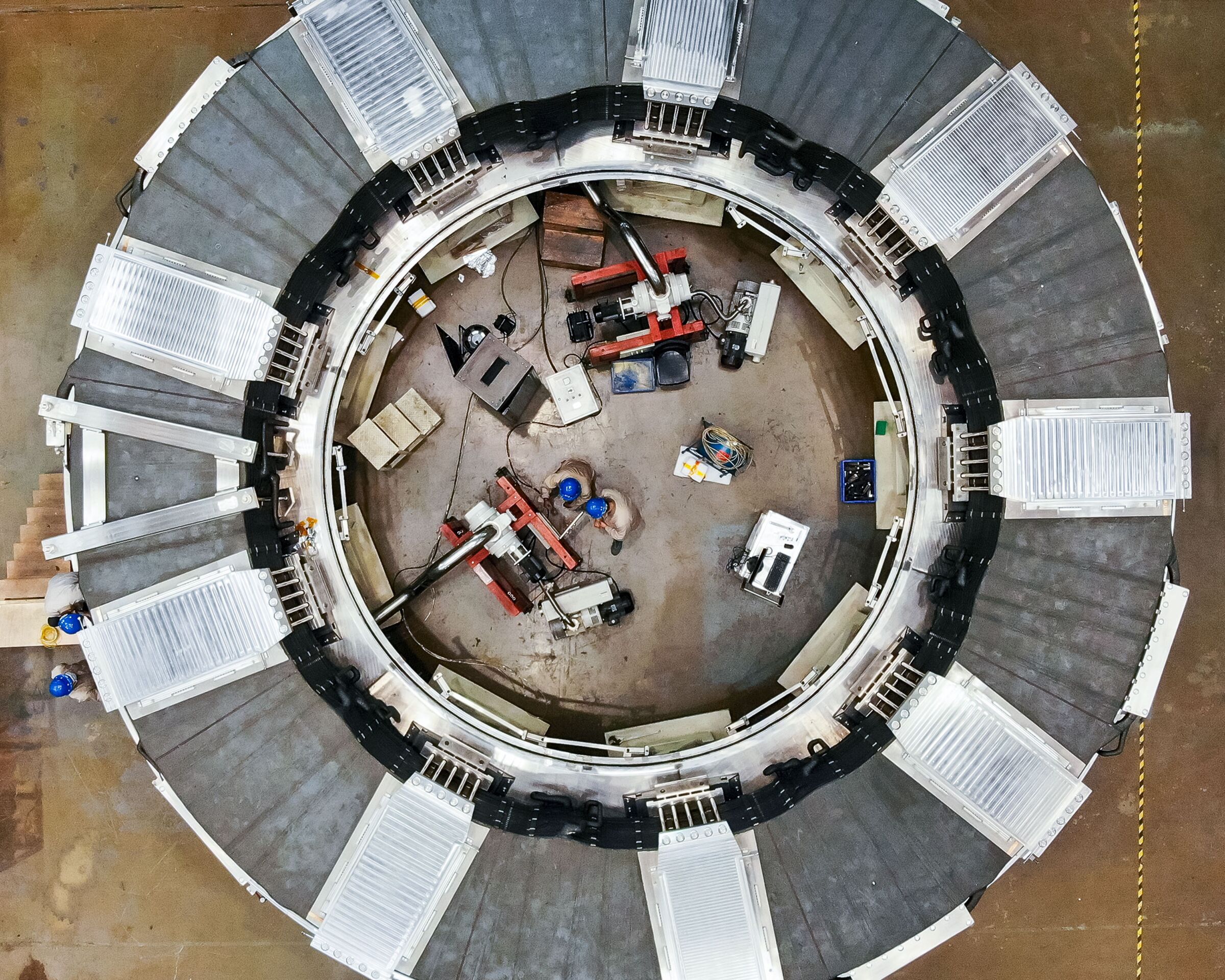
The project, which grew out of Cold War-era collaboration between the governments of Mikhail Gorbachev and Ronald Reagan, was incorporated under a treaty signed in 2006 by China, the European Union, India, Japan, Russia, South Korea, and the U.S. The agreement guarantees free passage of reactor materials and even distribution of intellectual property among the 35 parties. (Switzerland is also an ITER member via a cooperation agreement with the EU.) More than 1 million pieces of equipment manufactured to strenuously high standards have been making their way to the campus 44 miles north of Marseilles. The sides of a nearby mountain had to be chipped away in preparation for some of the biggest gear to be transported, including poloidal field coil No.?6, a magnetic ring that’s being shipped from China. Construction of the $22 billion reactor is about 65% complete and on course to begin testing in 2025. “We’ve always been able to bypass difficulties,” Bigot says, noting that his engineers have been unimpeded by Western sanctions against Russia.
That’s not to say the smooth road will persist. A no-deal Brexit could at least temporarily sever the U.K.’s participation, for example. The tokamak at the country’s Culham Centre for Fusion Energy has been a valuable source of people and knowledge for ITER. “There is a long-standing capability in the U.K. related to fusion, and we could lose very useful services,” Bigot says, adding that it would be up to the remaining members to decide at what cost the U.K. might be allowed to rejoin the project separately from the EU.
Other efforts are under way to prove the viability of fusion power, but none is being conducted in quite the same spirit of collaboration. If ITER succeeds, it will provide a template for world powers to develop reactors of their own, and humankind could have limitless emissions-free power by midcentury. The project could become a symbol of international peace and stability—and a concrete means of achieving it.
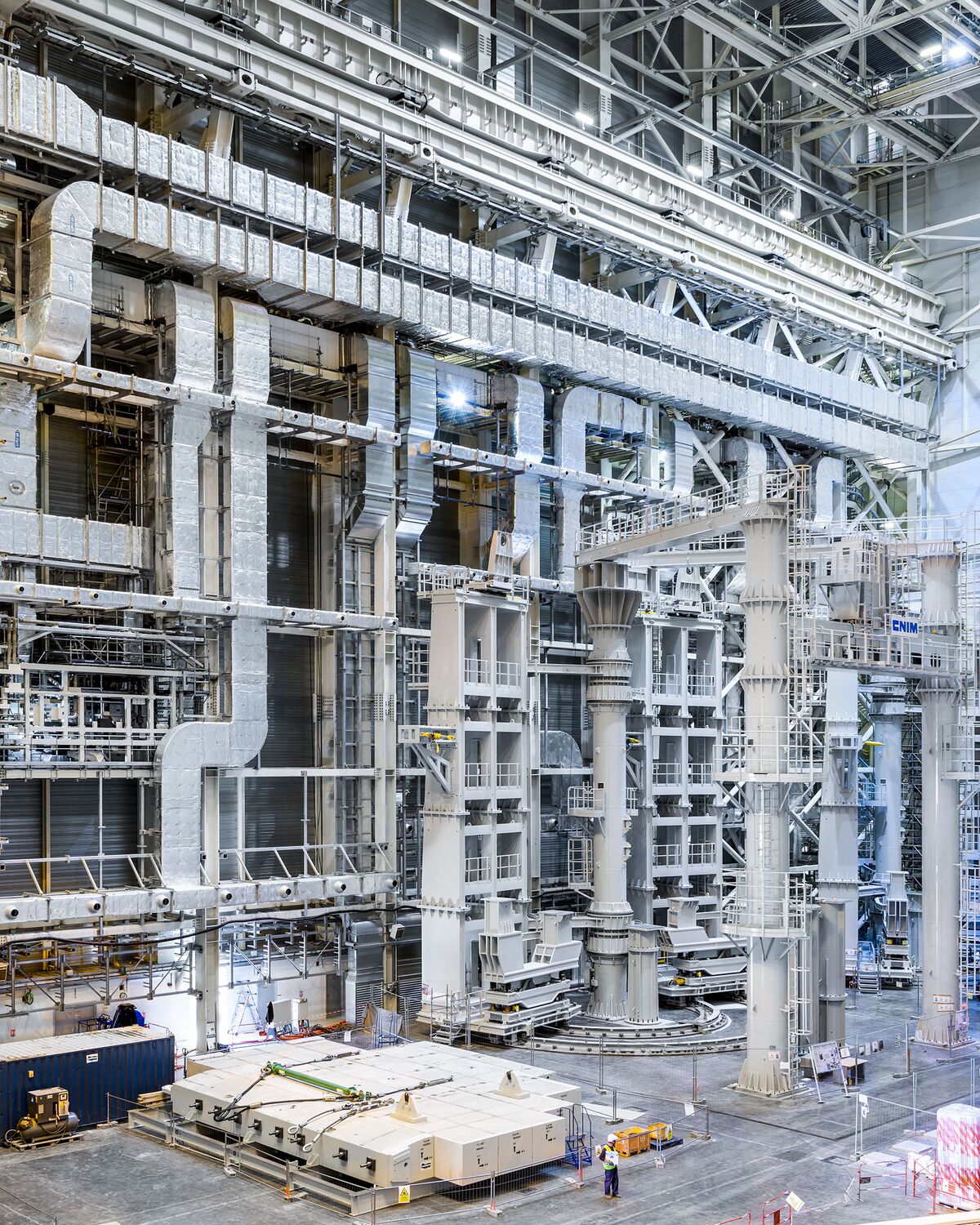
? An 800-metric-ton tool will preassemble some of ITER’s largest components before a crane lifts them into the machine well. The tool’s three columns are arranged in a triangle, shown on the right side of the image.
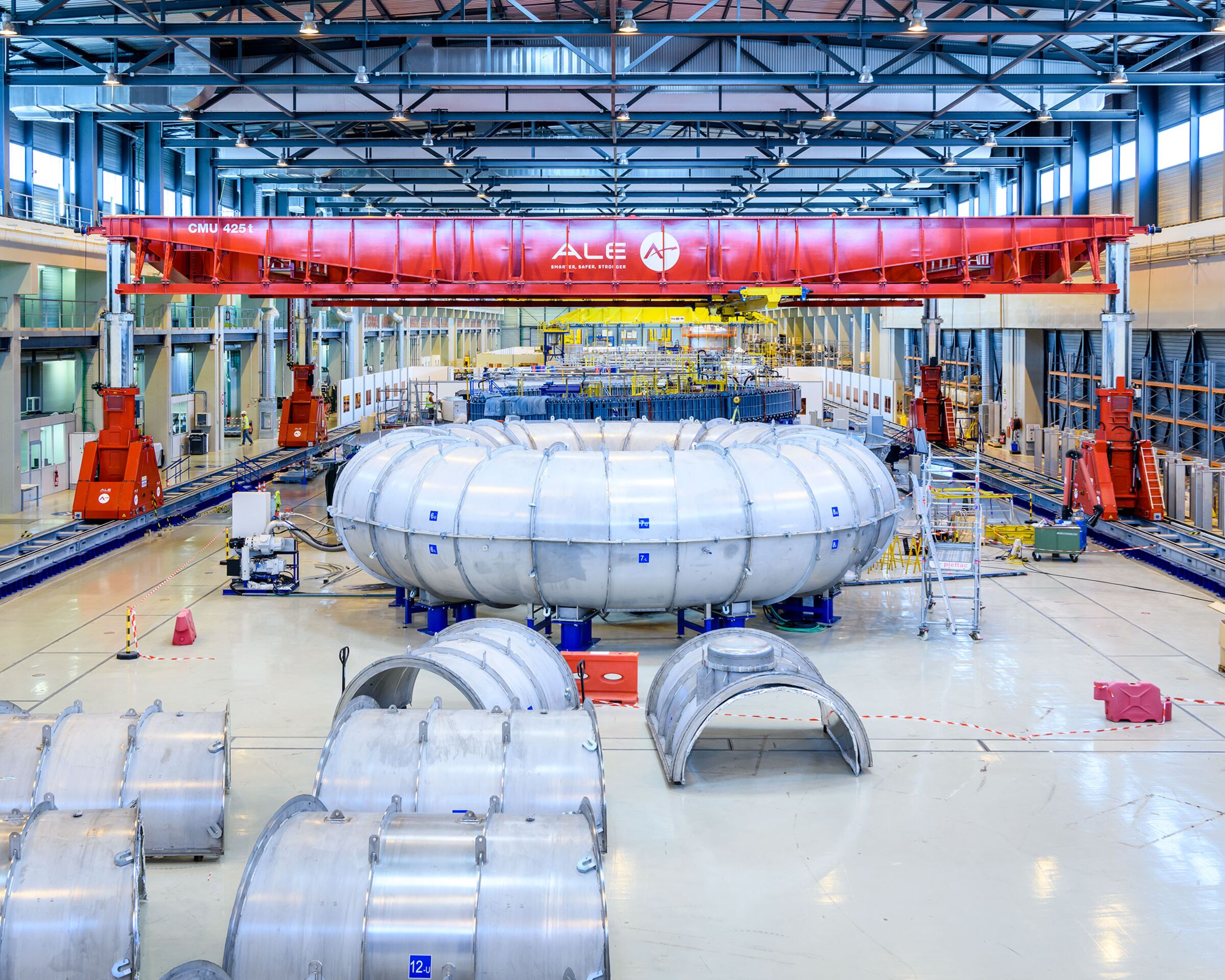
? The facility in France where the magnetic poloidal field coils are wound. The coils carry the power needed to cool the outside of the plasma container.
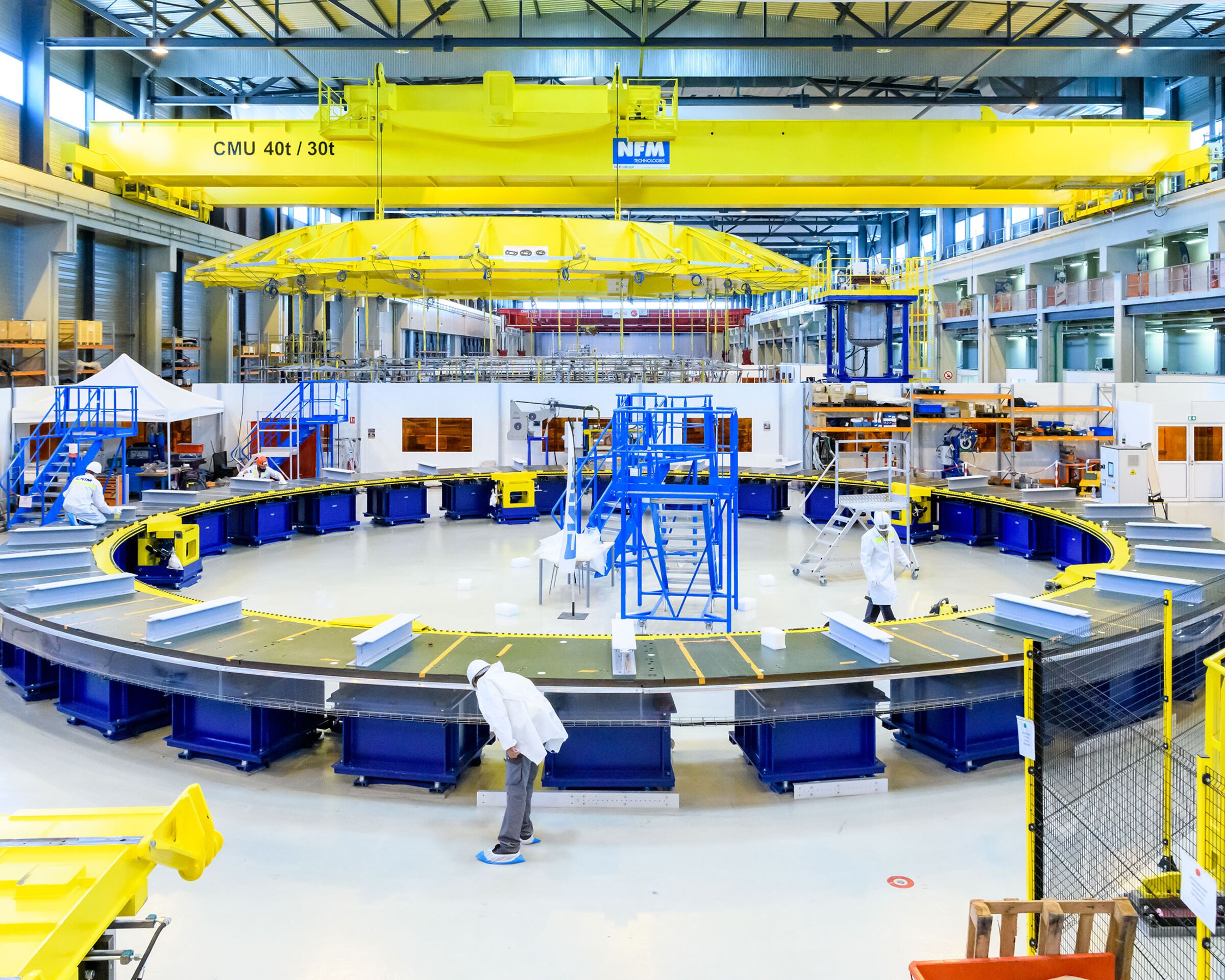
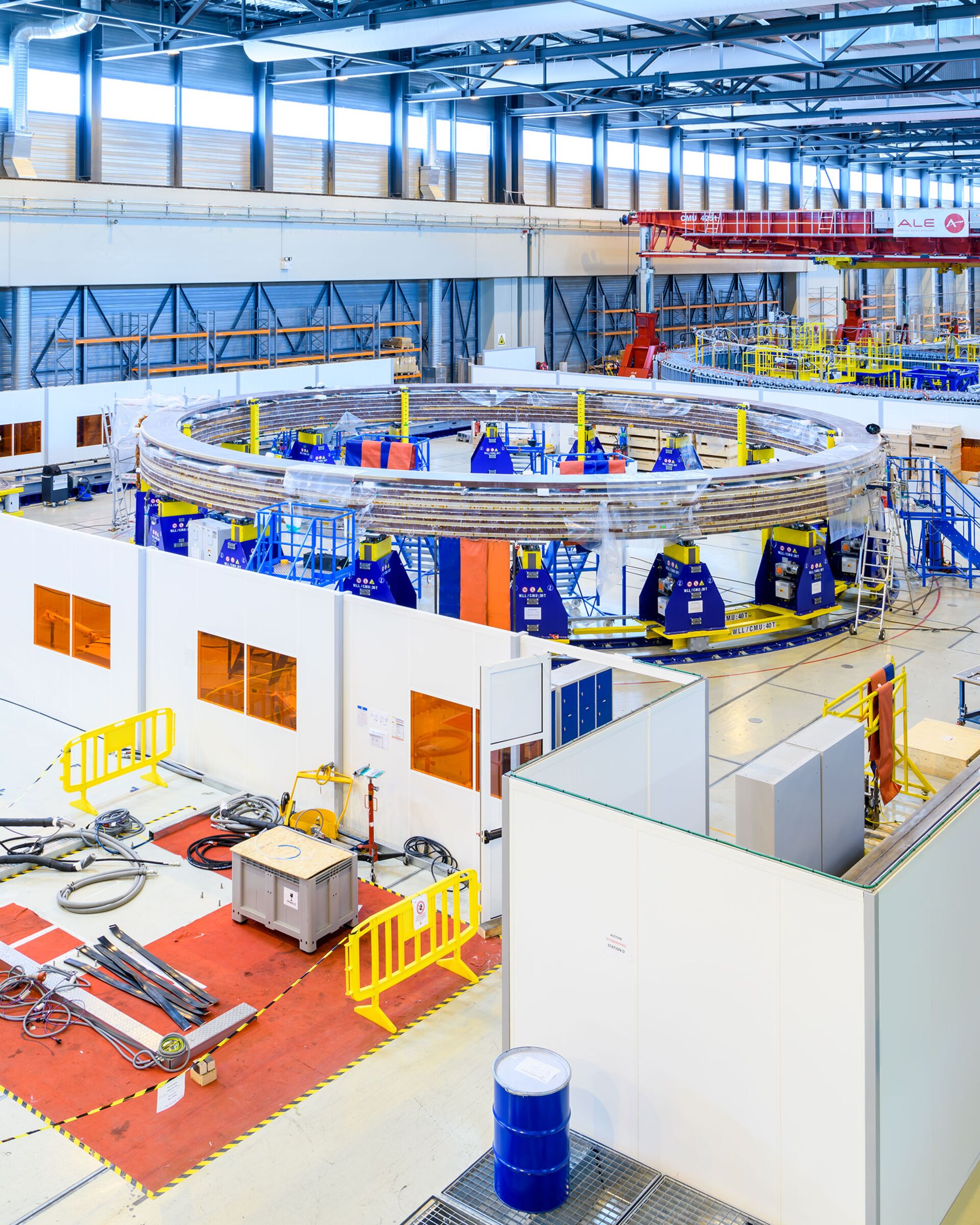
? ITER will have six poloidal field coils; four are being built on-site because they’re too big to be shipped in. Russia will supply PF1, and PF6 is coming from China.
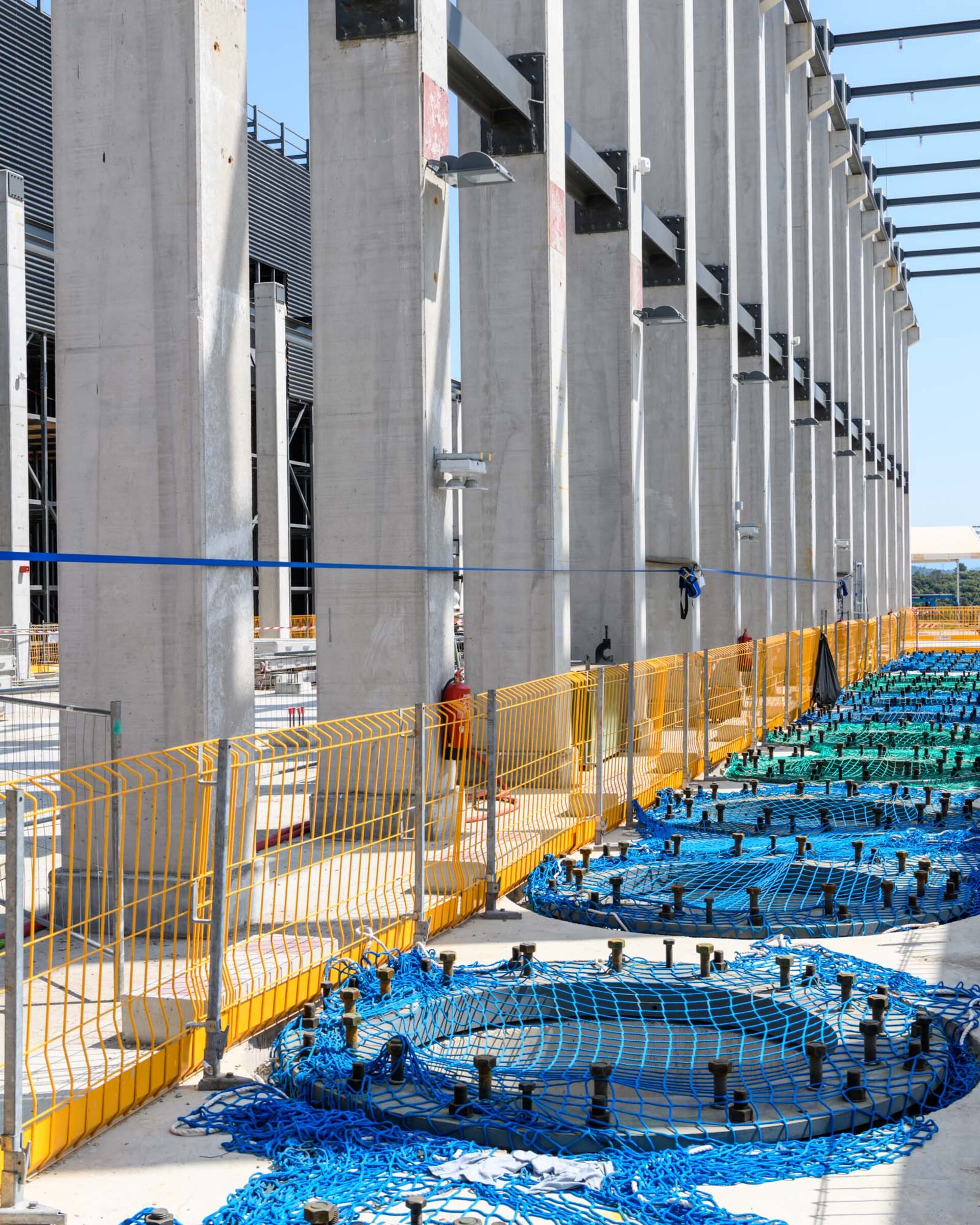
? Housings for the powerful vertical turbine pumps of ITER’s heat-rejection system, which will transfer heat through a cascade of loops to a designated zone for cooling by evaporation.
? Construction of PF6 in Hefei, China.
Photographer: Drone footage by Alex Greenberg
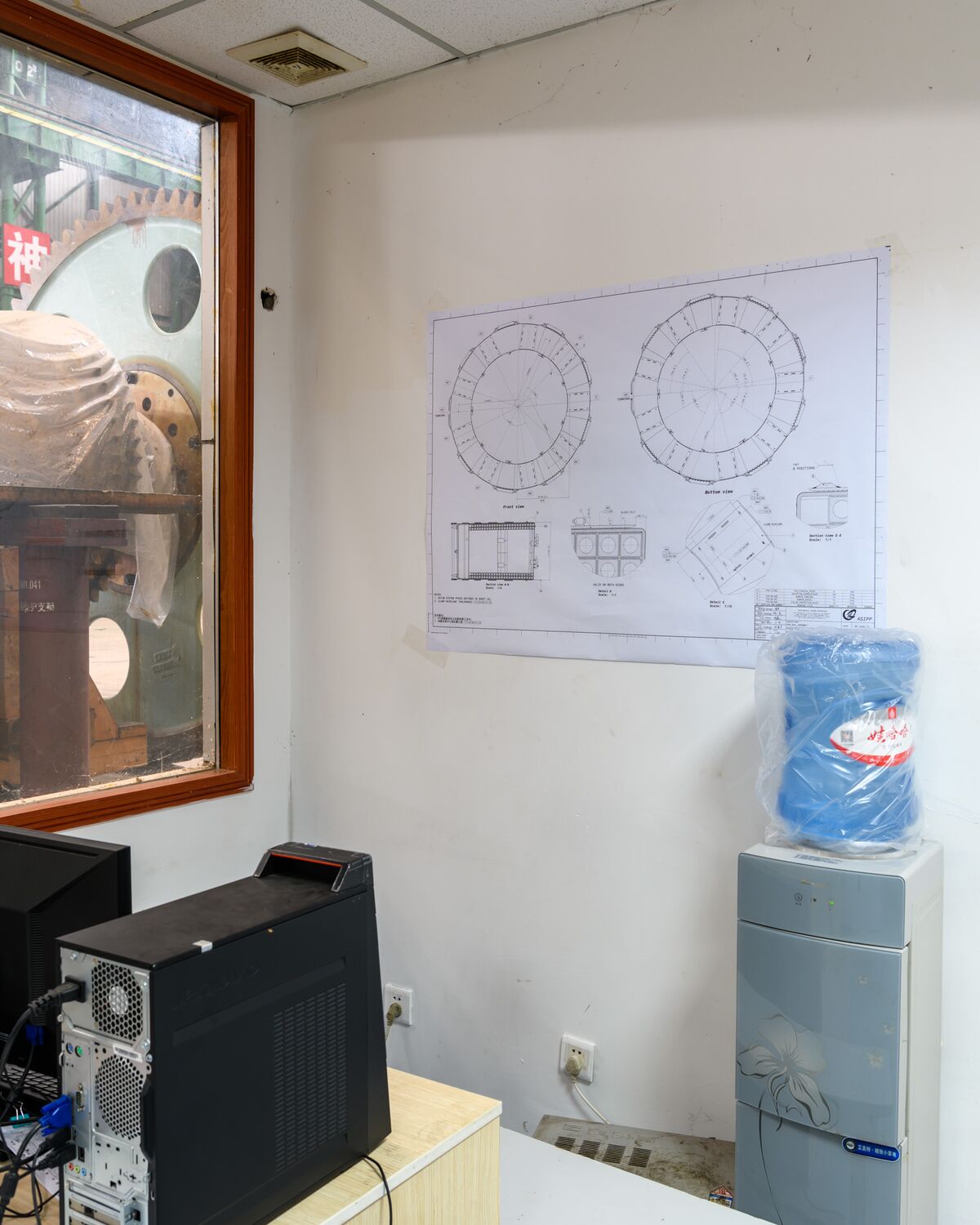
? Diagram of PF6’s final assembly on a wall in Hefei. |
|



