Scientists Document A DECLINE In Overall Greenhouse Effect Forcing From 1985-2014By Kenneth Richard on 30. December 2019
CO2 concentrations rose from 345 ppm to 398 ppm in the 29 years from 1985 to 2014. Mainstream scientists sympathetic to the anthropogenic global warming (AGW) paradigm have nonetheless reported the overall greenhouse effect forcing has been flat to declining throughout this period.1. Cess and Udelhofen, 2003 Due to the downward trend in cloud cover, absorbed shortwave radiation increased and the overall greenhouse effect’s forcing influence declined from 1985-1999. The authors consider these trends to be driven by natural variability.
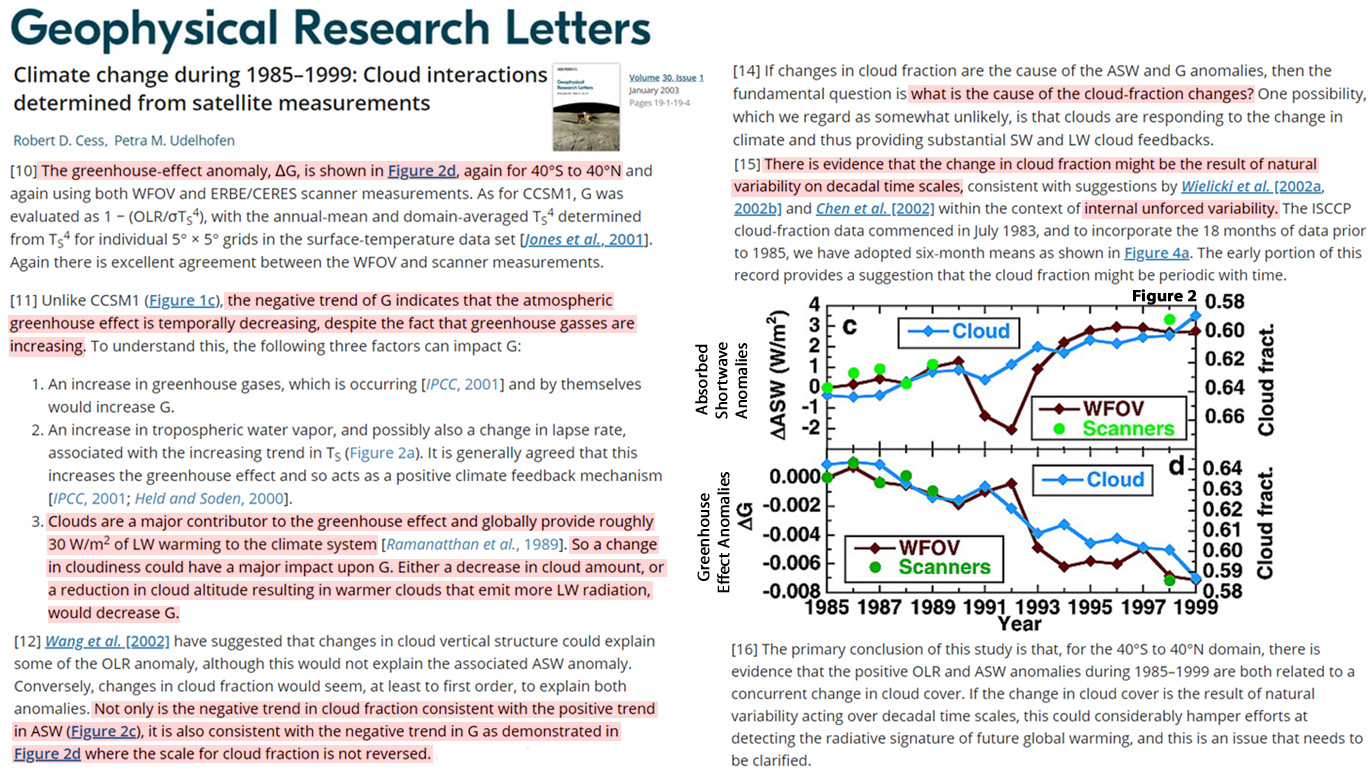
Image Source: Cess and Udelhofen, 20032. Song et al., 2016 The overall greenhouse effect went on “hiatus” from 1992-2014, with the combined forcing effects of water vapor, cloud, and CO2 declining by -0.04 W/m² per year (-0.4 W/m² per decade) during this interval. Again, the main reason for the declining greenhouse effect trend was the downward trend in cloud cover.
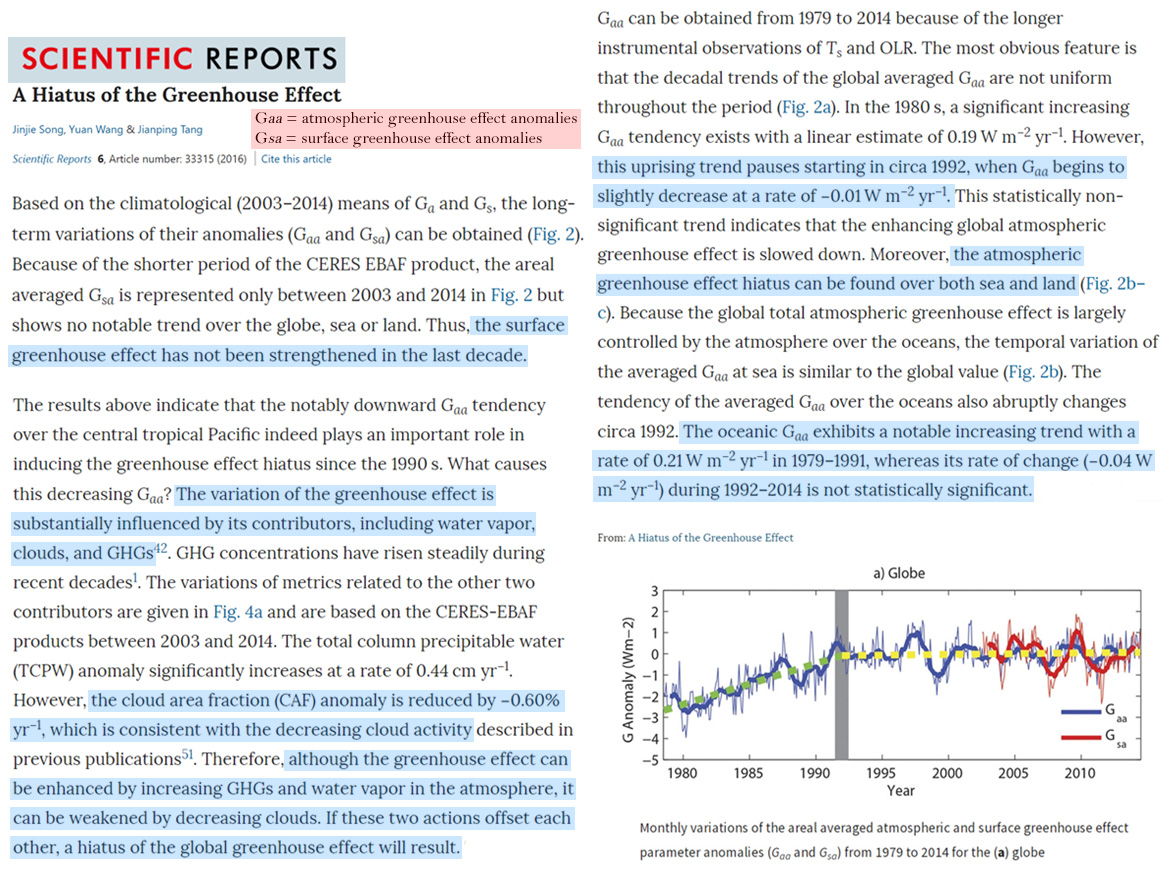
Image Source: Song et al., 20163. Kato et al., 2018 Downward longwave radiation (DLR), or the overall greenhouse effect, responds to variability in water vapor and cloud. CO2 isn’t mentioned in the paper as a factor influencing DLR. Total DLR was negative (-0.2 W/m²) during this decade, insinuating rising CO2 had no net warming climate impact. In contrast, downward shortwave forcing increased by +2.2 W/m² per decade from 1986-2000 and by +1.3 W/m² from 2005-2014. These positive shortwave absorption trends explain the warming during this period.
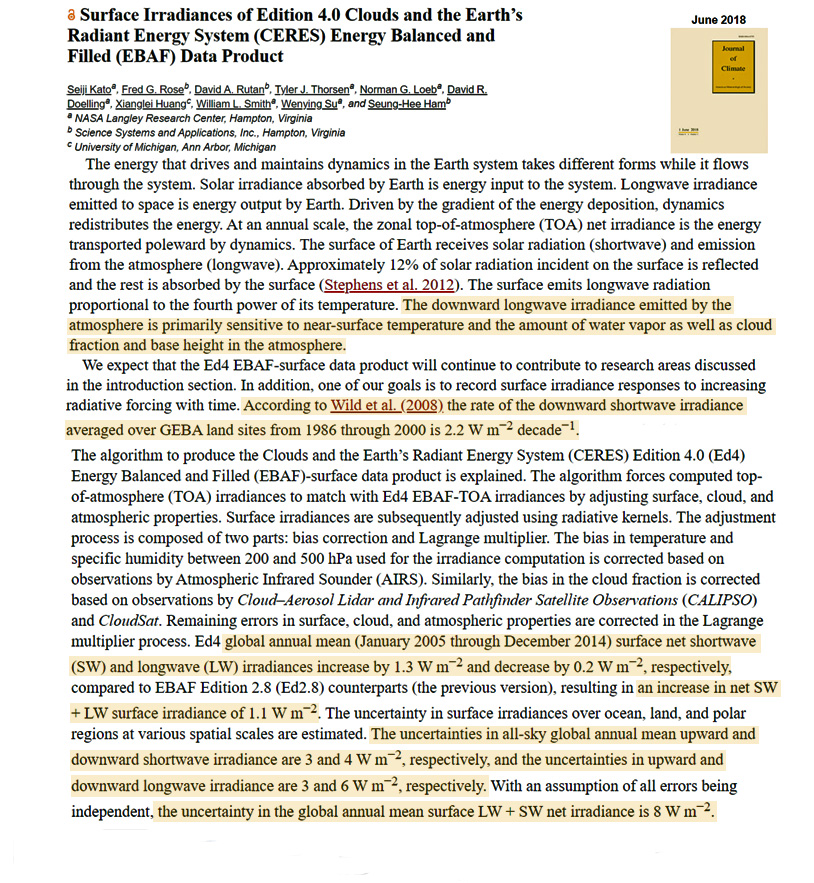
Image Source: Kato et al., 2018 |



