| | | Crude Crashes, Stocks Plunge, FX Sees Wild Moves: Markets Wrap
By Adam Haigh
www.bloomberg.com /news/articles/2020-03-08/yen-slides-as-oil-price-war-adds-to-global-worries-markets-wrap
Oil prices crashed, equities plunged and currencies and bonds saw wild moves as panic appeared to grip financial markets in the aftermath of a full-blown price war in crude.
Futures on the S&P 500 Index fell about 5%, triggering trading curbs. Japanese stocks sank 6% and futures on the U.K.’s FTSE 100 Index tumbled over 7%. Exchange rates including the yen and Australian dollar saw sudden moves that showed traders struggling to establish where new trading ranges might be. Sovereign bond yields plumbed fresh lows, on mammoth moves including a tumble of more than a quarter percentage point for 10-year U.S. yields.
Among the tumultuous moves to kick off the week:
- For the first time, the 10-year Treasury yield fell below 0.5% and the 30-year yield dropped under 1%
- Crude plummeted more than 30%, sliding the most since the Gulf War in 1991
- Norway’s krone slid to its weakest against the dollar since the 1980s. Mexico’s peso as much as 8%, to the weakest since the aftermath of border-wall advocate President Donald Trump taking office
- Australian and New Zealand 10-year government bond yields hit fresh record lows
- The yen climbed to its strongest since 2016
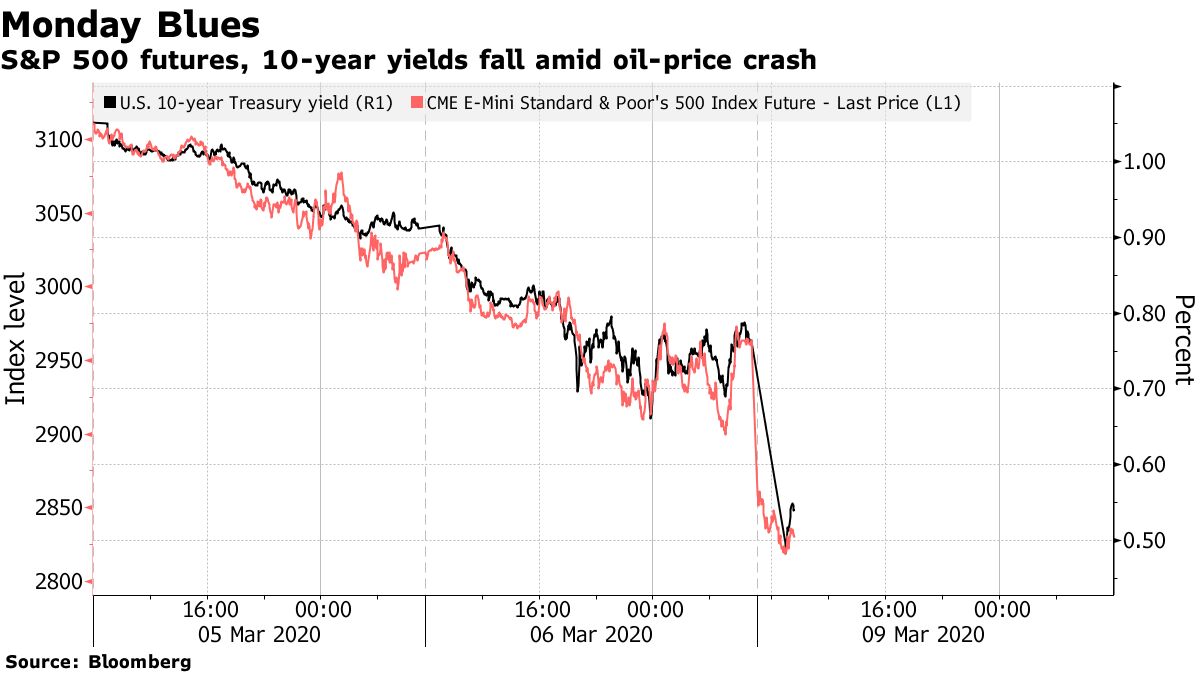
The oil-price crash, if sustained, would upend politics around the world, exacerbate strains in U.S. high-yield credit and add pressure on central bankers trying to avert a recession. It would otherwise prove a boon to consumers, but the coronavirus is increasingly keeping them at home. Italy over the weekend effectively put its industrial heartland in the north of the country on lockdown.
Equities and haven assets showed little immediate reaction to news that the Trump administration is drafting measures to blunt the economic fallout from the virus -- speaking to the state of stress in markets.
“You just don’t know which way things are going to go, it makes it very hard to price anything right now,” said Sarah Hunter, chief economist for BIS Oxford Economics, on Bloomberg TV. “We’re seeing that in the market with the wild oscillations that are coming through.” |
|



