Speaking of spreading, to a town near you?
Since it is cooling with food becoming more scarce and expensive. Advise you to begin canning these..
"They are also edible insects; they have been eaten throughout history and are considered a delicacy in many countries.
The Threat to Agriculture Which May Be the Result of Climate Cooling
Locusts have plagued farmers for millennia. When we look at the plague of locust in Africa which is now spreading to China, it brings up visions of the Book of Exodus, which recounts around 1446 BC the Egyptians experienced an exceptional ravenous Plague of Locusts which was the eighth Biblical plague. As Exodus describes, “They covered the face of the whole land, so that the land was darkened, and they ate all the plants in the land and all the fruit of the trees that the hail had left. Not a green thing remained, neither tree nor plant of the field, through all the land of Egypt.”
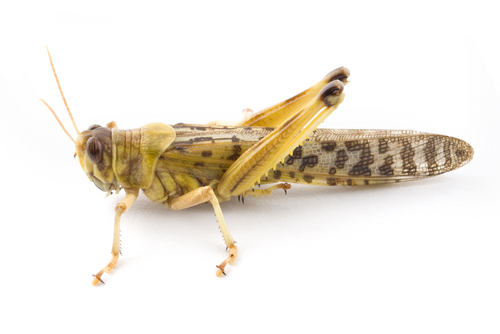
The desert locusts which are swarming right now have a long history of devastation. Owing to the destructive habits of locusts, they have been a representation of famine in many Middle Eastern cultures. During the spring of 1747, desert locusts arrived outside Damascus eating the majority of the crops and vegetation of the surrounding countryside. Historical accounts described them like a black cloud that blocked the sun. They covered everything including the trees and the crops. There was also a major swarm in 1915, known as the Ottoman Syria locust infestation, which devastated Palestine, Mount Lebanon, and Syria. Right now, the 2019–2020 swarm has impacted East Africa infesting Ethiopia, Kenya, Eritrea, Djibouti, and Somalia with the desert locust. This is what has spread to Pakistan and appears headed to devastate China. The government in China is now facing a Locus Plague threatening the harvest. These are the desert variety and officials are now warning local authorities to prepare for the possible arrival of the voracious insects.
The desert locust (Schistocerca gregaria) which is now threatening China is particularly notorious. Found in Africa, the Middle East, and Asia, they inhabit some 60 countries and can cover one-fifth of Earth’s land surface. Desert locust plagues may threaten the economic livelihood of one-tenth of the world’s humans. Such a desert locust swarm can be 460 square miles in size and pack between 40 and 80 million locusts into less than half a square mile. Each locust can actually eat its weight in plants each and every day. Therefore, a swarm of such size would eat 423 million pounds of plants every single day.
The rise in such a Plague of Locusts is by far a serious event which strangely may they align with global cooling. They tend to result in major famines and disease. In the Horn of Africa, the situation remains extremely alarming, specifically Kenya, Ethiopia and Somalia where widespread breeding is in progress and new swarms are starting to form. This is representing an unprecedented threat to food security and livelihoods at the beginning of the upcoming cropping season. However, locust swarms can travel vast distances. In 1954, a swarm flew from northwest Africa traveled to Great Britain. In 1988, another made the lengthy trek from West Africa to the Caribbean across the Atlantic Ocean.
 |



