Solved - The mystery of low mortality rate in Germany
Coronavirus Less Deadly in Germany Because of Youthful PatientsBy
Naomi Kresge
and
Tim Loh
March 24, 2020, 1:00 AM EDT
As the coronavirus death toll surges across much of Europe, one country remains an anomaly.
Despite more than 25,000 infections, the fifth-most in the world, Germany’s mortality rate is only 0.4%, according to data compiled by Bloomberg from state health authorities. At the virus’s epicenter in Italy, by contrast, some 9.5% of people confirmed to have the infection have died.
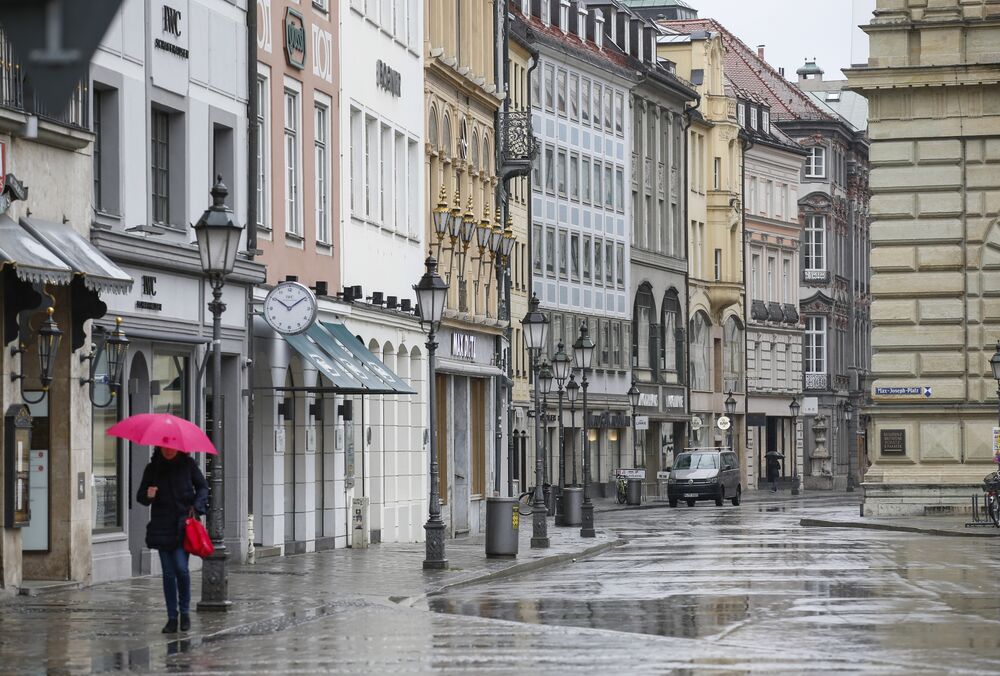
A lone pedestrian shelters from the rain under an umbrella on an empty street in Munich, Germany, on March 21.
Photographer: Michaela Handrek-Rehle/Bloomberg
There may be many reasons for the disparity, but they all boil down to one thing: Covid-19 has not yet hit as hard among the oldest and frailest members of Germany’s population. Authorities are testing and tracking mild cases aggressively, and more than 80% of those confirmed are in people under the age of 60. In Italy, despite similar demographics, the picture is vastly different, with the virus disproportionately striking the old.
Taken together, the two countries are an object lesson for why public health authorities around the world are sealing off nursing homes and asking families not to visit elderly parents or grandparents. Once the virus spreads into an older population, as Italy shows, it can overwhelm health systems and become more deadly for everyone.
Coronavirus DiscrepancyGermany’s confirmed cases are mostly younger than in Spain and Italy
Source: Germany, Spain, Italy government data
In Italy, 74% of those who’ve tested positive are over 50. In Germany, 82% of cases are people under 60. The prospect that the outbreak may shift to older people has German health officials worried, too.
“We are only at the beginning of the epidemic,” said Lothar Wieler, president of the Robert Koch Institute, Germany’s public health authority.
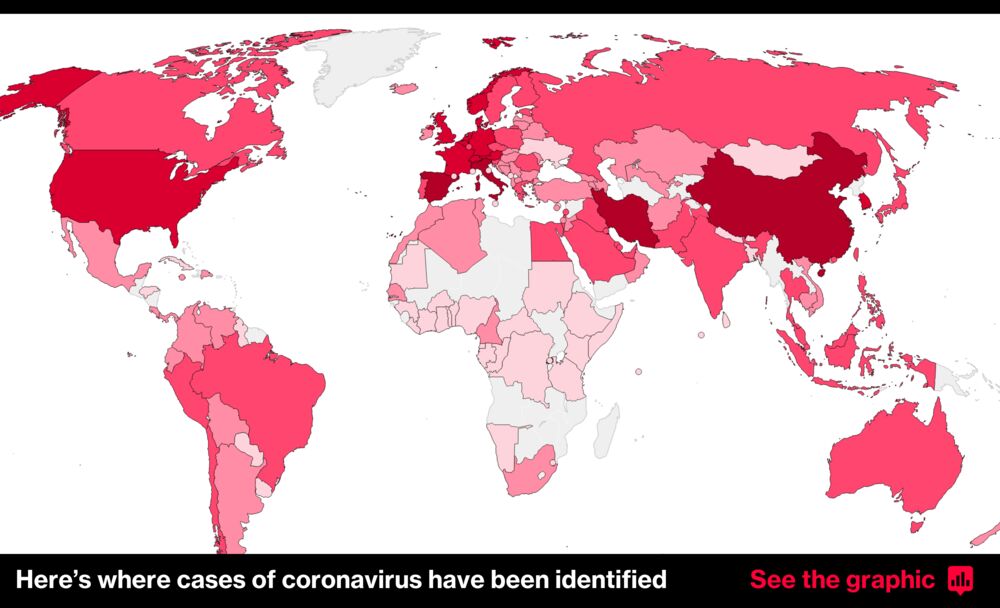
Hospitals OverwhelmedThe virus has infected more than 350,000 people and killed more than 16,000 around the world since it emerged in China late last year. About a third of those deaths have been in Italy, where some hospitals are overwhelmed. There have been reports of doctors forced to triage patients and ration equipment to save those most likely to live.
Europe’s Desperate Doctors Shield Themselves With Trash Bags
Health authorities still don’t know exactly how the virus entered Italy, but once there it easily infiltrated the high-risk older generation. To a degree uncommon in most other parts of Europe, Italian adults are in frequent contact with their parents. The “nonna” and “nonno” provide childcare and standing Sunday lunch dates, and they often live in the same city -- or even closer.
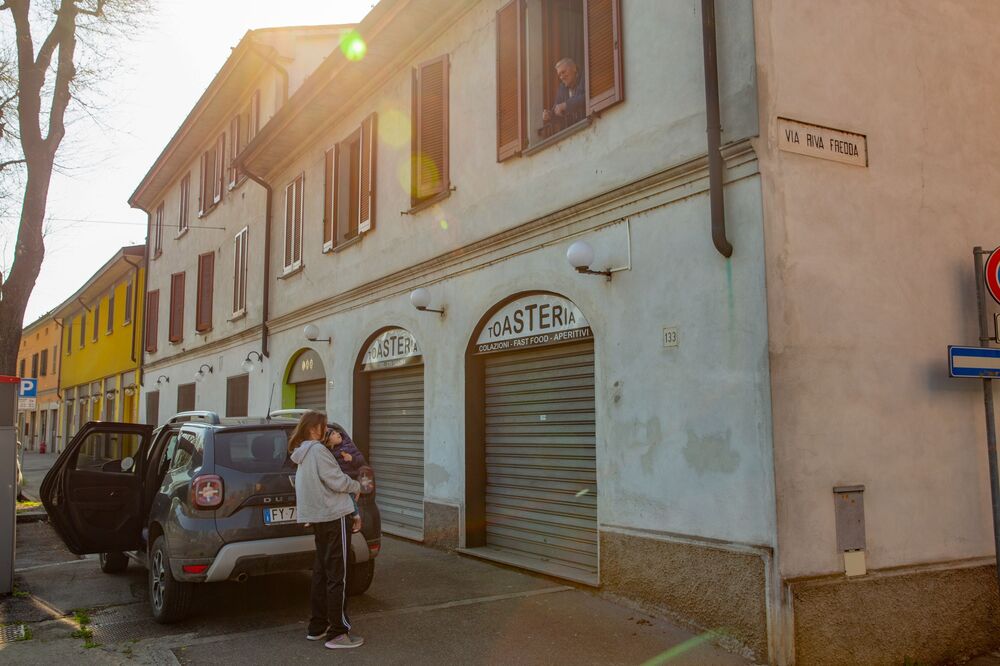
A grandfather speaks to his grandchild from the balcony of the house where he is self-isolating in Cremona, Italy on March 21.
Photographer: Francesca Volpi/Bloomberg
More than 20% of Italians between the ages of 30 and 49 live with their parents, according to Bonn University economists Christian Bayer and Moritz Kuhn. That’s more than double the rate for Germans in that age bracket. Bayer and Moritz have found a correlation between generations living under one roof and case fatality for coronavirus.
‘Social Network’“Why are so many elderly in some countries getting infected whereas in other countries they don’t?” Bayer said. “The social network is a natural explanation.”
While other factors are certainly influencing fatality rates, Bayer said his analysis appears to bear out thus far for most of Europe and the U.S. Countries where multigenerational living is common -- including Greece, Bulgaria, Poland and Serbia -- should move swiftly to protect the elderly, he said.
In Germany, many early cases were in young and healthy people who had just been to ski resorts where the virus was circulating, often in northern Italy or neighboring Austria. The majority of cases have been in people who are 35 to 59 years of age. The average age of those killed by the disease was 82, the Robert Koch Institute’s Wieler said on Monday.
Thanks to a “very aggressive testing process” in Germany, more of the mild cases are probably being included in the total numbers, said Michael Ryan, head of the World Health Organization’s health emergencies program. Ryan predicted that mortality rates will evolve in coming weeks, as patients die in the hospital three to four weeks after being diagnosed.
Italian authorities have pushed back against the idea that the country’s mortality rate is due to the strain on hospitals overrun by new patients, especially in hard-hit regions such as Lombardy. Areas like Veneto, around Venice, have tested more extensively and have lower mortality rates.
Italy’s TollEmergency chief Angelo Borrelli said Friday that the Italian death toll may be skewed higher by an expansive definition of coronavirus deaths, with anyone who tested positive being included, regardless of any other conditions from which they suffered. But Germany’s Koch Institute says it’s following a similar procedure.
“The real risk is the geriatric age and also concurring illnesses such as high blood pressure and diabetes,” said Roberto Bernabei, geriatrics professor at Catholic University in Rome. “These lead to a greater aggressiveness from the virus.”
Yes, Young People Are Falling Seriously Ill From Covid-19
Just 2.7% of confirmed infections in Germany are in people over the age of 80, the Koch Institute said on Monday. That compares with 18% of cases in Italy.
For now, children should visit their grandparents online instead of in person, German Chancellor Angela Merkel said last week. She suggested Skype, telephone calls and emails, or “maybe writing letters again.”
— With assistance by Giovanni Salzano, Corinne Gretler, Marco Bertacche, Alberto Brambilla, and Alessandro Speciale
|



