Nickel Belt: Staggering warmth recorded in Canada during the heart of winter
Jan 26, '21
A number of cities in Canada are seeing temperatures that are well over 10°C above seasonal
Extreme temperature anomalies plagued a gargantuan swath of the Prairies during the first half of January and the classic Canadian winter vaporized into a muted, more tepid version to kick-off 2021. Many Canadians might have missed the significance of such prolonged warmth, as the country is pretty darn cold in the winter.
Daily high temperatures in the Prairies and northwestern Ontario tend to average between -10°C and -15°C in January. Instead, temperatures tipped above the freezing mark several times in early 2021, which is quite rare for this region.
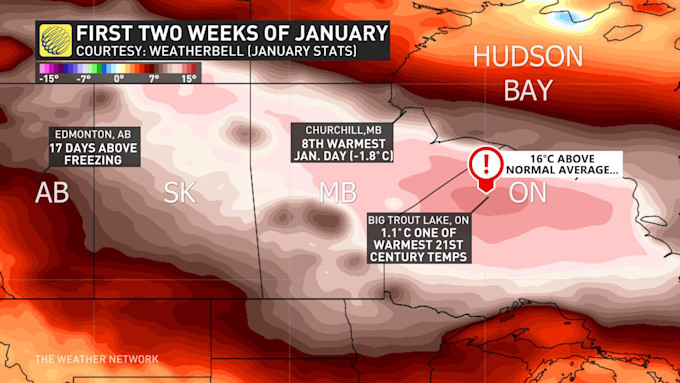
More to the point, many regions throughout the Prairies saw temperatures over 10°C above seasonal, and the most pronounced temperature anomaly was seen in northern Ontario where temperatures were over 16°C above seasonal. While recording temperatures a few degrees above or below seasonal is not uncommon, temperature anomalies to this extent are staggering and indicative of the overall warming trend during the winter months as global temperatures rise.
What would this same magnitude of temperature anomaly look like in summer?
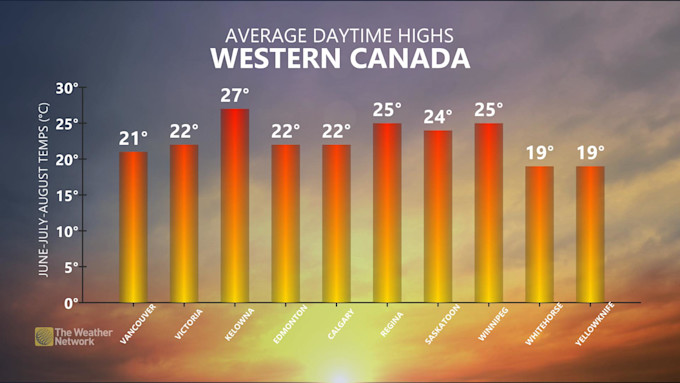
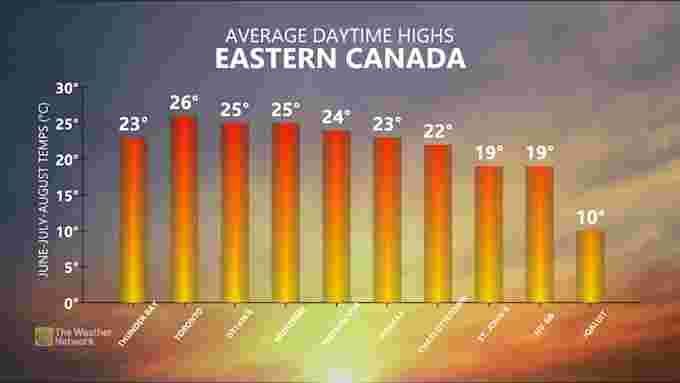
For starters, let’s take a look at some average summer temperatures across some major Canadian cities:
EYE-OPENING EXTREMES
Vancouver’s average day time high during the summer is 21°C. Take a second to visualize 31°C for two straight weeks in Vancouver—this would be considered an extreme heat event and would likely prompt city officials to set up cooling stations and other measures to keep people safe. It would be stifling and downright dangerous for some with profound economic costs for others due to potential water shortages and the grave forest fire risk.
How about Montreal pushing past 35°C for a couple straight weeks? There's a high probability that the event would bring an unimaginable loss of life and leave an indelible mark—much more extreme than the seven consecutive days that reached above 30°C in 2018.
But what about a temperature anomaly in the opposite direction, where regions experience much cooler conditions?
CLIMATE SIMULATOR
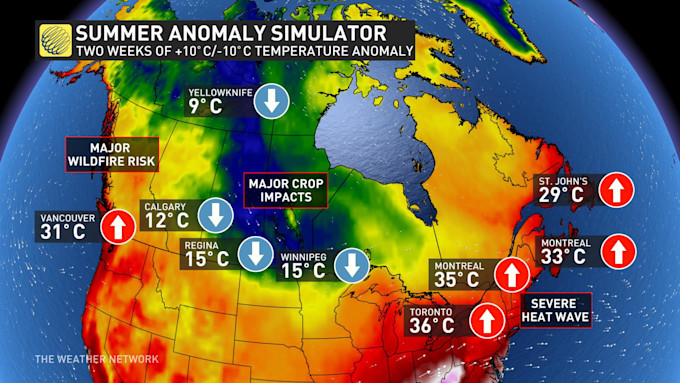
During the summer, a similarly harsh cold anomaly in the Prairies would yield temperatures barely above 10°C for Calgary, putting serious pressure on the agriculture industry across the area. With the average daytime temperature in Regina and Winnipeg reaching 25°C, the highs near 15°C would steal the limelight.
Considering these extreme temperature anomalies during the warmest and coldest seasons is merely a thought experiment that explores how much temperatures can range in Canada. However, unusually warm temperatures are occurring more frequently during all four seasons, and experts warn that extreme temperature anomalies will continue to occur unless global greenhouse gas emissions are curbed. All seasons will be impacted, but scientists say that some will undergo changes faster than others.
“Annual and seasonal mean temperature is projected to increase everywhere, with much larger changes in northern Canada in winter,” states Canada’s Changing Climate Report.
One of the reasons these profoundly warmer temperature anomalies that occur in the dead of winter don't receive a lot of press is because they are masked by Canada's propensity to be downright cold.
It's time to shake the temperature stigma and give these prolonged winter temperature anomalies the proper attention they deserve. |



