Re <<SBSW>>
Hydrogen-token stuff ...
bloomberg.com
How Palladium Became a Really, Really Precious Metal
Ranjeetha Pakiam
23 April 2021, 18:50 GMT+8
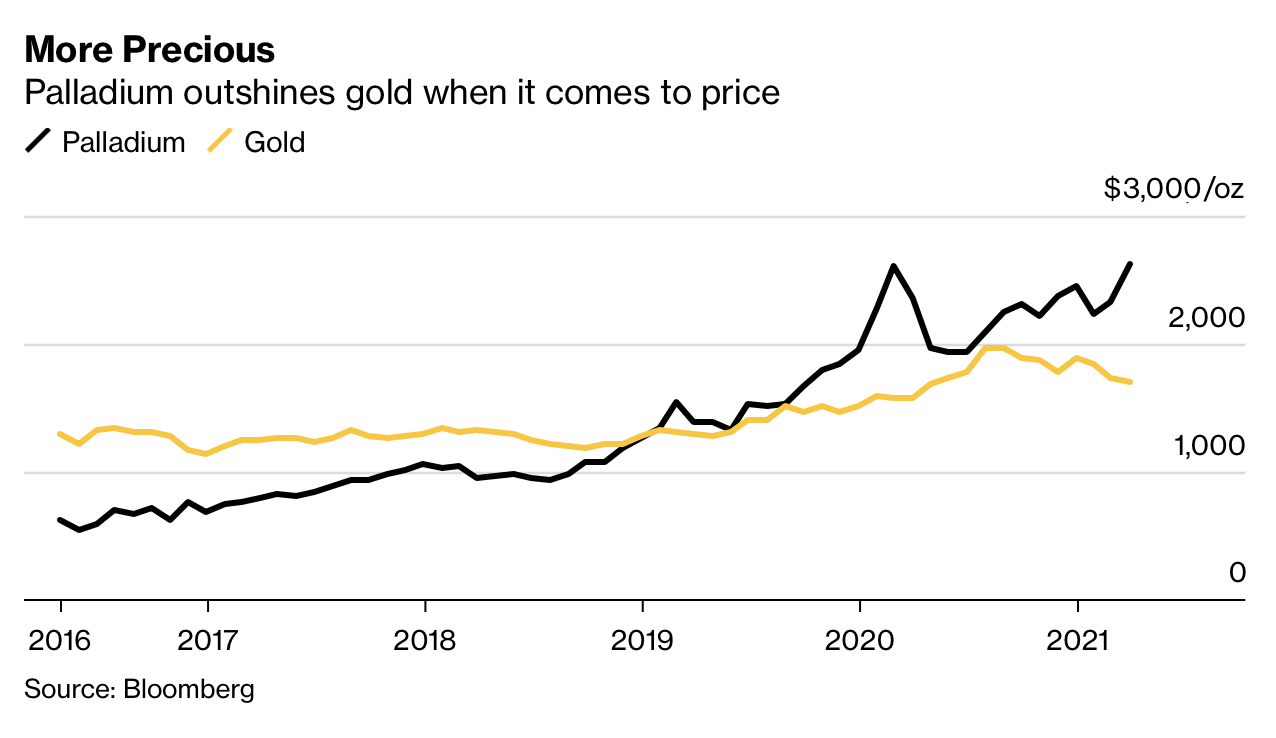
Palladium is the most valuable of the four major precious metals, with an acute shortage driving prices to records in recent years. A key component in pollution-control devices for cars and trucks, the metal’s price has been on a tear, rising more than sixfold since early 2016, an increase that’s lifted it above the price of gold.
1. What is palladium?
It’s a lustrous white material, one of the six platinum-group metals (along with ruthenium, rhodium, osmium, iridium and platinum itself). About 85% of palladium ends up in catalytic converters in car exhausts, where it helps turn toxic pollutants into less-harmful carbon dioxide and water vapor. It is also used in electronics, dentistry and jewelry. The metal is mined primarily in Russia and South Africa, and mostly extracted as a secondary product from operations that are focused on other metals, such as platinum or nickel.
2. Why is it getting more expensive?
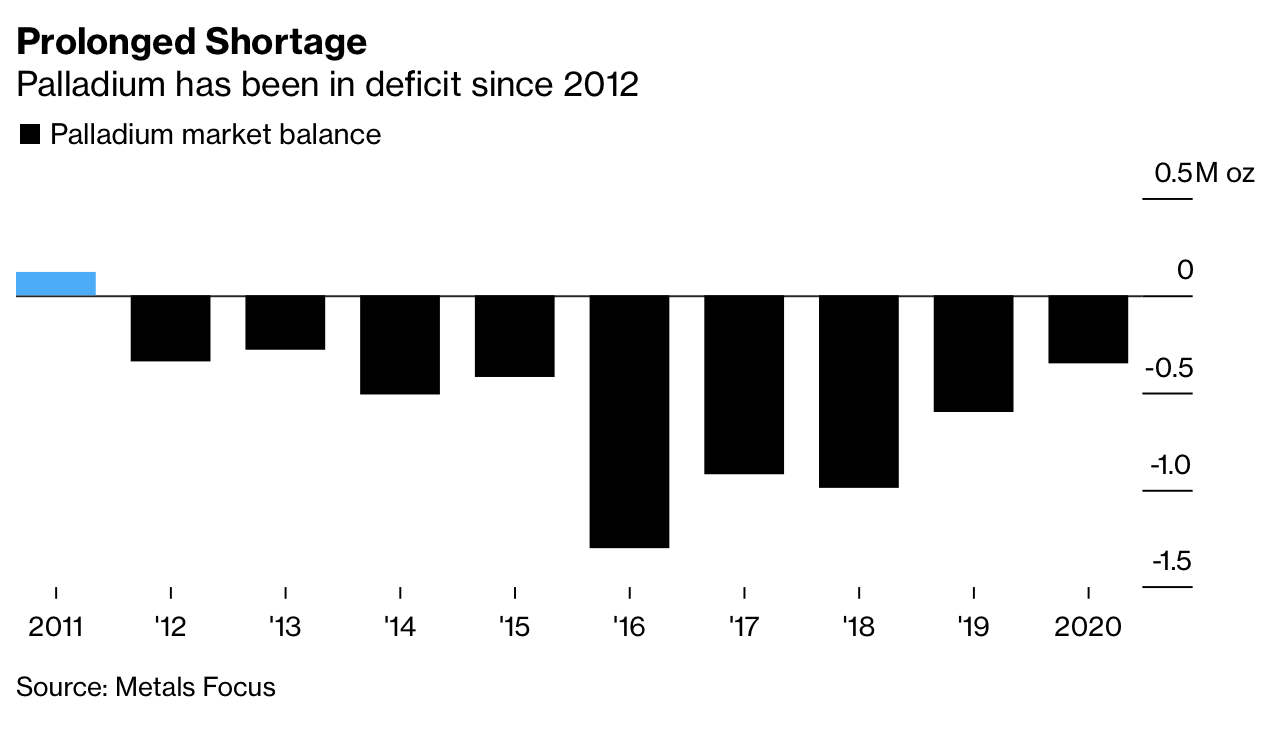
Supply has lagged demand for almost a decade. Usage is increasing as governments, especially China’s, tighten regulations to crack down on pollution from vehicles, forcing automakers to increase the amount of precious metal they consume. In Europe, consumers are buying fewer diesel cars, which mostly depend on platinum, and choosing gasoline-powered vehicles, which use palladium, following revelations that makers of diesel cars cheated on emissions tests and as concerns about diesel pollution intensified.
3. Why is supply so tight?
Palladium’s status as a byproduct means producers aren’t quick to respond to price changes. The coronavirus and resulting disruptions at mine operations also reduced production, while flooding at Arctic mines in February only exacerbated supply concerns. As a result, output is projected to fall short of demand for a 10th straight year in 2021. That’s helped drive prices to successive records. While some obscure metals like rhodium are still more valuable, palladium has mainly traded above gold since 2019.
4. Who are the winners and losers?
While Russia’s MMC Norilsk Nickel PJSC is the biggest palladium producer, the rally is also good news for South Africa’s platinum miners, who dig it up alongside their primary metal. On the other hand, carmakers are having to pay more for the metal and may eventually pass the increase on to consumers.
5. Is palladium usually this volatile?
Yes, and not just palladium. Precious metals used in small quantities by the auto industry have a history of price spikes when demand outstrips supply. In the decade following 1998, platinum soared more than 500% as a shortage caught the attention of speculative buyers. Rhodium, which rallied more than 4,000% over a similar period before carmakers found ways to use less, again climbed to a record in March 2021. Palladium itself jumped ninefold from its lows in 1996 to a peak in 2001 as users worried Russian sales would slow.
6. Can automakers use an alternative?
Substituting cheaper platinum appears to be gathering pace, according to some analysts, with an impact on palladium demand expected in the coming years. BASF SE developed a new technology for gasoline cars that substitutes some of the palladium with platinum. Research shows technological advances are needed before platinum can match the performance of existing palladium-based autocatalysts, according to Johnson Matthey Plc, which makes the devices. The company indicated in February that substitution was having a limited impact on PGM demand. And the likes of Daimler AG are more focused on electrification and batteries than a metal that represents a relatively small part of costs.
7. Where do electric cars fit into the picture?
Electric cars don’t burn fuel, don’t have exhaust pipes and don’t use palladium. Still, the electrification of the majority of the world’s automotive fleet will take years. In the meantime, palladium use in hybrid vehicles is also a growing source of demand.
The Reference Shelf
The history and science of palladium.Bloomberg Businessweek’s special issue: Elements.The market outlook from autocatalyst-maker Johnson Matthey.Bloomberg Intelligence data on palladium and platinum.A story on palladium’s sister metal, iridium.— With assistance by Eddie Spence
Before it's here, it's on the Bloomberg Terminal.
LEARN MORE |



