US seen as bigger threat to democracy than Russia or China, global poll finds
Belief in importance of democracy high in 53 sampled countries but inequality and big tech companies seen as biggest threats
The US faces an uphill task presenting itself as the chief guardian of global democracy, according to a new poll that shows the US is seen around the world as more of a threat to democracy than even Russia and China.
The poll finds support for democracy remains high even though citizens in democratic countries rate their governments’ handling of the Covid crisis less well than people in less democratic countries.
Inequality is seen as the biggest threat to global democracy, but in the US the power of big tech companies is also seen as a challenge.
The findings come in a poll commissioned by the Alliance of Democracies Foundation among 50,000 respondents in 53 countries.
The results will make stark reading for the G7 foreign ministers as they hold a final day of talks in London in which they have collectively assumed the role as bulwarks of democratic values determined to confront autocracy.
The survey was carried out by the Latana polling company between February and April, so a hangover effect of Donald Trump’s “America first” foreign policy may linger in the findings. Overall the results show perceptions of the US starting to improve from last year.
Whereas in the spring of 2020 people in both more democratic and less democratic countries were equally satisfied with their government’s pandemic response (70%), a year later the approval ratings have dropped down to 65% in less democratic countries, but in more democratic countries the rating has fallen to 51%. In Europe the figure is 45%. Positive ratings reach 76% in Asia.
In perhaps the most startling finding, nearly half (44%) of respondents in the 53 countries surveyed are concerned that the US threatens democracy in their country; fear of Chinese influence is by contrast 38%, and fear of Russian influence is lowest at 28%. The findings may in part reflect views on US comparative power, but they show neither the US, nor the G7, can simply assume the mantle of defenders of democracy.
Since last year, the perception of US influence as a threat to democracy around the world has increased significantly, from a net opinion of +6 to a net opinion of +14. This increase is particularly high in Germany (+20) and China (+16).
The countries still overwhelmingly negative about US influence are Russia and China, followed by European democracies.
The study shows an attachment to democracy globally, with 81% of people around the world saying that it is important to have democracy in their country. Only a little more than half (53%) say their country is actually democratic today – even in democracies.
The single biggest cited threat to democracy is economic inequality (64%).
In almost every country surveyed save Saudi Arabia and Egypt limits to free speech are seen as less of a threat to democracy than inequality.
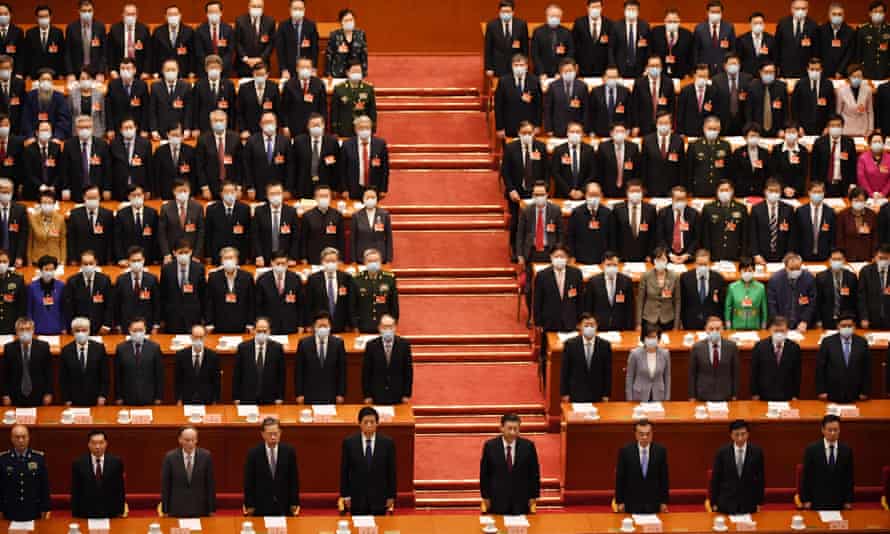
But half the people surveyed (48%) say the power of big tech companies, as opposed to the simple existence of social media, is a threat to democracy in their country. Among democracies, the US is the most concerned about big tech (62%), but wariness is growing in many countries compared with last year, reflected in broad support for greater regulation of social media.
Voters in Norway, Switzerland and Sweden are most confident their country is democratic, but so are the Chinese, where 71% agree that China has the right amount of democracy. In Russia only 33% think their country is democratic. Global support for Joe Biden’s plans to stage a Democracy Summit is high in every country save China and Russia.
The findings will also make disturbing reading for the eastern European democracies such as Hungary where only 31% of voters think their country is democratic – on a par with findings in Nigeria, Iran, Poland and Venezuela.
Anders Fogh Rasmussen, chair of the Alliance of Democracies Foundation, former Nato chief and Danish prime minister, said:
“This poll shows that democracy is still alive in people’s hearts and minds. We now need to come out of the Covid-19 pandemic by delivering more democracy and freedom to people who want to see their countries become more democratic.
“The positive support for an Alliance of Democracies, whether the UK’s D10 initiative or President Biden’s Summit for Democracy, shows that people want more cooperation to push back against the autocrats. Leaders should take note of these perceptions and act upon them.”
theguardian.com |



