Re <<Bhutan>>,
I start w/ the statement that most of what is MSM is BS, but weaponised BS.
Bhutan has a territorial dispute w/ China due to the mess left behind by Britain when British imperialism was rolled back, just as Britain left messes all over the planet including Middle East / North Africa, and now its allies are still trying to somehow benefit / score points off of the legacy imperialistic mess.
China offered to settle the dispute by compromise and was refused by Bhutan which believed in India backing. Alas, India cannot deliver, and so conveniently Xinjiang, Tibet, Bhutan, East China Sea, South China Sea, Taiwan, wherever all issues converged on China China China and CCP CCP CCP.
No matter, what was shall be.
Few folks keep track but I was paying attention even at the young years of 1972, and remember well that India black-ops-ed and overthrew an independent kingdom called Sikkim situated between Napal and Bhutan; akin to if Israel absorbed Lebanon.
Oh, and yes, India strips Moslims of Indian residency and denying them citizenship without the benefit of reeducation and job training irrespective of whether they have lived all their lives in India en.wikipedia.org but there is little complaint from the rest of the world and the suspect MSM. This truth tells us all we need to know.
en.wikipedia.org
The history of Sikkim, begins with contacts between ancient Hindus and Tibetans, followed by the establishment of a Buddhist kingdom or Chogyal in the 17th century. Sikkim emerged as a polity in its own right against a backdrop of incursions from Tibet and Bhutan, during which the kingdom enjoyed varying degrees of independence. In the early 18th century, the British Empire sought to establish trade routes with Tibet, leading Sikkim to fall under British suzerainty until independence in 1947. Initially, Sikkim remained an independent country, until it merged with India in 1975 after a decisive referendum. Many provisions of the Indian constitutionhad to be altered to accommodate the international treaties and between Sikkim and India.
The Great Game never ended because the Indians wished to play on even after the departure of the British. They were hiccuped in 1962 by China.
Bhutan and Napal are part of the game. Think West Bank, Golan Heights, Sinai Desert, S Lebanon, and Gaza.
scmp.com
India’s shadow looms over revived China-Bhutan border talks - After years of delay, Beijing and Thimphu have agreed to resume discussions on their disputed boundary - Analysts say breakthrough is unlikely because of Indian influence over Bhutan
Bhutan has to toe the Indian line until it doesn’t, and the juncture comes when infrastructure is put in place to offer Bhutan a choice, and the village you cited is part of the infrastructure
"Every country knows that China is a reality. We also need to accept that there is a geographical reality. Our access to the world is through India. The feeling is if Bhutan tries to neglect India to go with China, that's going to be suicidal," said a Bhutanese analyst, who did not want to be identified. The way forward, he said, was to engage with China while respecting India's security interests.
bbc.com
Why Bhutan's Sakteng wildlife sanctuary is disputed by China
25 November 2020
By Anbarasan Ethirajan
BBC News
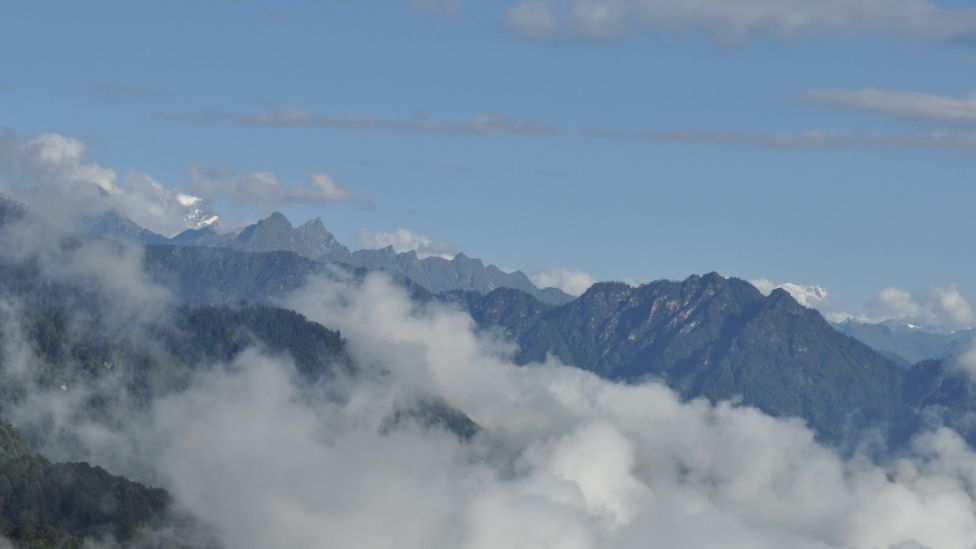
High above the rest of the world, territorial disputes are being played out in tiny Bhutan
Sandwiched between China and India, the tiny Himalayan nation of Bhutan is feeling the squeeze as its giant neighbours square up for supremacy.
A close ally of India, Bhutan got a shock when China made sudden new claims in the summer - over a wildlife sanctuary in the east of the country, on land that had not been considered disputed.
Most Bhutanese commentators don't want to discuss this in detail, but many believe Beijing is trying to drag the Buddhist majority nation - population 750,000 - into the territorial stand-off with India.
Since April the world's two most populous nations have deployed tens of thousands of troops further west along their border, with both accusing each other of trespassing into each other's territory.
China shares land borders with 14 countries and says it has settled its frontiers with most of them. India and Bhutan are notable exceptions, with no progress made in years of talks over disputed areas.
Beijing views disputed territory in the two countries as part of Tibet, which it invaded and annexed in the 1950s.
'Chinese attempt to irritate Bhutan'
Beijing's surprise move came during a virtual conservation meeting in June, when it laid claim for the first time to Sakteng Wildlife Sanctuary, which spans about 740 sq km (285 sq miles) in eastern Bhutan.
 Choling Choling
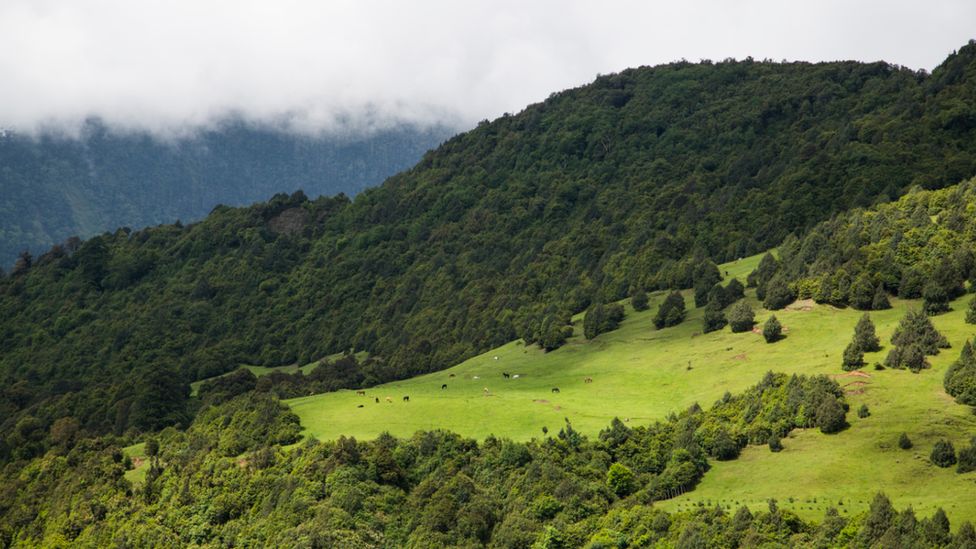
Sakteng sanctuary has a diverse ecosystem and is home to rare wildlife species
The government in Thimphu had requested aid for projects in the park from the Global Environmental Facility, a US-based group which finances eco-friendly projects. Chinese representatives objected, saying the area was in dispute and funds should not be allocated.
Bhutan rejected the claim, pointing out the area had never featured in 24 previous rounds of boundary talks. A 25th round scheduled for earlier this year was delayed by the Covid crisis.
India and China race to build along a tense frontier An extraordinary escalation 'using rocks and clubs' China and India face off on the roof of the world
In July, Chinese foreign ministry spokesman Wang Wenbin left no doubtwhen he said "the boundary between China and Bhutan is yet to be demarcated, and the middle, eastern and western section of the border are disputed".
The eastern section was an obvious reference to the Sakteng reserve.
 Choling Choling
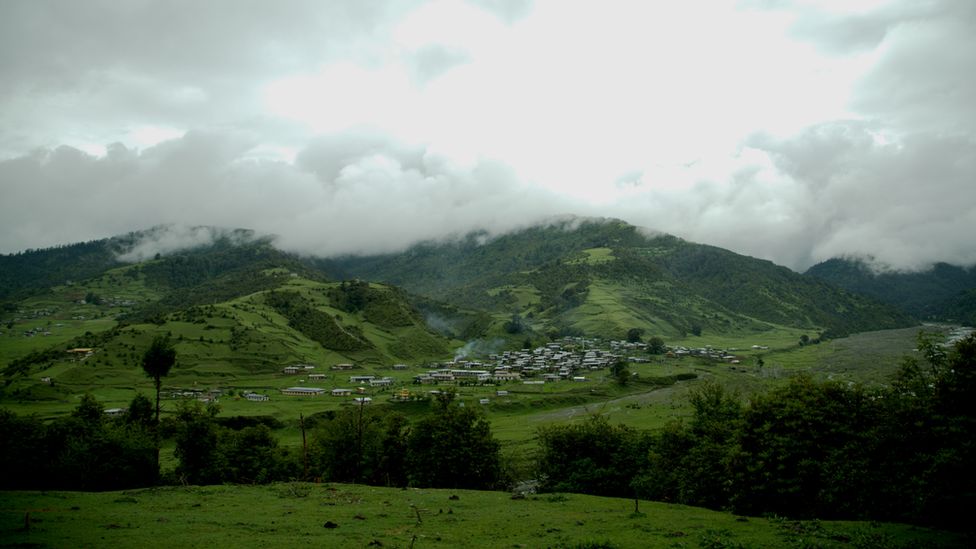
Until recently Chinese maps have shown Sakteng in Bhutan
Bhutanese historian Karma Phuntsho says: "Sakteng national park was never a disputed area and it was always under Bhutanese control. There is no evidence of any affiliation [of that region] to China.
"The recent claim by a Chinese official at the Global Environment Facility is perhaps a Chinese attempt to irritate Bhutan as there are border disputes to settle in other areas."
'A way to put pressure on India'
Border talks between Thimphu and Beijing have focused since 1984 mostly on around 269 sq km in the west and around 500 sq km in the north of Bhutan.
"All official Chinese maps have showed Sakteng as part of Bhutan. In 2014, China came out with its most ambitious map ever, with vast territorial claims, including India's Arunachal Pradesh. But even in that map Sakteng park was shown as part of Bhutan," said Tenzing Lamsang, the editor of weekly newspaper The Bhutanese.
Bhutan is no stranger to feeling caught between China and India. Border negotiations stalled following a crisis three years ago over a plateau known as Doklam in India, and Donglang in China.
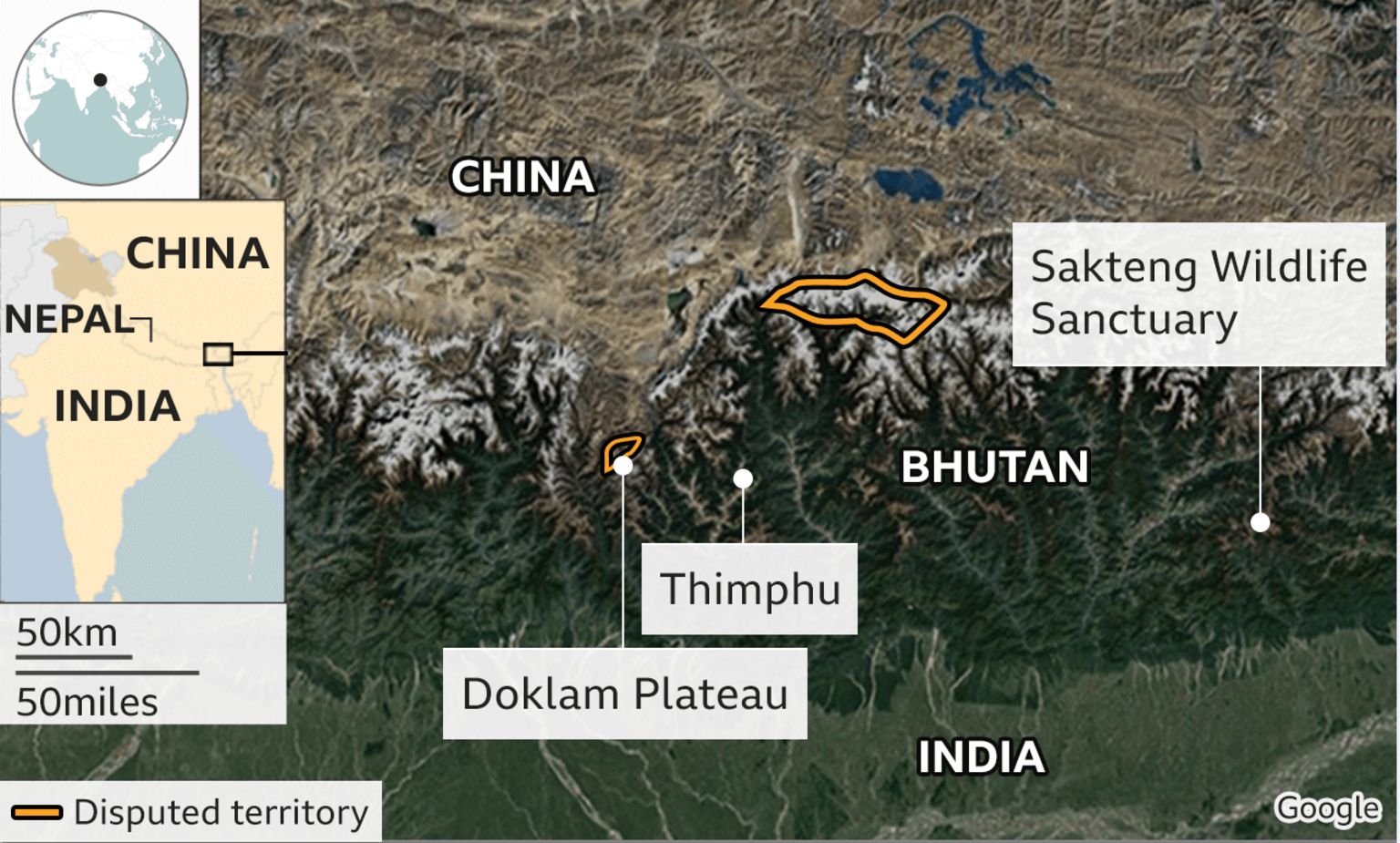
In June 2017 Indian forces confronted Chinese troops, who had started to expand an unpaved road in the crucial tri-junction between India, China and Bhutan. The area actually fell within Bhutan's claims but India challenged Chinese troops on behalf of its tiny ally.
The plateau is of strategic importance to Delhi because it overlooks the Siliguri corridor, known as the "chicken's neck", a narrow strip of land that connects India's north-eastern states with the rest of the country. India fears that in any future conflict, Chinese troops could seize the corridor.
Though both countries disengaged following talks, it showed how border disputes might escalate. Subsequent satellite pictures showed the Chinese army had built a vast network of military installations, including heliports, not far from the flash point in Doklam.
So China's decision to claim the Sakteng sanctuary now is being seen in the context of the wider stand-off, as Asia's giants jockey for advantage.
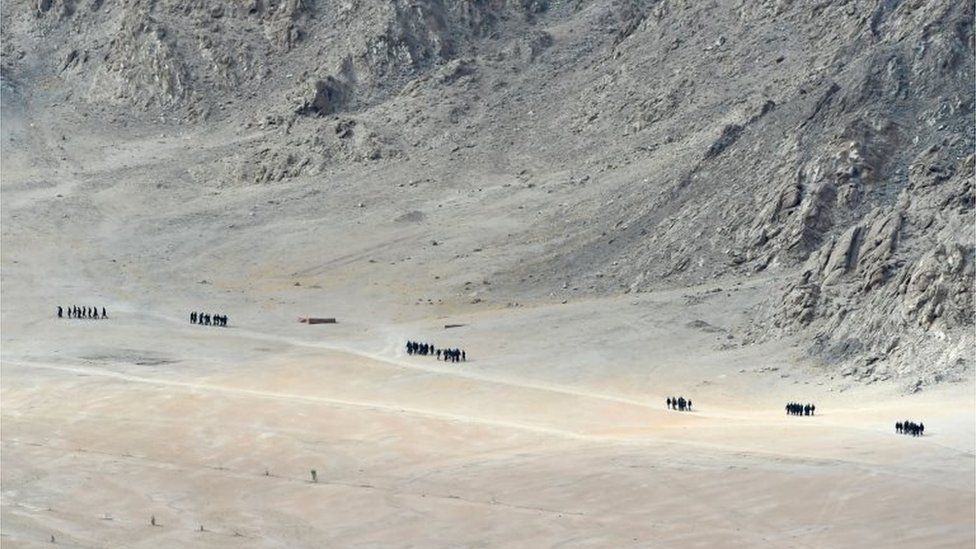 AFP AFP
Indian soldiers on patrol near Leh, in the disputed frontier region of Ladakh
"It is a way to put pressure on India, not just Bhutan. The Sakteng sanctuary borders India's Arunachal Pradesh, which is also claimed by China. Beijing's view seems to be Sakteng is an extension of Arunachal Pradesh," said Sangeeta Thapliyal, professor of international studies at Jawaharlal Nehru University in Delhi.
How Nepal's new map is stirring old rivalries The Tibetans serving in ‘secretive’ Indian force
But Dr Lu Yang, a research fellow at the Institute of Belt and Road Initiative in Tsinghua University, Beijing has a different view.
"It is not that China is bullying Bhutan on the border issue. It is because the Bhutan-China border dispute could not be separated from the India-China one. This is the main challenge," she told the BBC.
From Beijing's perspective, she said, "the solution of China-India eastern border is the precondition for the solution of Bhutan-China border".
The Bhutanese foreign ministry did not respond to BBC requests for comment.
'We need to accept geographical reality'
But Bhutan's options are limited
Tensions are at their worst for decades between India and China, and will be hard to defuse.
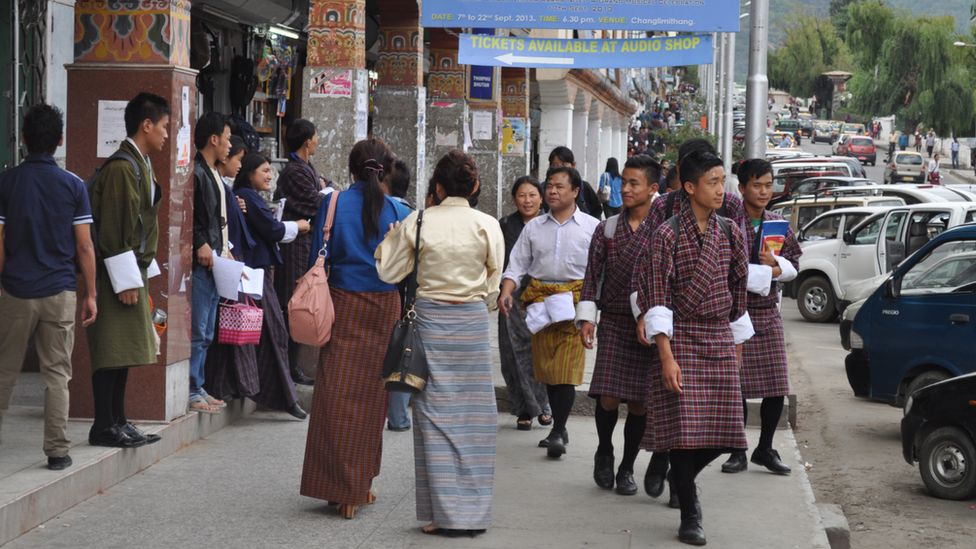
With its tiny population, Bhutan has few options in the stand-off
In mid-June, a brawl on the frontier in Ladakh resulted in the deaths of 20 Indian soldiers and an unknown number of Chinese army casualties - the first deadly clash on their border in at least 45 years.
Despite various rounds of talks, Beijing has refused to withdraw from the areas it occupied, Indian analysts say.
By putting pressure on Bhutan, Beijing may be testing Delhi's resolve in coming to its tiny ally's aid. India's neighbours are closely watching how Delhi decides to tackle China's growing military and economic might. India doesn't want to lose face.
"Every country knows that China is a reality. We also need to accept that there is a geographical reality. Our access to the world is through India. The feeling is if Bhutan tries to neglect India to go with China, that's going to be suicidal," said a Bhutanese analyst, who did not want to be identified.
The way forward, he said, was to engage with China while respecting India's security interests.
Historian Dr Phuntsho says he regrets that India and China use their power to cause instability, rather than to promote peace.
"Both China and India had expansionist and imperialistic outlooks in the past, and show a tendency to control other countries, even now."
Smaller countries like Bhutan have no choice but to remain on edge.
You may also be interested in:
India formally divides Jammu and Kashmir state
Sent from my iPad |



