Forget about mining asteroids.
Mine the sea bottom!
japan-forward.com
Japan Has A National ‘Treasure Box’ Sleeping on the Seabed of Okinawa“Japan now depends largely on the import of mineral resources. If we can mine our own from the bottom of the sea, the national interest is immeasurable.” — Tokai University Professor Yoshihiko Yamada
April 29, 2021
By Hiroyuki Kawase
~~
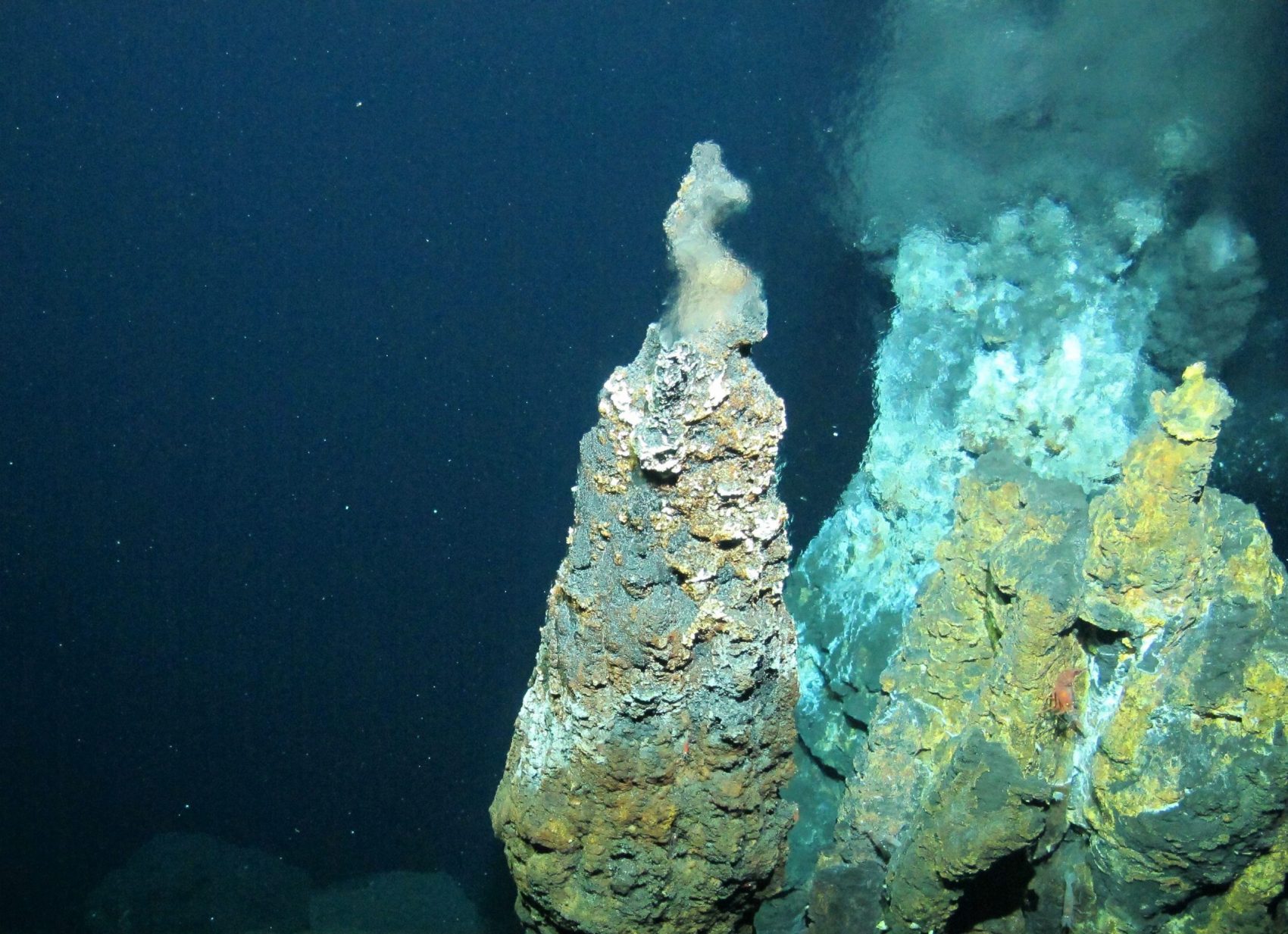
There is a treasure chest in Okinawa with great potential. It is filled with mineral resources such as gold, silver and copper, that are sleeping on the bottom of the sea.
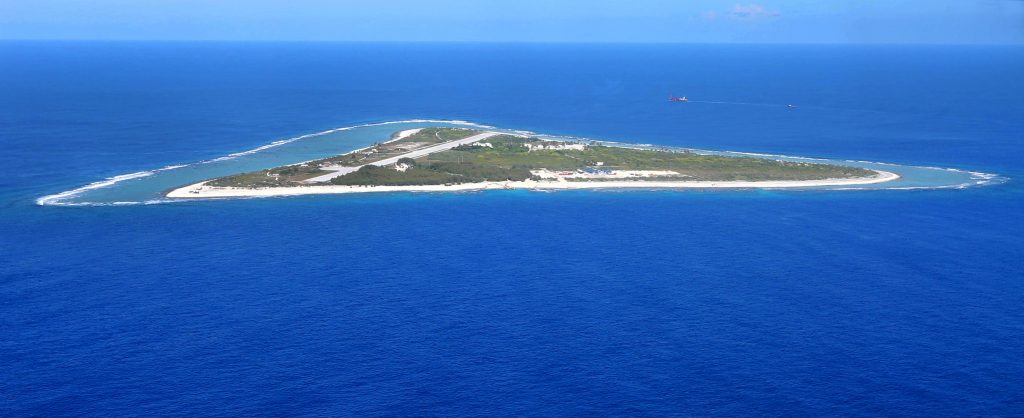 In another example of Japan’s seabed riches, Japan’s Minami Torishima, an island that is part of the Tokyo metropolis, is also a source where rare earth minerals have been found. In another example of Japan’s seabed riches, Japan’s Minami Torishima, an island that is part of the Tokyo metropolis, is also a source where rare earth minerals have been found.
The lid on the treasure chest has yet to open and development of these riches hasn’t moved forward. This is partly due to potential impacts on the environment and some technical problems. But the greater concern is the looming shadow of China’s lingering presence in the background.
Submarine hydrothermal deposits are found widely distributed on the seabed near Okinawa at a depth of 700 to 2,000 meters (about 2296 to 6561 feet). Hydrothermal water containing heavy metals is spewed out by underground magma ?the extremely hot liquid and semi-liquid rock located under Earth’s surface. It contains a variety of metal components such as copper, lead, zinc, gold and silver.
RELATED: Breaking China’s Stranglehold on the Rare Earth Elements Supply Chain
It was not until 2008 that the Japanese government began a full-scale survey of these deposits. In 2018, one of the deposits at the Izena Cauldron was calculated to contain about 7.4 million tons of minerals. The following year, Japan became the first in the world to mine ore from a depth of 1600 meters (5249.344 feet ) below the sea and successfully raise them offshore with an underwater pump.
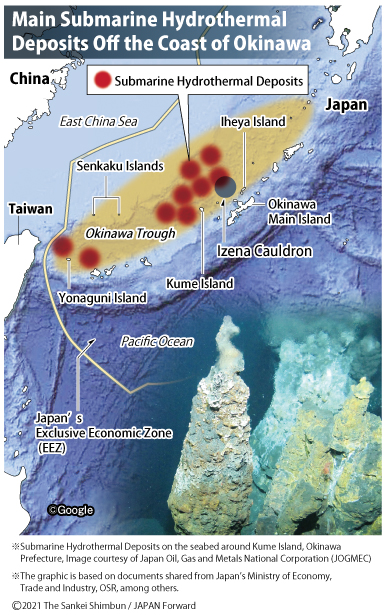
However the country has still not found a path to commercialization because of the high cost of developing sufficient undersea resources to make it viable. Japan’s Agency for Natural Resources and Energy estimates it would take 50 million tons of natural resources to make the process profitable.
In addition to the Izena Cauldron, several promising deposits have been found in the seas around Okinawa, including those off Kumejima Island and Iheyajima Island, but the government has not disclosed details of the deposits there.
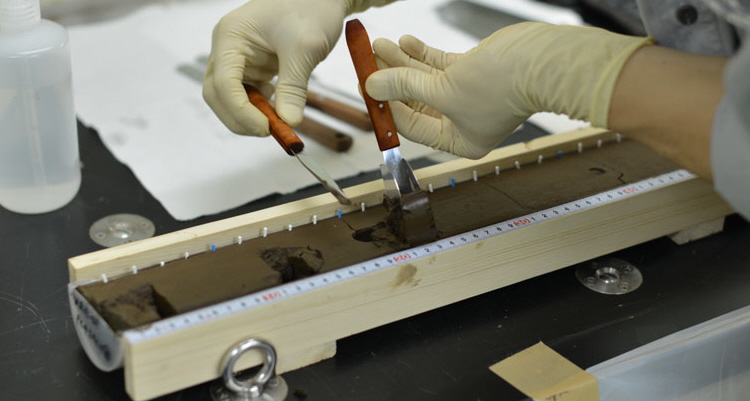 Measuring minerals and rare earth elements in a sample from the Okinawa seabed. Measuring minerals and rare earth elements in a sample from the Okinawa seabed.
On the other hand, some encouraging comments have come from Yosei Takahashi, CEO of the Okinawa Seabed Resources Industrial Development Organization (OSR), which is studying how to utilize undersea reserves in Okinawa Prefecture. Takahashi said, “It is highly likely that the overall amount of resources will exceed 50 million tons.”
“There have not been any examples in the world of commercializing undersea mineral resources. So if it happens, it will play a role in the future of Japan and Okinawa,” he said.
With Japan’s resource development at a standstill, the concern has turned to China’s activities in the area. Since 2020 when Japan began full-scale surveys of the area, there have been repeated confirmations of Chinese government vessels sailing with research lines out through Japan’s exclusive economic zone (EEZ).
RELATED:
Glimpsing the Reality of a Maritime Nation as SDF Protects Japan’s Easternmost Point in the Pacific Rare Earths and the Free World: Who Will Vie with China in the Global Green Race?
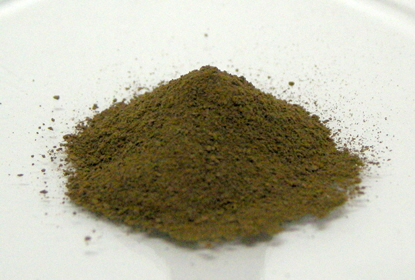 Rare earth elements from the vicinity of Minami Torishima. Rare earth elements from the vicinity of Minami Torishima.
In 2016, the Japan Coast Guard announced that it had confirmed the largest hydrothermal vent in Japan?a fissure on the seabed from which geothermally heated water is discharged?off Kumejima, another island in the Japanese archipelago.
As expectations about the size of the deposits increased, the number of Chinese vessels appearing in Japan’s EEZ increased rapidly. According to the Japan Coast Guard, the number of Chinese ships operating in Japanese waters without consent reached a record high of 22 in 2015. These unauthorized activities have continued, with five incidents reported in 2019.
China, with its aggressive policy of maritime hegemony, does not respect Japan’s EEZ.
“If Okinawa’s development of its mineral reserves is delayed, China could go ahead and create another situation like the Senkaku Islands Issue,” commented one local prefectural assemblyman from the Liberal Democratic Party. |



