| | | the real estate within <<USA and rest of world bought megatons from China and supplied the technology and know how for a billion Made in China people to escape paddy fields, famine and hutongs.>> en.wikipedia.org are very expensive these days
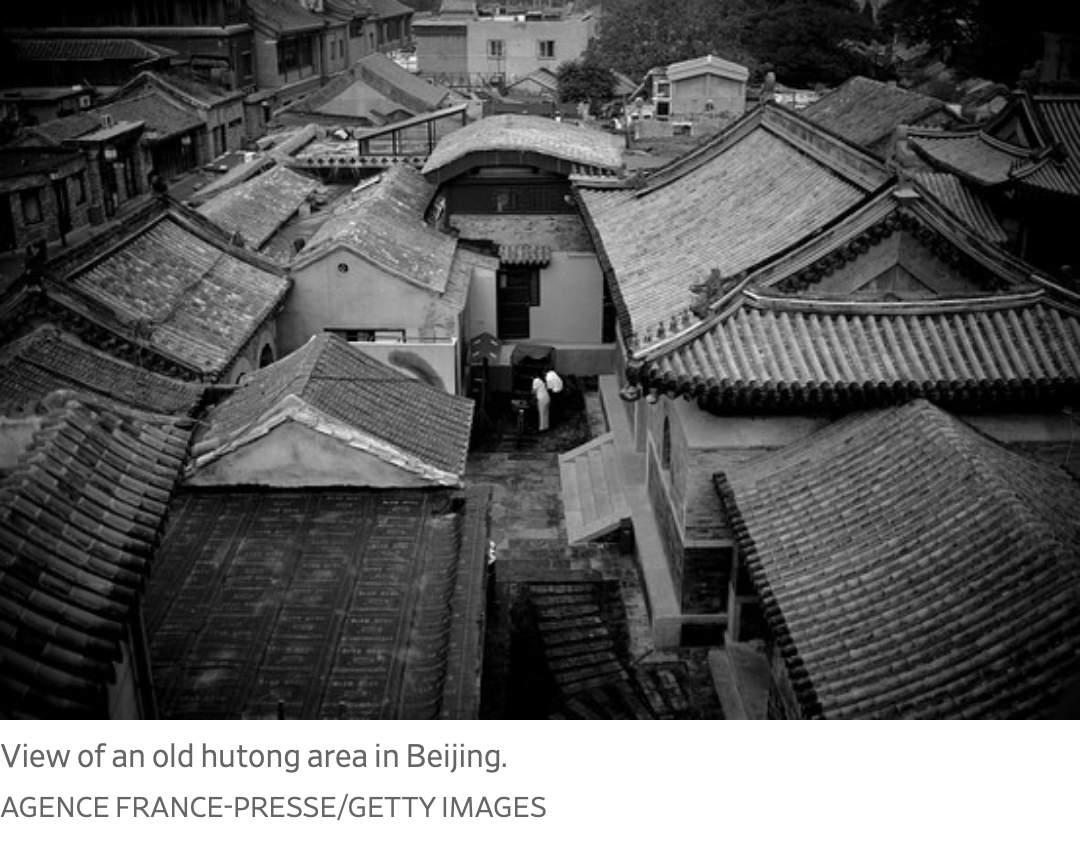
communism worked the magic, arguably, and each abode compound pre-fix-up priced at ~1 Hong Kong parking space to start. Post renovation pricing is beyond ordinary reach, say 8 - 15 Hong Kong parking spaces, depending on renovation grade.
dezeen.com
Curving glass walls bulge into courtyards of converted Beijing hutong
Jon Astbury 24 January 2020
Chinese practice Arch Studio have renovated an abandoned hutong in Beijing, making a house with curving glass walls around internal courtyards.
Originally the hutong was a style of courtyard residence known as a siheyuan.
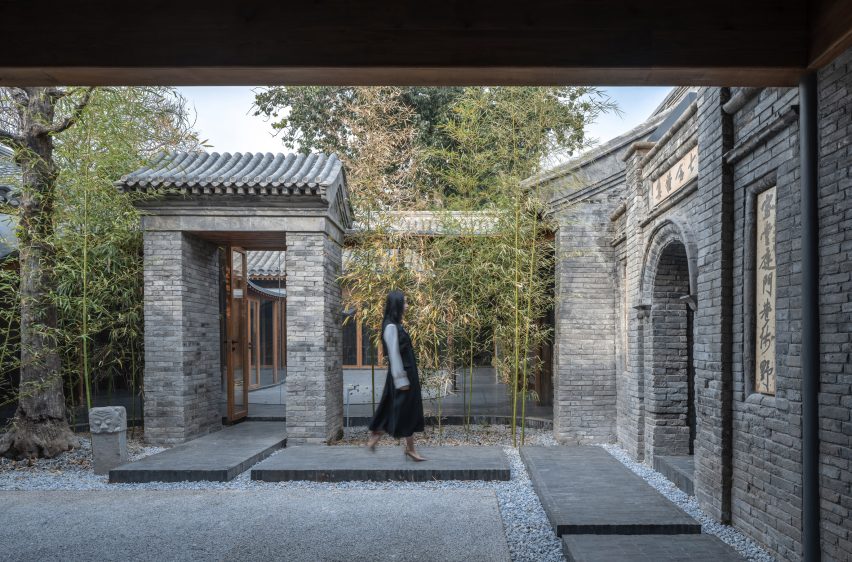 The project is called Qishe Courtyard for the seven original structures - qishe translates as seven houses - that stood on the site. The project is called Qishe Courtyard for the seven original structures - qishe translates as seven houses - that stood on the site.
These seven basic wooden structures were intact, but their roofs, walls and windows had fallen into disrepair.
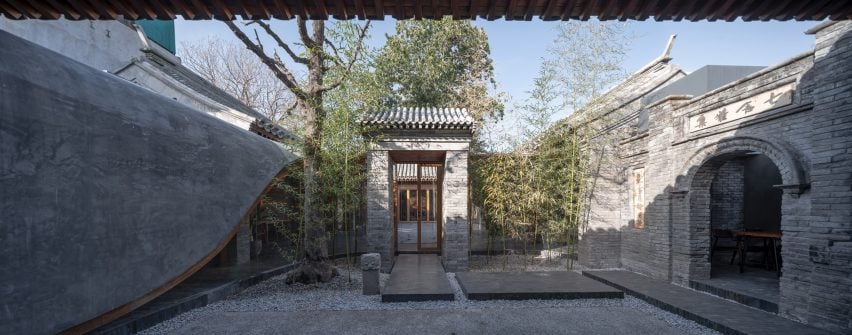 When Arch Studio took on the project the courtyards of the home were filled with temporary structures and waste materials. When Arch Studio took on the project the courtyards of the home were filled with temporary structures and waste materials.
Rather than simply restoring the original design, the architects preserved the original materials but improved the circulation to unite the disparate spaces in a single, large home.
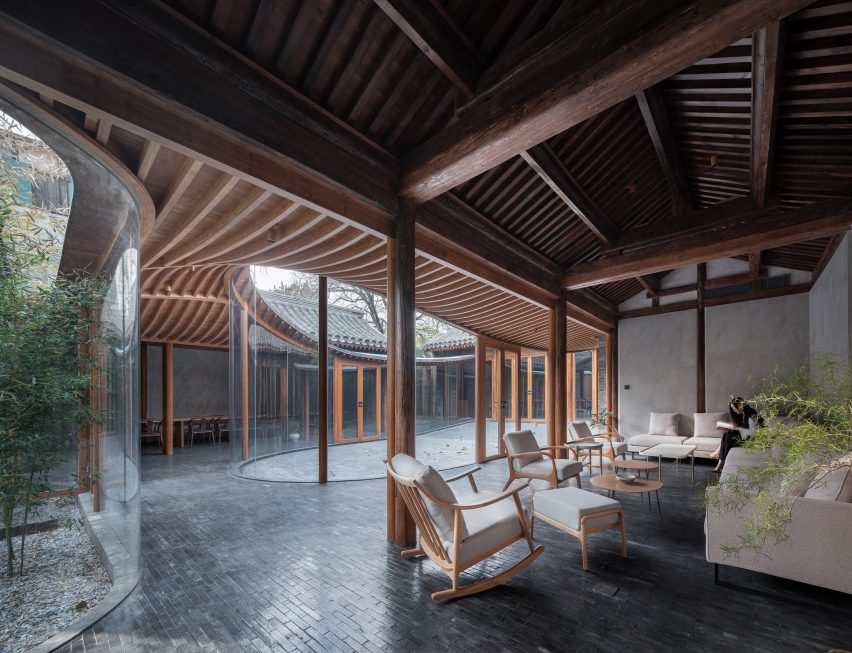 "We embedded a veranda – a basic element of traditional Chinese architecture – into the old siheyuan to link up the seven separate pitched-roof houses," said the practice. "We embedded a veranda – a basic element of traditional Chinese architecture – into the old siheyuan to link up the seven separate pitched-roof houses," said the practice.
"The veranda functions as a circulation route, reshapes the spatial pattern and layers and provides a playful walking experience as well as fantastic views."
 The facade and entrance has been largely retained and rebuilt using the original grey bricks. The facade and entrance has been largely retained and rebuilt using the original grey bricks.
Inside it has been opened to create a garage space that sits in front of the home's original gate.
 Along the eastern edge of this entrance, a glimpse of the contemporary additions can be seen through section of wall formed from the roof sweeping down to the ground. Along the eastern edge of this entrance, a glimpse of the contemporary additions can be seen through section of wall formed from the roof sweeping down to the ground.
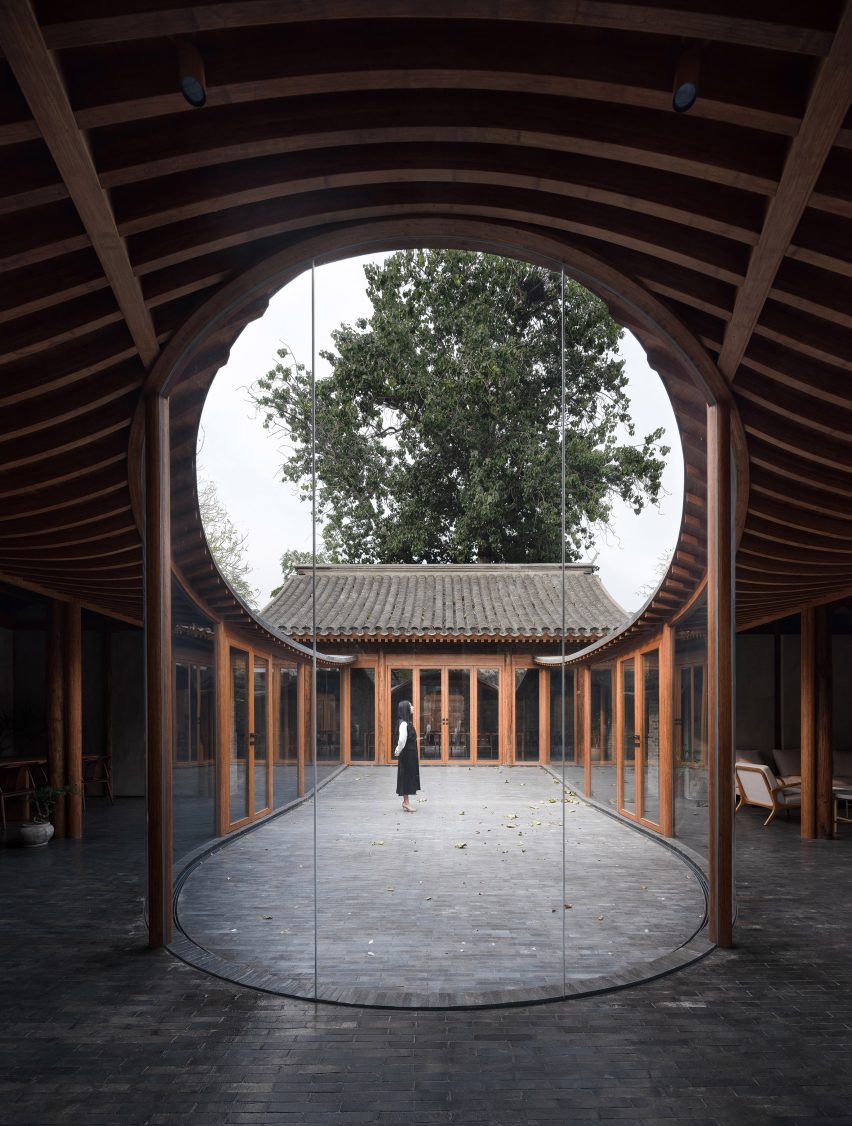
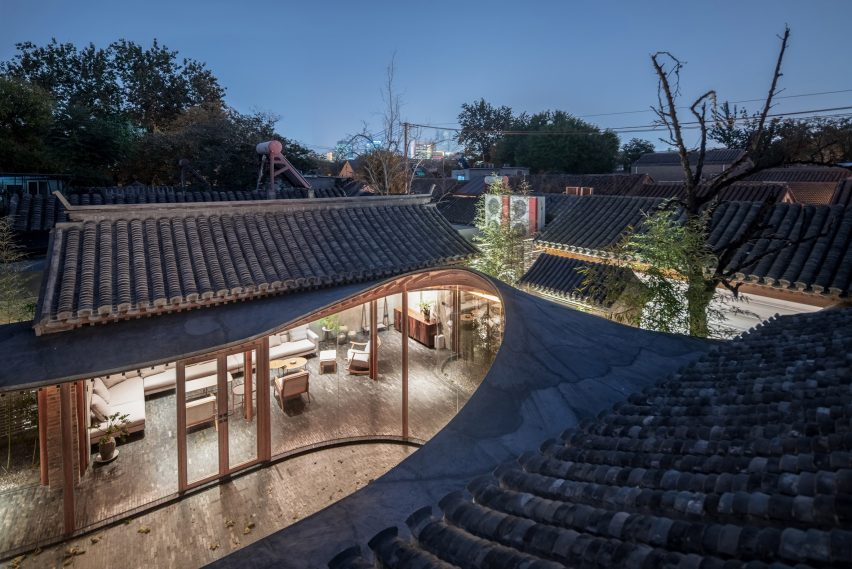
Qishe Courtyard's new veranda begins with an upward sweep towards the central, arc-shaped courtyard.
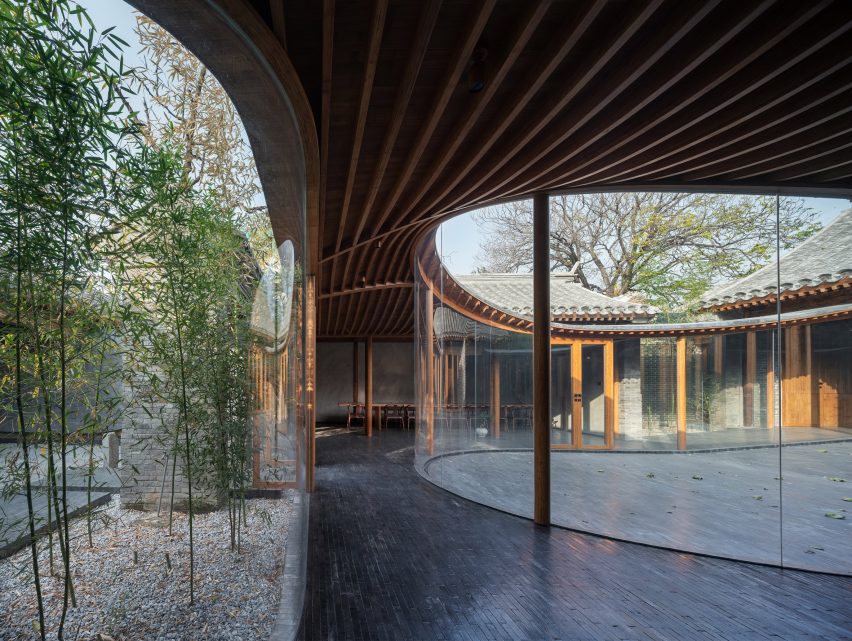
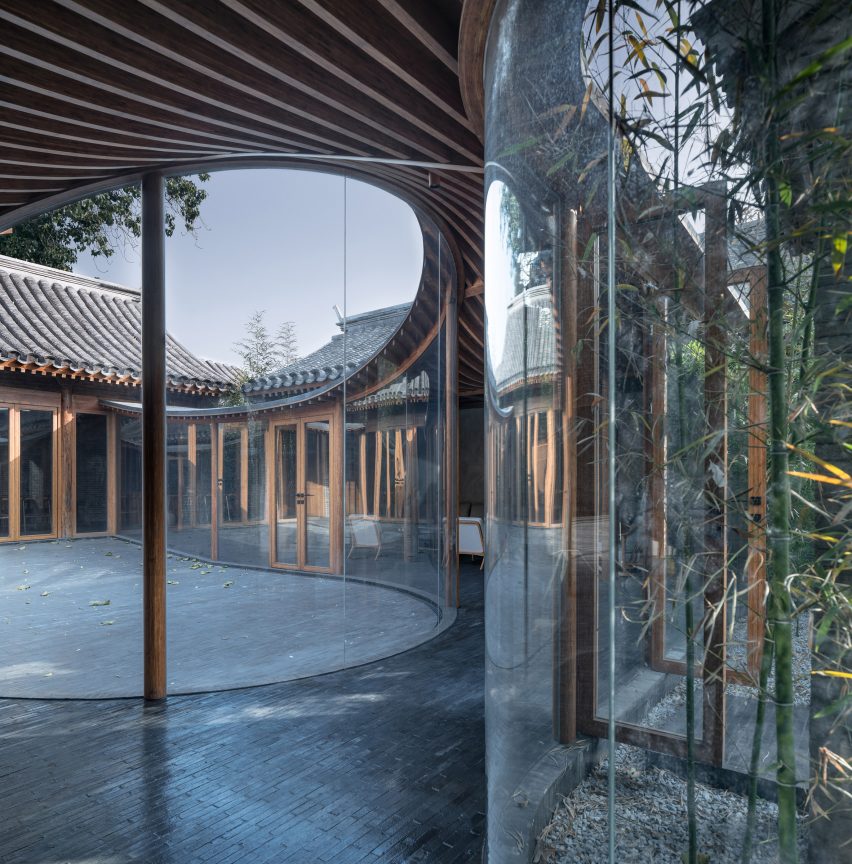 This middle courtyard space, arch-shaped in plan, is surround by glazing. This middle courtyard space, arch-shaped in plan, is surround by glazing.
A tea room, dining room and living room surround this central courtyard, which is sheltered by a wooden roof with exposed beams.
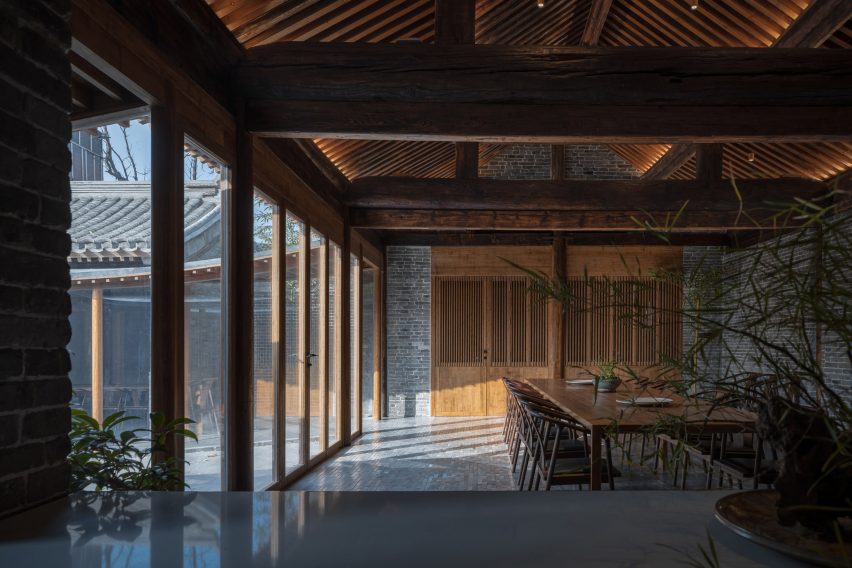
 "The dining room has a sliding door, which can open the interior to the outside space completely and extend indoor activities to the courtyard as well," said the practice. "The dining room has a sliding door, which can open the interior to the outside space completely and extend indoor activities to the courtyard as well," said the practice.
Another courtyard at the back is surrounded by the more private areas of the home.
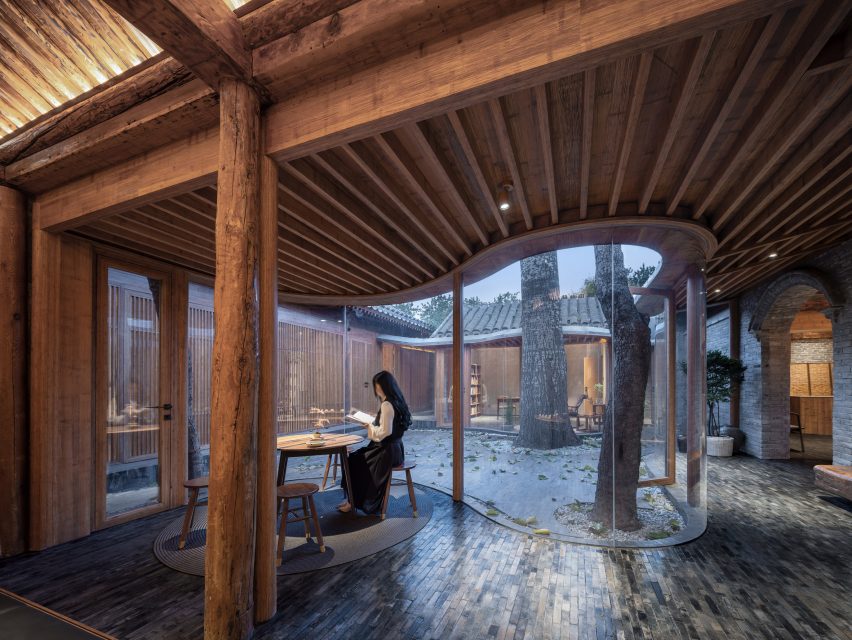 Two bedrooms, a study and a smaller tea room face this courtyard with the curving glazed walls of the veranda, which undulates to accommodate three existing trees. Two bedrooms, a study and a smaller tea room face this courtyard with the curving glazed walls of the veranda, which undulates to accommodate three existing trees.
The bedroom block is given privacy by a slatted wooden screen.
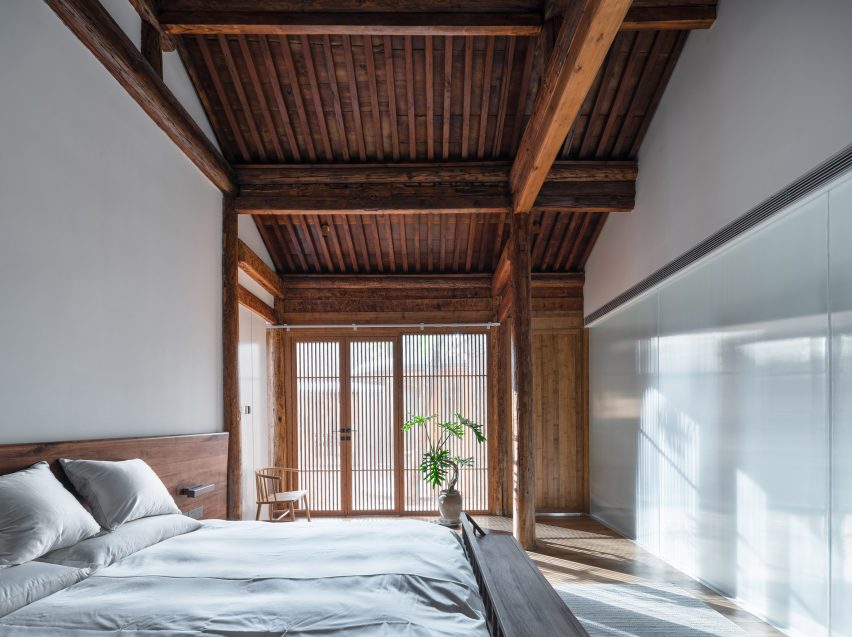 Laminated bamboo was used for the new elements, including doors and window frames, to complement the existing pine structure. Laminated bamboo was used for the new elements, including doors and window frames, to complement the existing pine structure.
The roofs of Qishe Courtyard's old buildings had to be re-built for waterproofing and insulation, then re-clad with their original grey tiles.
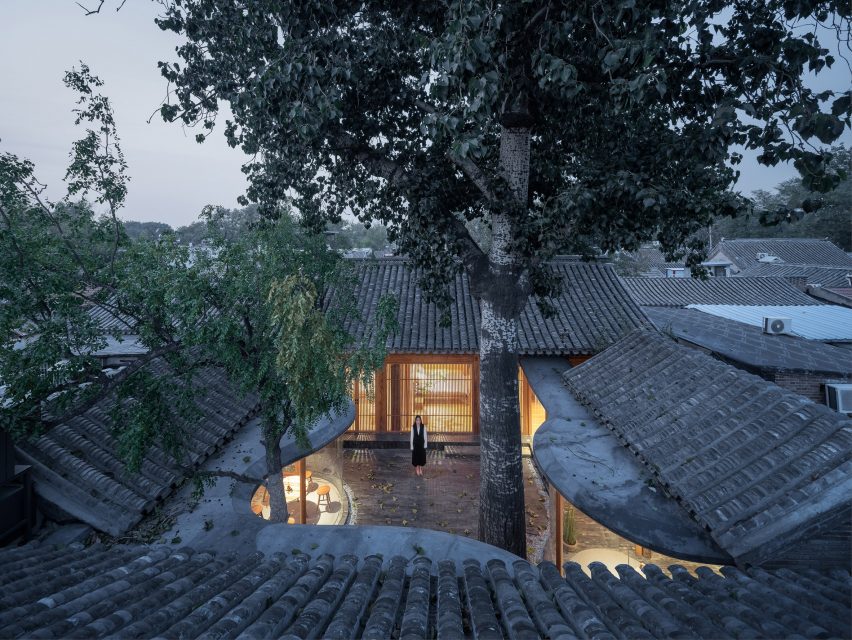 In contrast, the roof of the new areas are finished with grey polymer mortar. In contrast, the roof of the new areas are finished with grey polymer mortar.
Waste wood found left in the courtyards of the original buildings was used to create new furniture.
 Salvaged items such as a millstone were turned into flowerpots and ornaments. Salvaged items such as a millstone were turned into flowerpots and ornaments.
Many of Arch Studio's previous projects have worked with courtyard typologies.
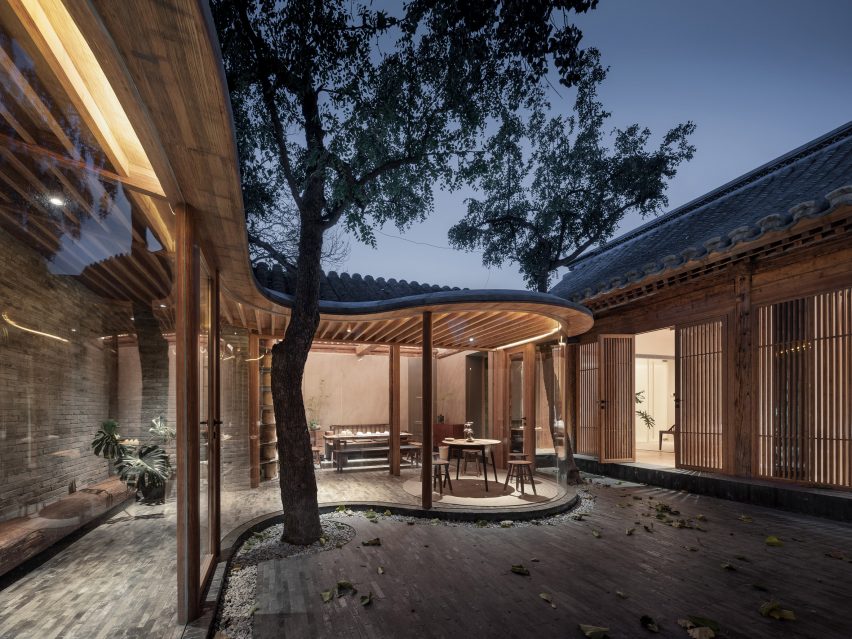 Recently the practice used a similar approach of uniting several abandoned structures in Beijing with a rooftop walkway to create a series of courtyards and workspaces. Recently the practice used a similar approach of uniting several abandoned structures in Beijing with a rooftop walkway to create a series of courtyards and workspaces.
dezeen.com
Fon Studio designs hotel with interior courtyard in Beijing hutong
Ali Morris 12 May 2021
Terrazzo, wood panelling and dark red steel feature throughout this renovated hotel in a Beijing hutong, designed by Fon Studio to echo the atmospheric quality of the surrounding alleyways.
The 800-square-metre Well Well Well Hotel is set inside a hutong – a kind of narrow alleyway found in the city's traditional neighbourhoods and formed by lines of single-storey courtyard residences.
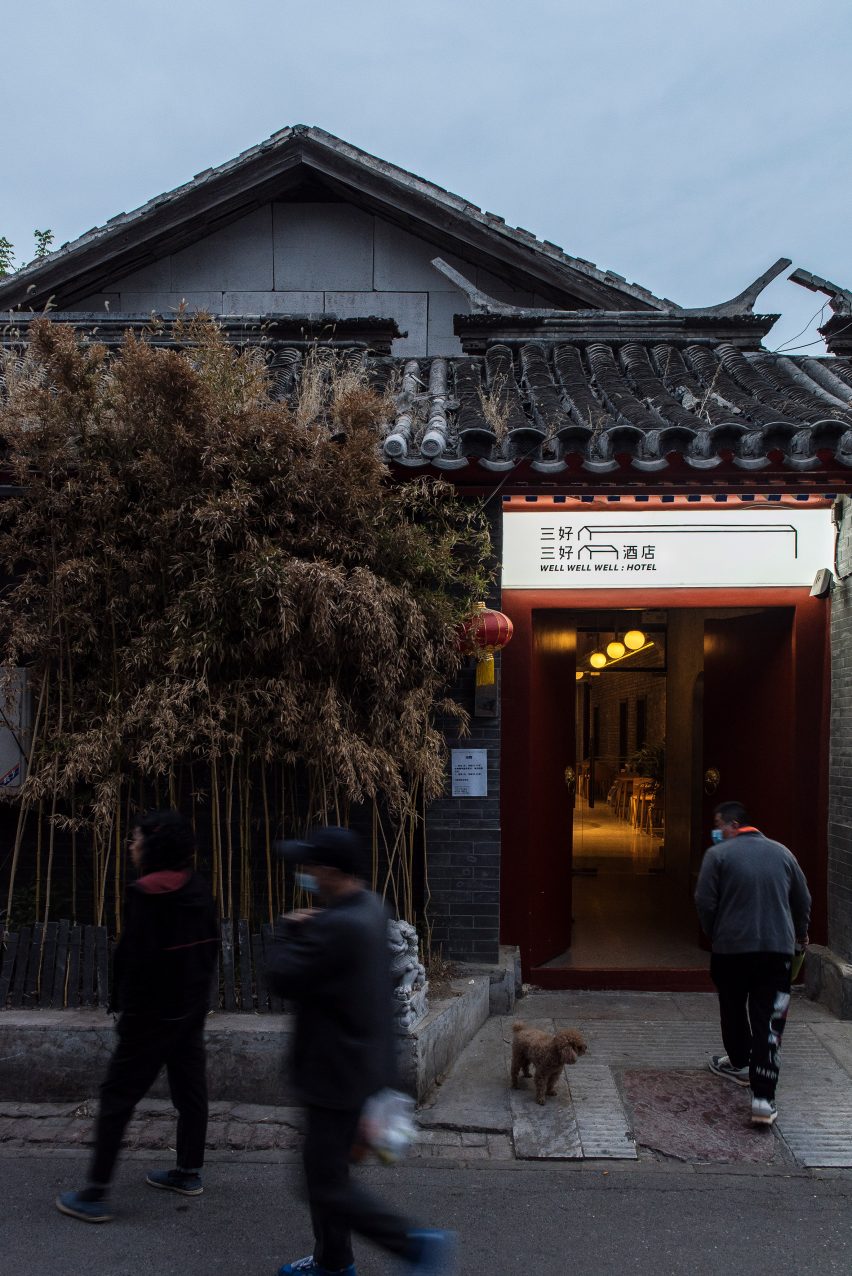 Above: the Well Well Well Hotel is located inside one of Beijing's traditional hutongs. Top image: the interior features dark red steel and wood panellingIts ground floor and newly added first floor accommodate a dense layout of 13 guest rooms, arranged around a central double-height courtyard that is covered with a large gabled wooden roof. Above: the Well Well Well Hotel is located inside one of Beijing's traditional hutongs. Top image: the interior features dark red steel and wood panellingIts ground floor and newly added first floor accommodate a dense layout of 13 guest rooms, arranged around a central double-height courtyard that is covered with a large gabled wooden roof.
When Fon Studio took over the project, the building was already under construction and had previously undergone several renovations.
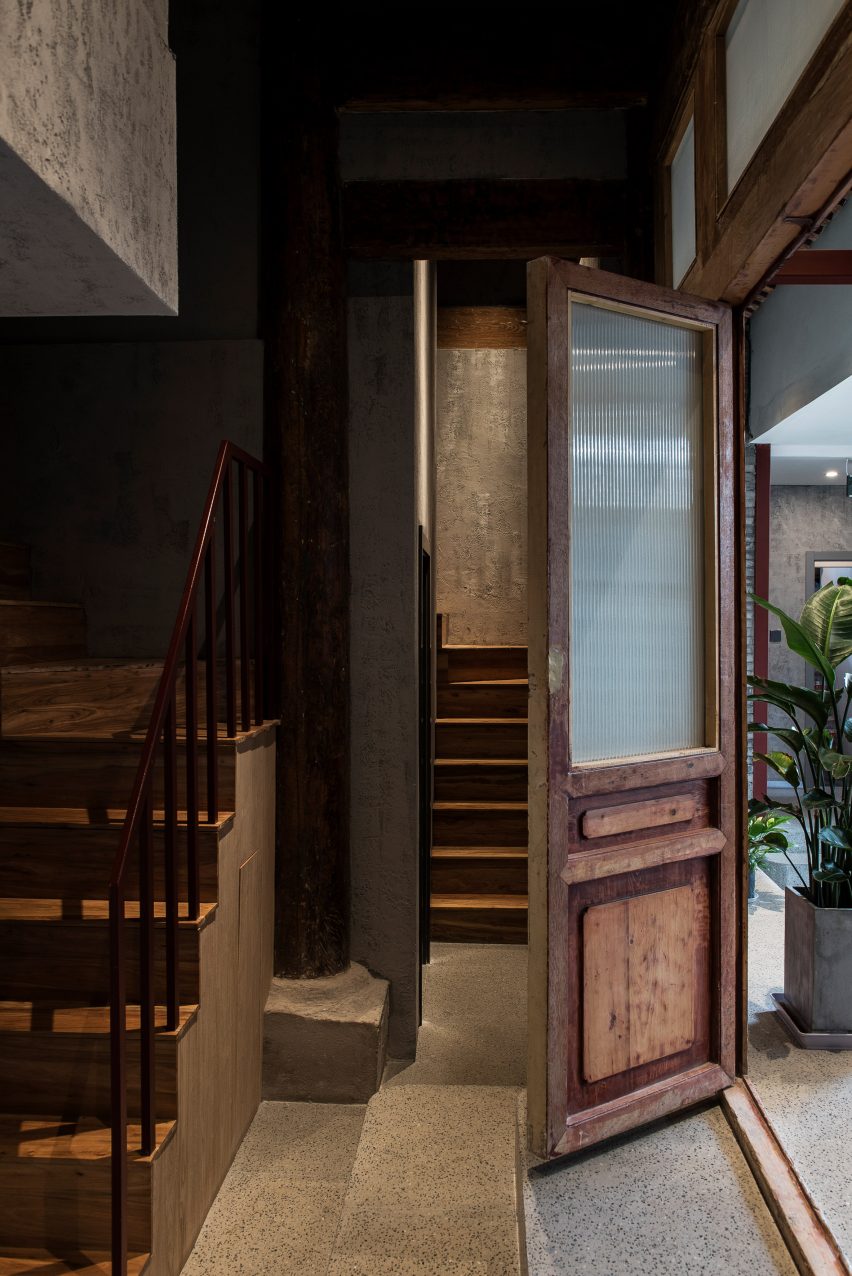 Partially remodelled doors and window frames were matched to the building's original structure"Initially, the original decoration was demolished," explained the local studio. Partially remodelled doors and window frames were matched to the building's original structure"Initially, the original decoration was demolished," explained the local studio.
"We were attracted by the sophisticated wooden roof structure of this old house, which increased the richness and visual characteristics of the space."
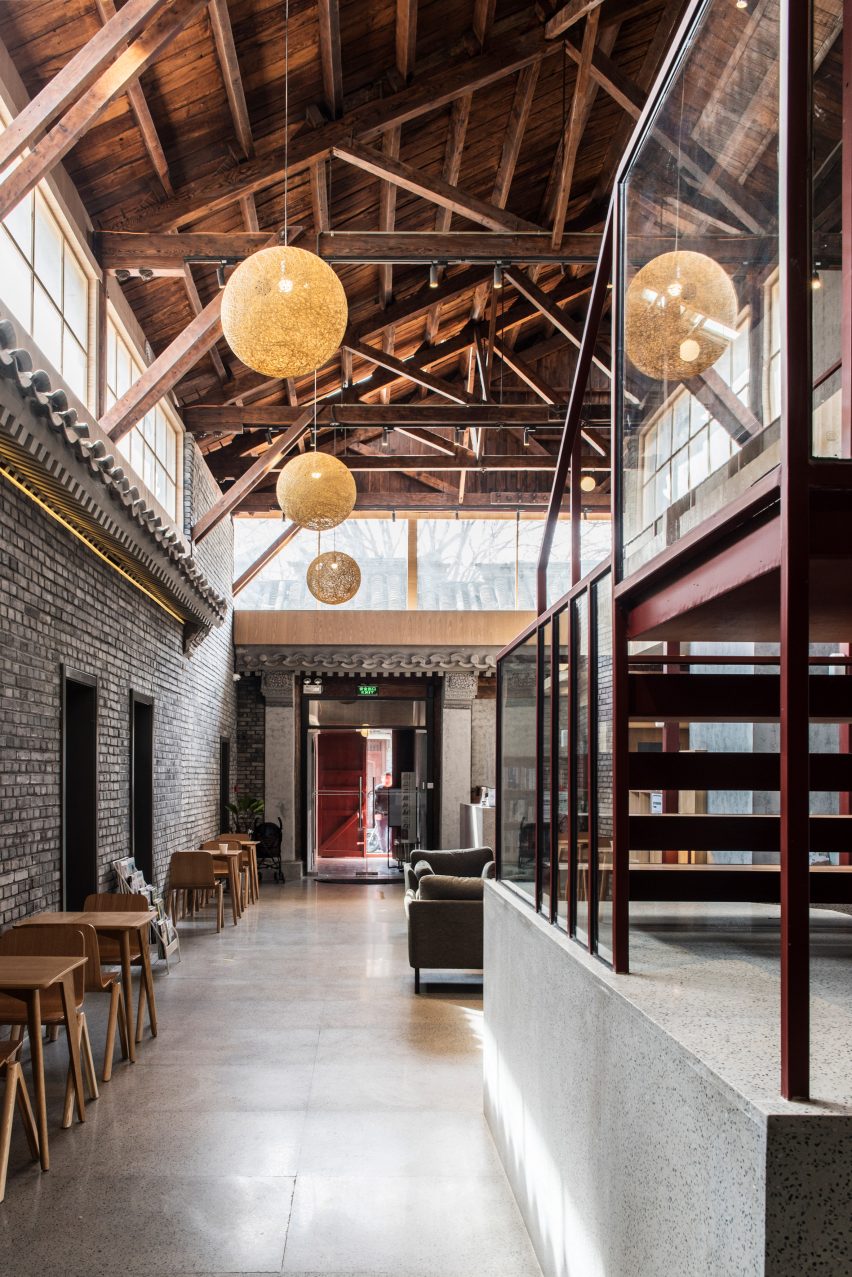 A gabled wooden roof covers the central courtyardThe building's original roof is supported by dark red columns of reinforced steel, which also prop up the new first floor and the terrazzo staircase that can be used to access it via the courtyard. A gabled wooden roof covers the central courtyardThe building's original roof is supported by dark red columns of reinforced steel, which also prop up the new first floor and the terrazzo staircase that can be used to access it via the courtyard.
"The large courtyard is not common in hutong houses," said Fon Studio, which was established by architects Jin Bo'an, Li Hongzhen and Luo Shuanghua in 2016.
"The orderly interior courtyard originally belonged to a traditional inn, decorated in every corner with the most popular Chinese elements."
Clerestory windows encircle the top of the courtyard space on three sides, providing views over the tiled roofs of the surrounding buildings.
Both floors accommodate seating areas for guests and small corners for socialising and relaxing.
Fon Studio wanted the hotel's new additions – including partially remodelled doors and window frames – to be in keeping with the building's original structure and proportions.
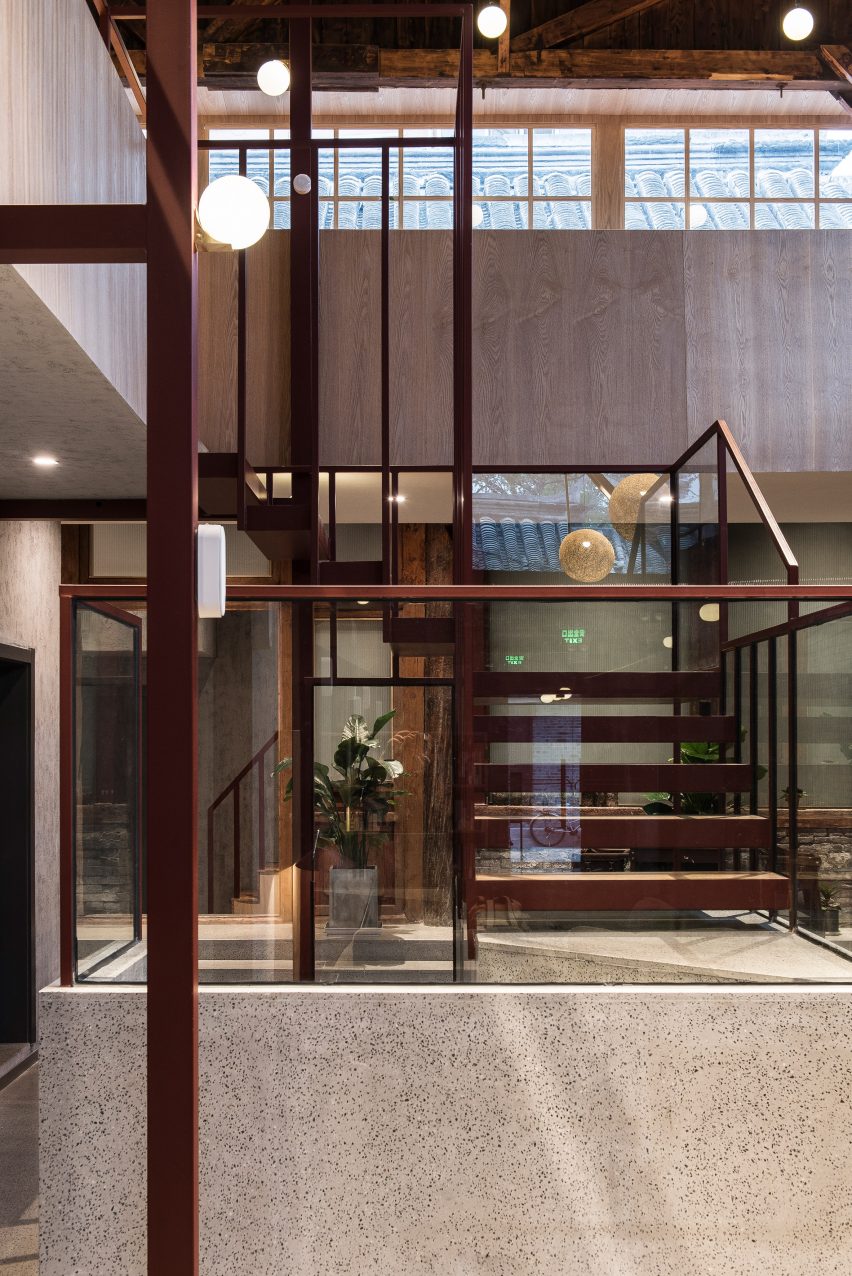 The new first floor can be accessed via a red steel and terrazzo staircase"We respected the aesthetic style and structural logic of the original old building and performed a simple redesign to make it not much different," the studio told Dezeen. The new first floor can be accessed via a red steel and terrazzo staircase"We respected the aesthetic style and structural logic of the original old building and performed a simple redesign to make it not much different," the studio told Dezeen.
"The structure of the staircase naturally becomes a visual focus in the space but its turning form and scale is still integrated into the overall atmosphere."
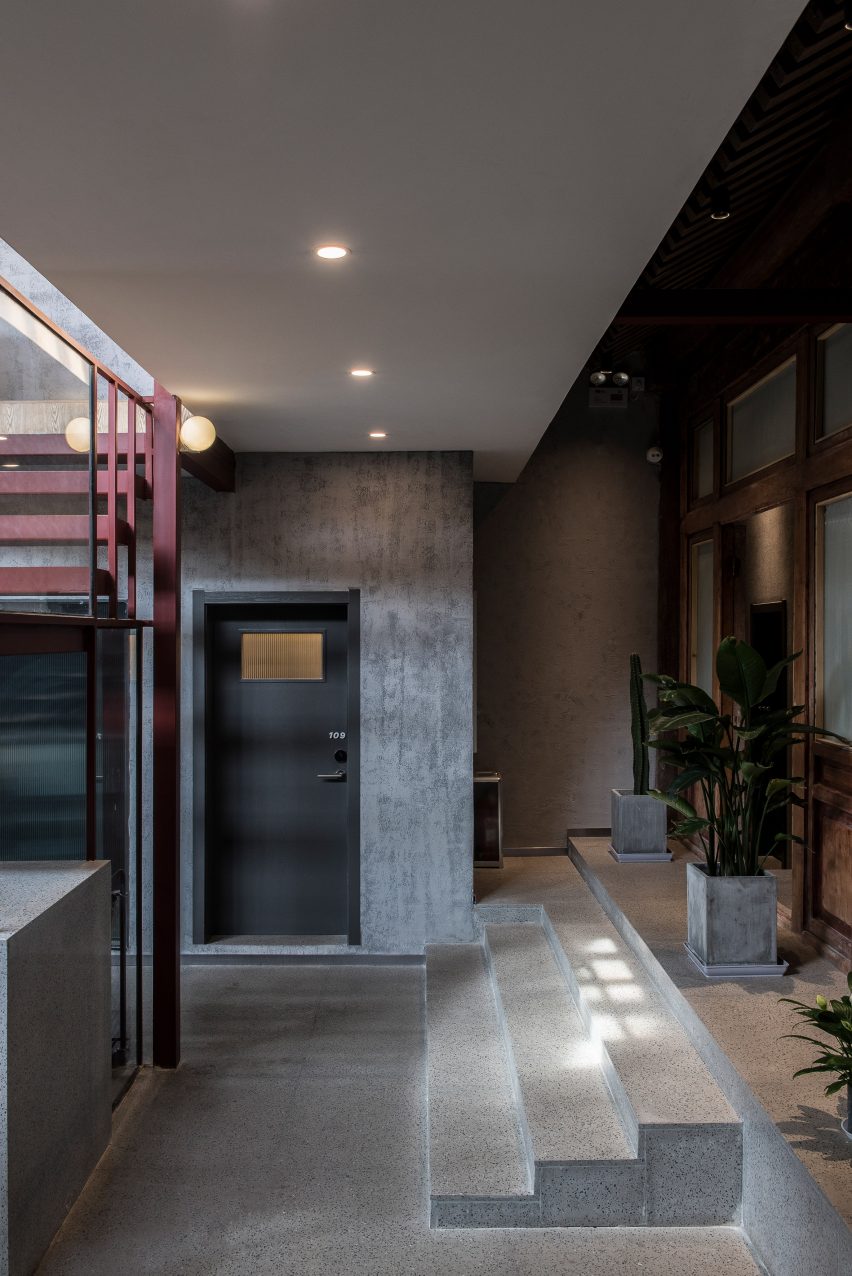 Guest rooms are located on both the ground and the first floor"In the way of atmosphere creation, the main visual colours are a combination of wooden logs and dark red under different grey textures," the studio added. Guest rooms are located on both the ground and the first floor"In the way of atmosphere creation, the main visual colours are a combination of wooden logs and dark red under different grey textures," the studio added.
"It also abstracts and organises people's intuitive feelings in the alley – simple and delicate."
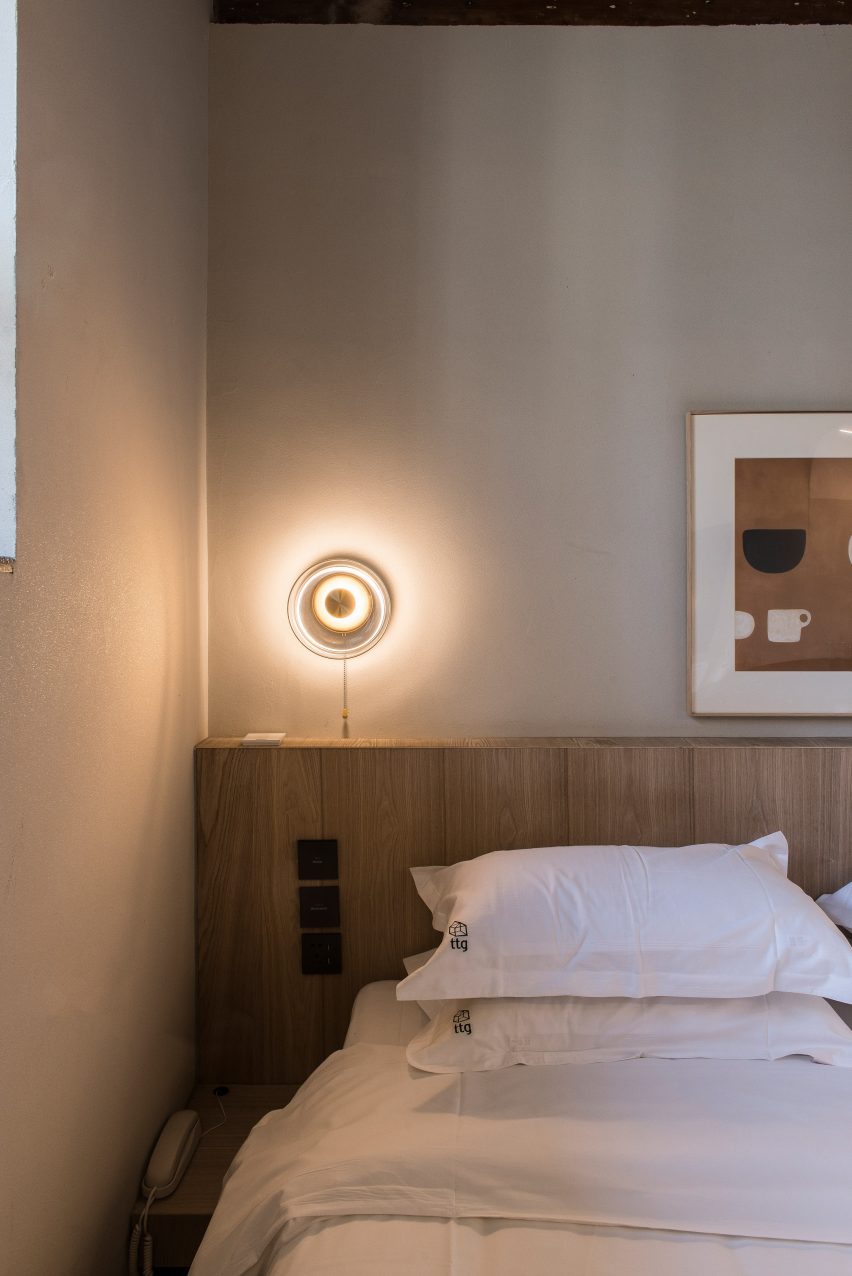 Wooden headboards in the guest rooms create a sense of warmthWalls are finished in textured grey cement and the compact rooms were designed to create a "simple and warm feeling". Wooden headboards in the guest rooms create a sense of warmthWalls are finished in textured grey cement and the compact rooms were designed to create a "simple and warm feeling".
Other hutong renovation projects include a specialist fan shop with a minimalist oak-lined interior and a teahouse with porthole windows set in a landscape of white gravel, terrazzo and marble.
contemporist.com
A Transparent Glass Skin Modernizes This Traditional Chinese Hutong
September 11, 2019
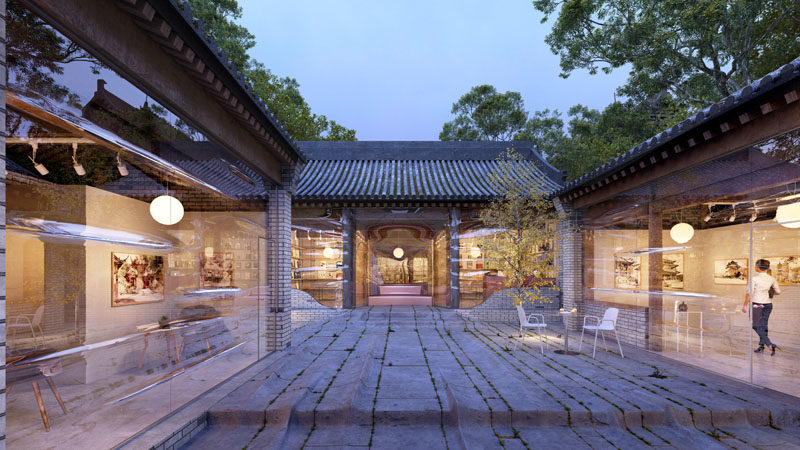 Daipu Architects have updated an old hutong in Beijing, China, and transformed it into a modern space with a unique appearance. Daipu Architects have updated an old hutong in Beijing, China, and transformed it into a modern space with a unique appearance.
This is what the hutong looked like before the transformation. The existing building was of historic preservation status, with the original facades, timber structure, and brickwork to be left untouched.
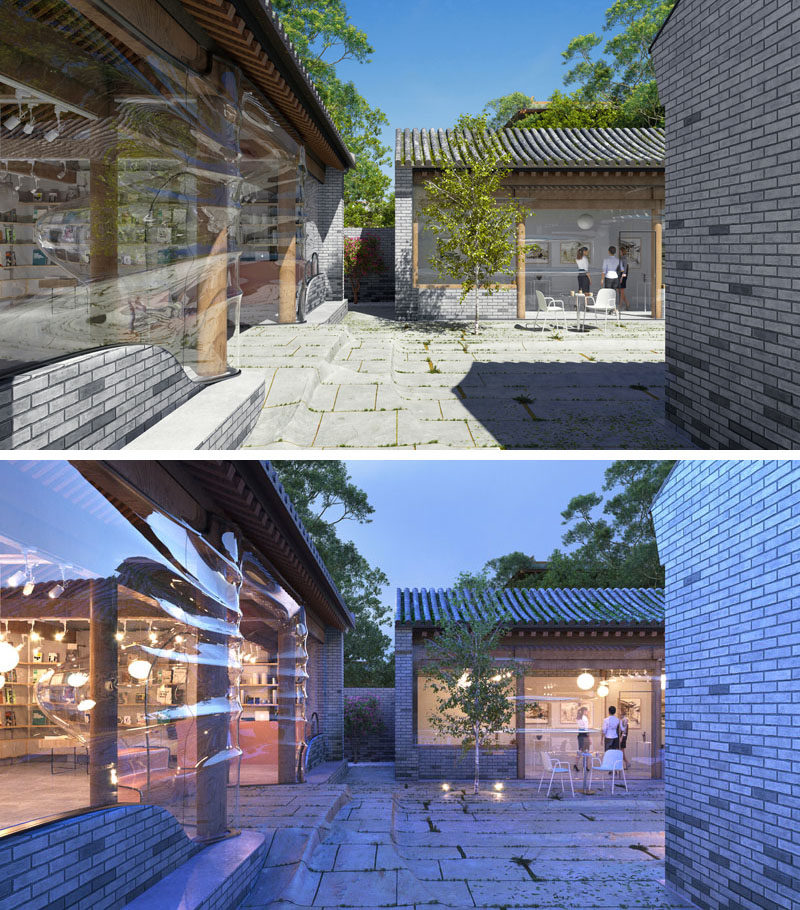
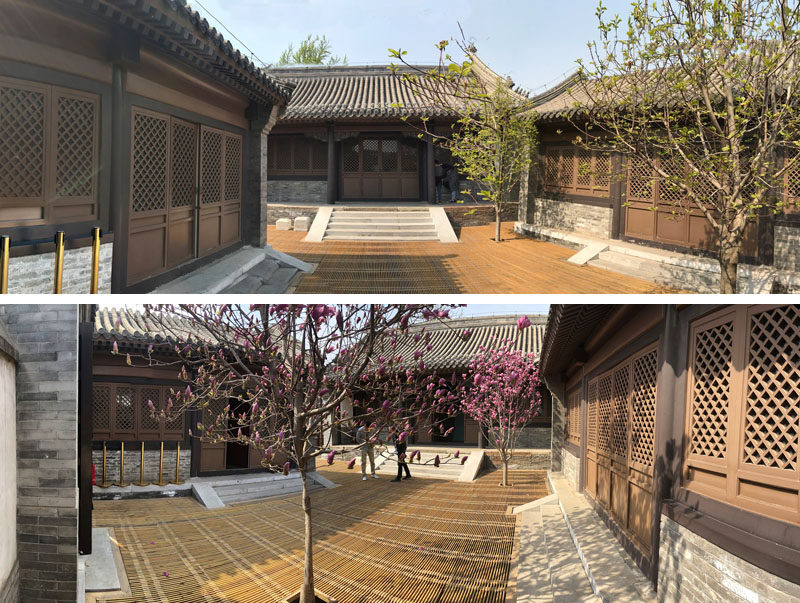 The buildings within the hutong were updated with a transparent, invisibility cloak-like glass skin, that preserves the building in its original state. If required in the future, the glass cloak can be removed without a trace, returning the courtyard to its former state. The buildings within the hutong were updated with a transparent, invisibility cloak-like glass skin, that preserves the building in its original state. If required in the future, the glass cloak can be removed without a trace, returning the courtyard to its former state.
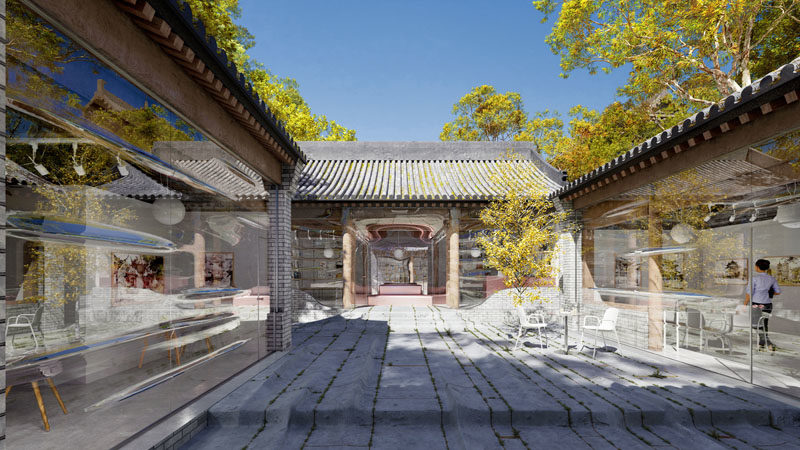 Part of the glass skin looks like it’s being pulled into the building, with the wrinkles being showcased when the light hits them. Part of the glass skin looks like it’s being pulled into the building, with the wrinkles being showcased when the light hits them.
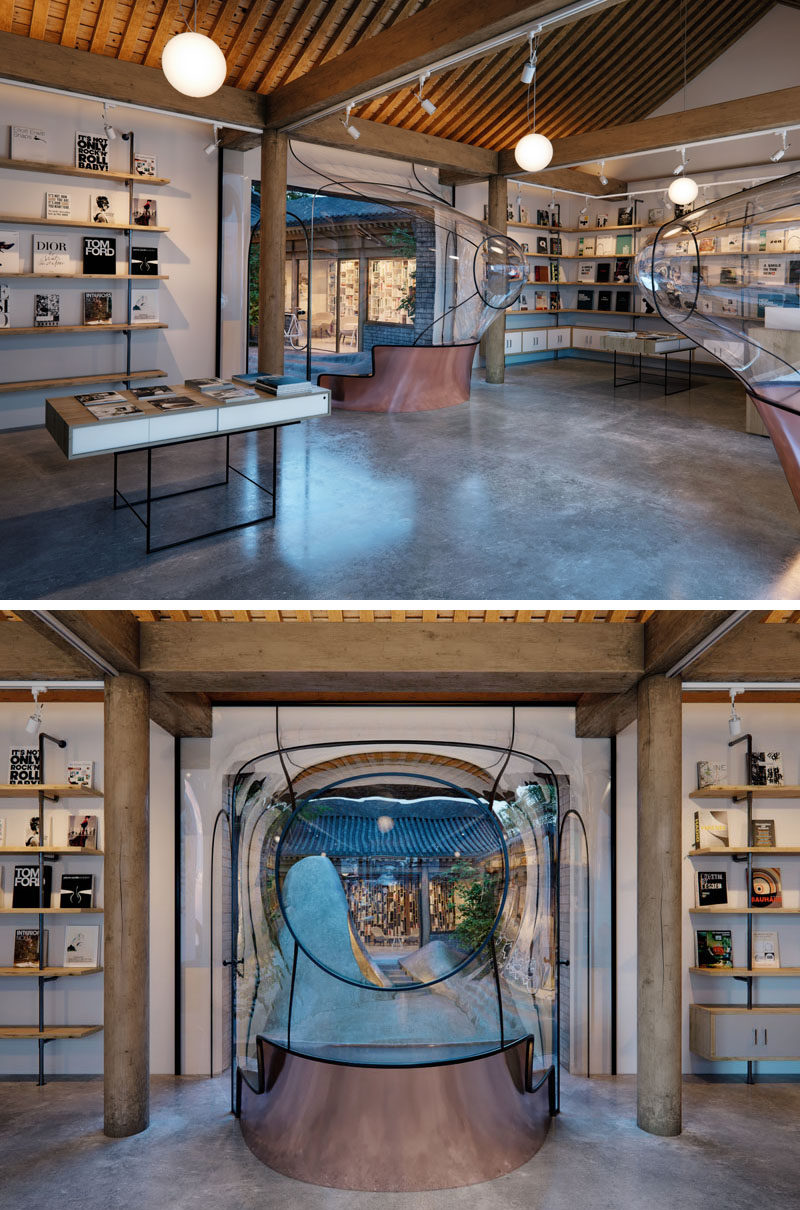
 Inside the retail space, the glass skin becomes a sculptural feature that divides the space into a reception area and reading area, and provides a unique view of the courtyards. Inside the retail space, the glass skin becomes a sculptural feature that divides the space into a reception area and reading area, and provides a unique view of the courtyards.
 Design Architect: Daipu Architects | Director : Dai Pu | Design Team: Guo Lulu, Evelyn Jingjie Wong, Mohamed Hassan El-Gendy, Sooyeon Jeong, Yoomin LeeGet the contemporist daily email newsletter – sign up here Design Architect: Daipu Architects | Director : Dai Pu | Design Team: Guo Lulu, Evelyn Jingjie Wong, Mohamed Hassan El-Gendy, Sooyeon Jeong, Yoomin LeeGet the contemporist daily email newsletter – sign up here |
|



