| | | First North American patient implanted with next-generation total artificial heart
Published by:
Duke University and Carmat announced that doctors at Duke University Hospital performed the first North American implantation of a next-generation total artificial heart.
The patient is recovering well after a procedure of approximately 8 hours, doctors said during a press conference.
 Source: Adobe StockThe bioprosthetic artificial heart (Aeson, Carmat) is approved in Europe and is being evaluated in the U.S. in up to 10 patients with end-stage biventricular HF to see if it is feasible as a bridge to transplantation, according to press releases from the university and the company. The device uses biological valves derived from bovine tissue and operates on an external power supply. Source: Adobe StockThe bioprosthetic artificial heart (Aeson, Carmat) is approved in Europe and is being evaluated in the U.S. in up to 10 patients with end-stage biventricular HF to see if it is feasible as a bridge to transplantation, according to press releases from the university and the company. The device uses biological valves derived from bovine tissue and operates on an external power supply.
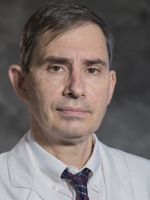
Carmelo Milano
Jacob Schroder
On Monday, Carmelo Milano, MD, professor of surgery at Duke School of Medicine, chief of adult cardiac surgery and surgical director for Duke’s left ventricular assist device program, Jacob Schroder, MD, assistant professor of surgery and the surgical director of the heart transplant program at Duke, and colleagues performed the trial’s first procedure on Matthew Moore, aged 39 years old, from Shallotte, North Carolina.
Moore was referred to Duke in June after a sudden diagnosis of HF and his condition deteriorated quickly, to the point that conventional options, including transplantation, were not viable, Milano said during the press conference.
Many patients with terminal HF “don’t have a treatment option, so we were happy to engage with the Carmat company and their product,” Milano said. “Mr. Moore suffered from advanced coronary artery disease and a terminal heart condition. We implanted him with the Carmat device, which has a number of novel features. We believe that this device will have improved hemocompatibility and be safer to support patients as a bridge to transplant, but potentially also as a destination treatment.”
During the surgery “you remove the left and right ventricles and then place the artificial heart in its place,” Schroder said during the press conference. “This was a little bit challenging because Mr. Moore had had surgery within the past month. But it went very well. The thing that has been most striking about the operation and Mr. Moore’s progress is that he has been very stable throughout. It is a testament to the device, which auto-regulates. We don’t spend a lot of time adjusting things; it adjusts itself. This is a new feature over any other device we could use.”
Schroder noted that the current iteration of the device is somewhat large, and Moore’s body is large enough to accommodate it, but that would not be the case for smaller patients with terminal HF.
Rachel Moore, the patient’s spouse, said during the press conference that “the decision was actually very easy” for him to receive the new device. “God got us this far, so there is obviously something Matthew Moore is supposed to do. I spent 10 years as a postoperative cardiothoracic nurse, and I was fascinated. It is amazing to be part of advancements in technology and cardiac surgery.”
Manesh Patel
“What’s really intriguing about Carmat is that they have made two significant leaps,” Manesh Patel, MD, chief of the division of cardiology at Duke University School of Medicine, said during the press conference. “The first is the biocompatibility, so there is potentially less need for anticoagulation. That’s a leap that has not yet been made. The second is the interplay in terms of the way the device is interacting in terms of the flow on the left and right side of the heart. That means that there will likely be further innovations in size and other aspects. Many millions of Americans are affected by advanced heart failure. These types of advances will hopefully continue to provide us the opportunity to work as a team to improve their outcomes.”
The team aims to perform a heart transplant on Moore in 3 to 4 months, Schroder said.
 Read next Read next
The trial protocol, which the FDA signed off on, calls for an interim analysis of the first three patients after 60 days, after which the remaining seven patients will be enrolled if there are no major safety concerns. The primary endpoint is patient survival or successful heart transplant at 180 days.
Perspective Back to Top
Daniel J. Goldstein, MD
The total artificial heart remains a niche therapy for patients with advanced HF — less than 100 Syncardia Total Artificial Heart devices (the only FDA-approved total artificial heart) are implanted each year in the U.S. Between Jan 2014 and December 2018, 200 total artificial hearts were implanted in the U.S. (Intermacs Report, 2019). In contrast, about 4,000 durable LVADs are placed yearly.
Total artificial hearts are reserved for patients with biventricular failure felt to be too severe to rescue with a durable LVAD alone. Additionally, patients with specific and rare situations — extensive intracranial thrombus, post-infarct ventricular septal defect, unresectable benign cardiac tumor, severe restricted cardiomyopathies and failed transplant, among others.
The main difference between the Carmat device and others relies on the use of bioprostheses for all four valves, which reduces the need for anticoagulation. The advanced integrated electronics provide right-left balance and superb hemodynamic control, thus minimizing the postoperative management of the patients.
We need to await the results of this trial before estimates about its potential use can be advanced. In my opinion, the total artificial heart will remain a niche therapy, No. 1, because of its large size, reducing applicability to smaller patients; No. 2, the fact that the overwhelming majority of patients with biventricular failure can be successfully supported with an LVAD alone; No. 3, it removes the possibility of LV recovery; and No. 4, the fear that failure of the device will lead to death because the native heart, which could potentially sustain the patient in the event of an LVAD failure, is removed.
One of the most difficult challenges facing total artificial heart technologies is that they will always be applied to the sickest patients with predictable worse outcomes than those achieved with LVAD therapies. This will continue to unfairly perpetuate the general sense that “outcomes are suboptimal.” Rather, they should be perceived as best therapy available for a small segment of the advanced HF population for whom LVAD alone is unlikely to suffice and heart transplantation is not immediately feasible.
Daniel J. Goldstein, MD
Professor and Vice Chair, Department of Cardiothoracic & Vascular Surgery
Surgical Director, Cardiac Transplantation & Mechanical Assistance Programs
Co-Director, Center for Advanced Cardiac Therapy
Montefiore Medical Center and Albert Einstein College of Medicine
Disclosures: Goldstein reports he consults for Abbott, Abiomed and Medtronic and serves on advisory boards for Abbott and Abiomed.
healio.com |
|



