Re <<insanity ... defense of last resort for psychopaths>>
Am eagerly anticipating the trial
Read the book "Bad Blood", and watched the videos Message 33435321
It is going to be delicious, and the below vector might prove decisive-enough
bloomberg.com
Elizabeth Holmes Warns Lab Chief’s Testimony May Upend Trial
Joel Rosenblatt
21 August 2021, 05:12 GMT+8
Of all the high-profile witnesses set for Elizabeth Holmes’s criminal trial, Kingshuk Das isn’t exactly a key player in the collapse of Theranos Inc. But Das poses enough of a risk for her defense that her lawyer said his testimony threatens to upend the proceeding.
Das, a former lab director for Theranos, has said he told Holmes, who founded the company and was its chief executive officer, that its blood-testing equipment was deficient and not reliable, court filings show. He’s one of the few high-level scientists positioned to explain to jurors how aware Holmes was of problems with the machines even as she continued to promote them.
But on Friday, lawyers for Holmes argued in court that Das was added too late to the prosecution’s list of witnesses for a trial that starts in 11 days. The defense said in court filings it wasn’t aware until late last month that the government might rely on his expert opinions about assays, or tests. That didn’t allow enough time to prepare a response at trial, her attorneys said.
Prosecutors argued that Das is providing testimony about facts and events in the case, not expert opinion.
In response, U.S. District Judge Edward Davila said he’s inclined to let Das testify -- so long as he doesn’t veer into subjects that get too technical for jurors. The judge suggested the subject may be “something we’re going to have to police as the witness testifies.”
Lance Wade, a lawyer for Holmes, warned against “kicking this can down the road,” suggesting that dealing with Das’s testimony in the middle of trial poses possible problems of fairness that could derail it.
“My concern is if we wait and defer on this we’re not going to draw the lines the way we think is appropriate,” Wade told the judge. Waiting until Das testifies, he added, “is creating the serious risk of a continuance down the road.”
Jury selection is scheduled to begin in federal court in San Jose, California, on Aug. 31.
Read More: The Spectacular Rise and Fall of Elizabeth Holmes and Theranos
Holmes is charged with lying to doctors, patients and investors about the accuracy and capabilities of blood-testing machines made by Theranos. The company was once valued at $9 billion, but crashed and was dissolved after exposes and regulators revealed myriad problems with the tests.
Possible witnesses at the trial include former Secretary of State Henry Kissinger and former Secretary of Defense James Mattis -- who both served on the board of Theranos -- and Holmes herself.
According to court filings, Das said he was told by Holmes when he was hired in 2015 that his job would include responding to findings in an audit of the company’s Edison blood-testing machine by the Centers for Medicare & Medicaid Services. Das said he was told the CMS audit had uncovered “a few irregularities,” but that specific details weren’t discussed, according to a court filing.
The findings by the CMS were grave enough that the regulator banned Holmes from running a lab company for two years. Theranos also had to retract or correct the results of tens of thousands of medical tests.
In his own review of Theranos data, Das “concluded the Edison devices did not perform well, and the accuracy and precision did not meet the level needed for clinical testing,” court records show. Das told the government that “even using a fairly low bar, none of the Edison tests passed an acceptable level,” and that CMS inspectors were “100% correct with their deficiency findings.”
He was laid off at Theranos in 2018, the year the company ceased operations.
The case is U.S. v. Holmes, 18-cr-00258, U.S. District Court, Northern District of California (San Jose).
Before it's here, it's on the Bloomberg Terminal.
LEARN MORE
bloomberg.com
Theranos Founder Elizabeth Holmes Is Ready for Her Day in Court
Prosecutors should have a strong case. But defense lawyers could try some creative strategies to keep her out of prison.
More stories by Joel Rosenblatt
20 August 2021, 18:00 GMT+8
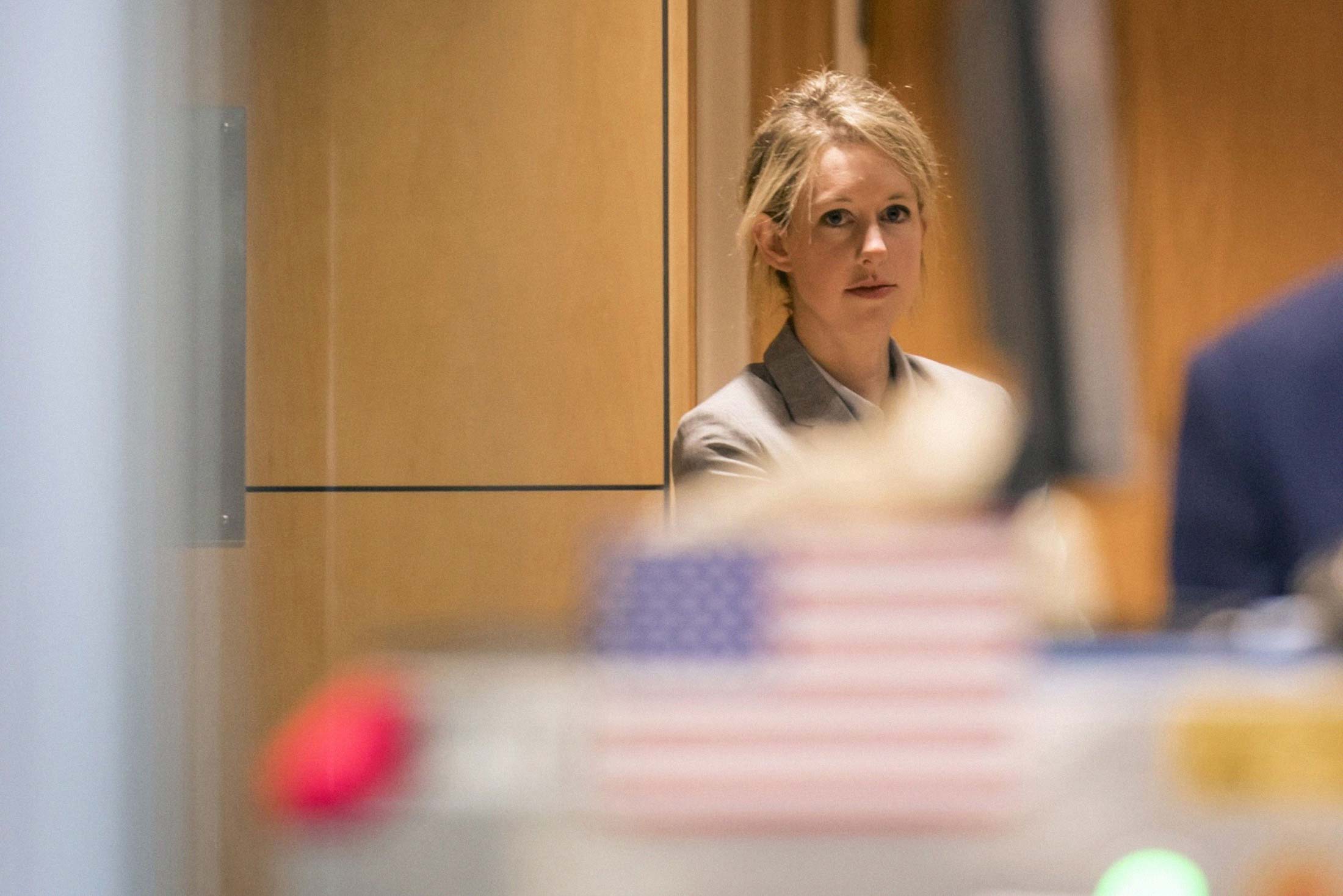
Holmes in 2019.
Photographer: David Paul Morris/Bloomberg
At the end of August, Elizabeth Holmes is set to go to trial to defend herself against multiple counts of conspiracy and fraud. If convicted, the founder and former chief executive officer of disgraced blood-testing startup Theranos Inc. faces up to 20 years in prison.
The charges include lying to patients about the efficacy of her blood tests and misleading investors when she told them the company would generate $1 billion in revenue in 2015. In reality the tests had grave problems, and Holmes allegedly knew the company would only generate a few hundred thousand dollars that year.
Theranos— once valued at $9 billion—became one of the most spectacular flameouts in modern tech history. Now, after multiple delays because of the pandemic and Holmes’s pregnancy (she had a baby in July), the hotly anticipated legal drama, expected to last three months, is set to begin in federal court in San Jose, Calif.
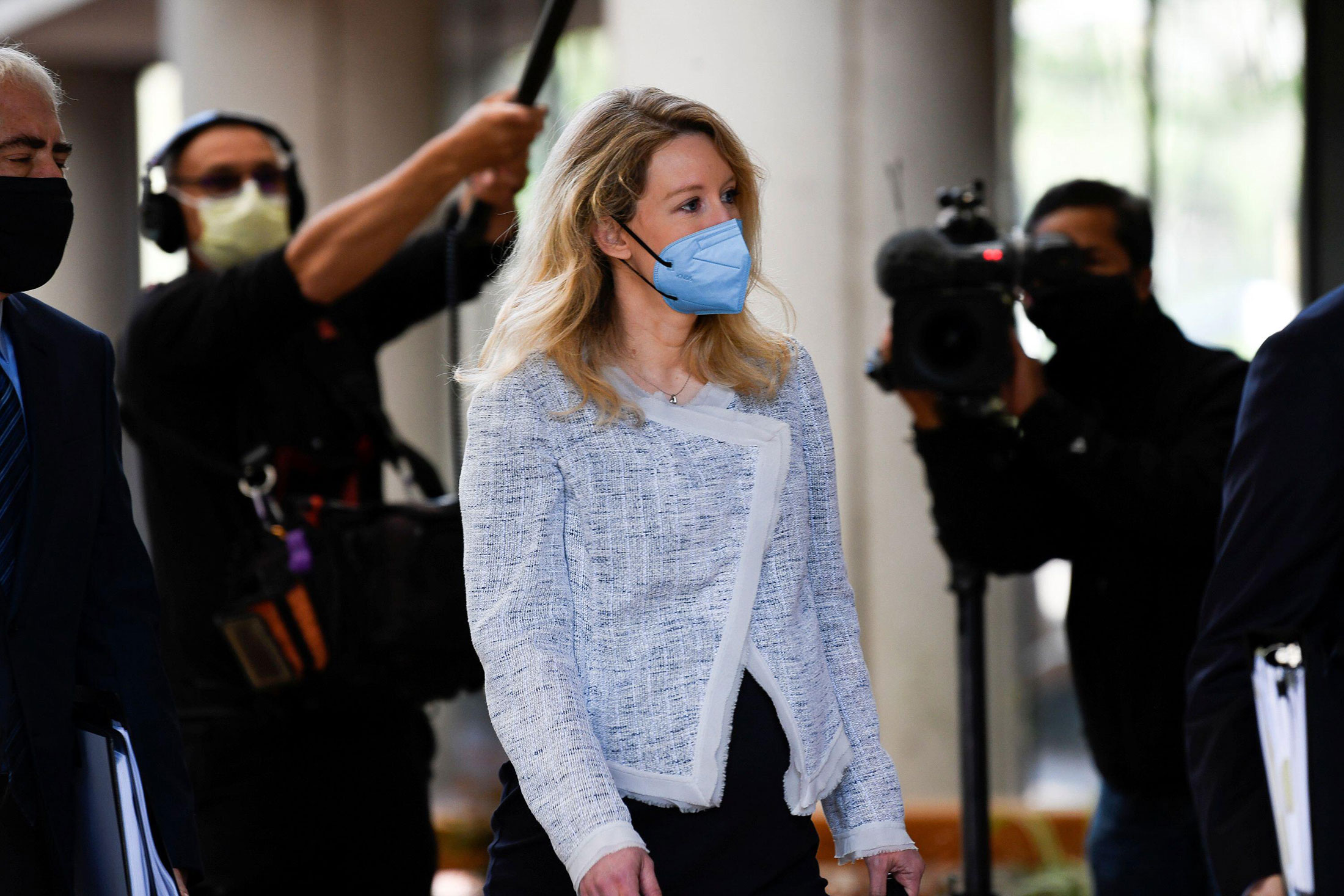
Holmes arrives at the Robert F. Peckham Federal Building to attend a court hearing in San Jose on May 4.
Photographer: Kate Munsch/Reuters/Alamy
The prosecution has a strong case, according to conversations with more than a dozen legal experts. But Holmes’s top-shelf defense team still has multiple options—such as claiming good intentions, striking a late plea deal, or claiming a “mental disease” by asserting that trauma had impaired Holmes’s judgment. Her lawyers declined to comment.
One of her strongest arguments may be that the only thing she was guilty of was optimism. Some experts expect Holmes to claim she was a true believer in Theranos and therefore didn’t knowingly mislead anyone. “Because no one can read another person’s mind, the defense will likely try to raise reasonable doubt about what was in hers,” says Barbara McQuade, a former U.S. attorney who teaches at the University of Michigan Law School. Holmes might argue that “she simply got caught up in the Silicon Valley culture of fake it till you make it,” she says.
It’s unclear if Holmes herself will take the stand. If she does, prosecutors will be able to question her, which carries big risks. “Most defense attorneys are very reluctant to have their client testify,” says James Melendres, a former prosecutor turned criminal defense lawyer. “Prosecutors spend a professional lifetime honing their ability to conduct withering cross-examinations.”
“Because no one can read another person’s mind, the defense will likely try to raise reasonable doubt about what was in hers”
Still, as a public figure with a gift for persuasion, Holmes might be predisposed to try to win over jurors. In 2015 she made an impassioned defense of her company after investigative reports in the Wall Street Journal raised serious questions about the accuracy of its blood testing technology and revealed that Theranos ran most of its tests on traditional machines from other companies. “This is what happens when you work to change things,” Holmes said on CNBC shortly after the first Journal exposé. “First they think you’re crazy, then they fight you, and then all of the sudden you change the world.”
Holmes might also highlight the distinguished people who sat on the Theranos board, including former Secretaries of State George Shultz and Henry Kissinger. Her lawyers could point out that they stood by Holmes while she worked to bring the technology to market and didn’t object to her leadership.
The board members may actually hurt her case, though. Prosecutors have named all of them as potential witnesses (Shultz died in February), and Joe Grundfest, a professor and corporate governance expert at Stanford Law School, expects at least some will testify. “The board can simply say, accurately, ‘She lied to us,’?” he says.
Holmes was under a legal obligation to be candid with her directors, a responsibility that included disclosing any problems she was aware of with her blood-testing machines. According to a settlement Theranos reached with the state of Arizona, at least 10% of the 1.5 million tests it sold there between 2013 and 2016 had to be voided or corrected.
A less dramatic strategy for Holmes would be to strike an eleventh-hour plea agreement and cooperate with prosecutors in their case against her onetime lover and former Theranos President Ramesh “Sunny” Balwani, who faces the same charges at a separate trial set for early next year. Any deal, however, is likely to include significant prison time, and it may be more appealing to Holmes to try to convince at least one juror of her arguments.
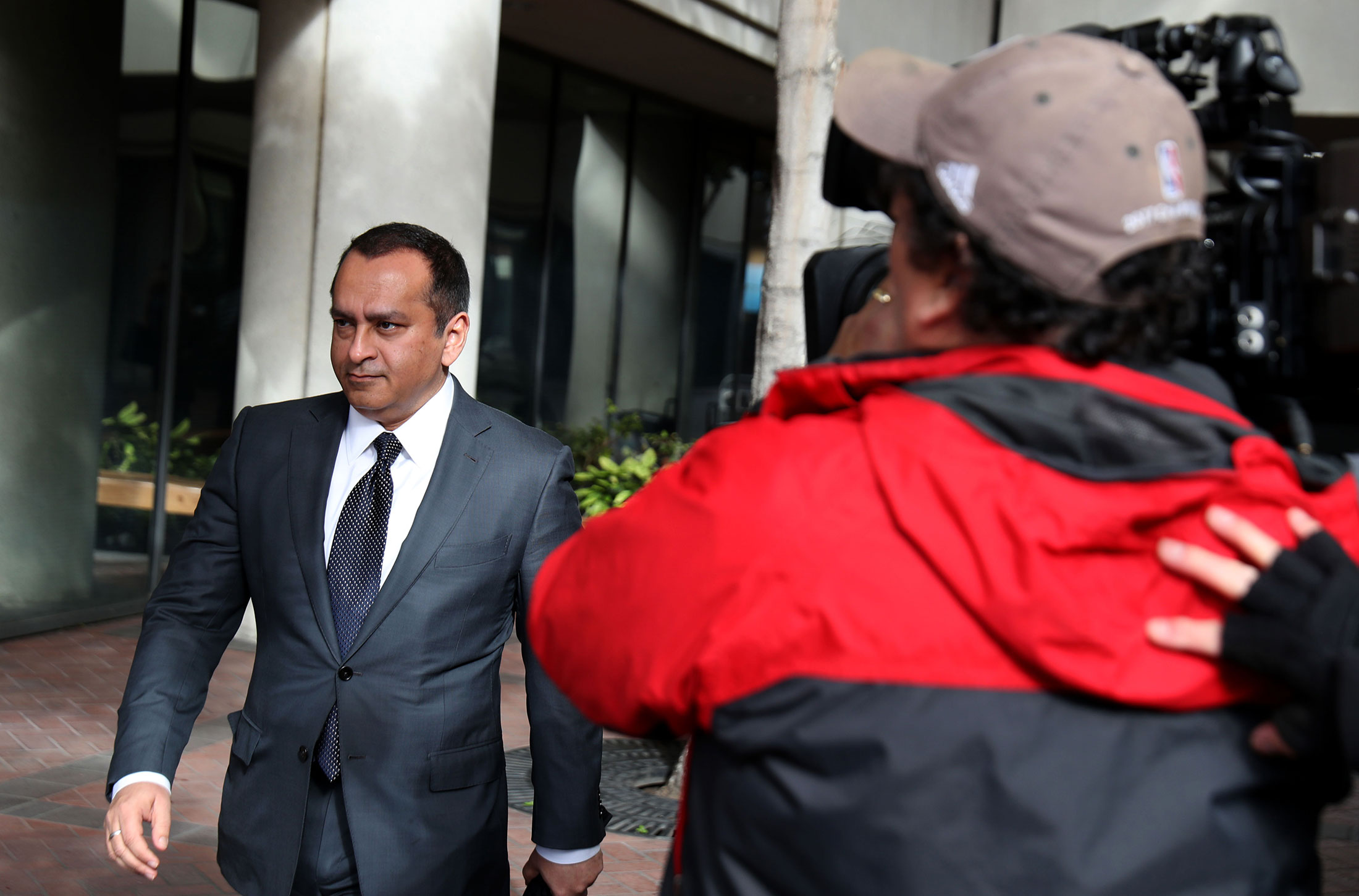
Former Theranos COO Balwani in 2019.
Photographer: Justin Sullivan/Getty Images
It’s also possible that Holmes will not put up a defense even if a trial does go forward. The strategy, a kind of legal jiujitsu in which the defense presents no testimony or evidence, depends on jurors deciding for themselves that prosecutors didn’t prove their case beyond a reasonable doubt. It’s not unusual in criminal trials, and a hung jury would be a win for Holmes.
Perhaps the biggest wild card in Holmes’s defense is whether her attorneys call Mindy Mechanic, a clinical psychologist at California State University at Fullerton; Holmes’s legal team has identified her as a possible witness. Mechanic is an expert on the psychosocial consequences of trauma, with a focus on violence against women. She could testify about what court filings describe as a “mental disease or defect” that Holmes suffered.
This wouldn’t be an insanity defense, per se, but rather an argument to jurors that Holmes was unable to form the intent to commit fraud because she was traumatized by a relationship. The details of such an argument remain a mystery, because key court filings on the subject are under seal.
Whatever the eventual approach, legal experts say it will be difficult for Holmes to overcome the extensive evidence that’s accumulated against her. “Fraud prosecutions are all about showing what the defendant said and how it compares with the truth,” says McQuade, the former prosecutor. “Here it seems that her lies can be objectively proven through witnesses and documents.”
Read next: Pharma CEO Faces Personal Fight for a New Breed of Organ Donors |



